Tree · Cupressaceae
Sawara False Cypress
Chamaecyparis pisifera
Sited in full sun and free-draining soil, false cypress sustains its foliar color through every season.
Full sun
Every 7–14 days
USDA 4–8
20–30 ft · 6.1–9.1 m
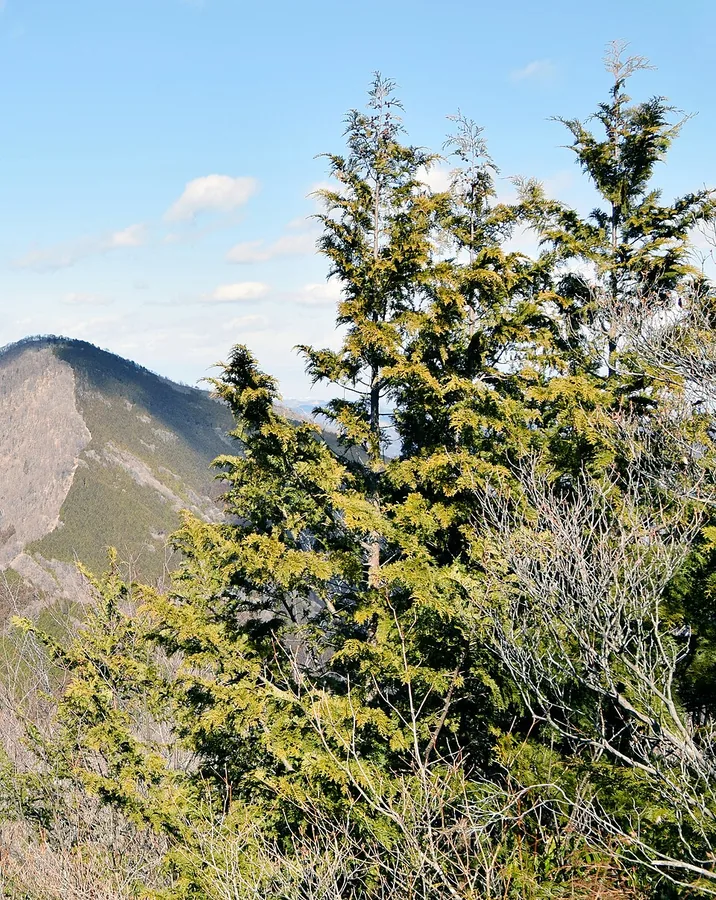
Overview
Sawara false cypress is a hardy evergreen conifer of Japanese origin, valued for its soft, feathery foliage rather than any reproductive display, since the species is non-flowering. Placed in the cypress family, it tolerates winter lows to -29°F (-34°C), a cold hardiness that anchors it across USDA zones 4 to 8. The wild type develops into a sizable tree over time, yet the trade and most gardens rely on the smaller named selections.
The cultivar range is the plant's principal horticultural value. Selections diverge into low golden mounds, soft blue-green columnar habits, and threadleaf types whose strands weep in yellow. That breadth supports several landscape roles, from foundation massing to specimen placement to winter color when deciduous material has dropped.
Cultural demand is low once the plant is established. Provide sun, free drainage, and shelter from desiccating wind, and it maintains year-round color with minimal intervention. The decisive constraint is pruning, because this conifer cannot regenerate shoots from leafless old wood.
Care
The short version: full sun to part shade in moist but well-drained soil that never remains saturated, with pruning held to green tissue only and a single balanced evergreen feed applied in spring.
Light
Foliar color develops best in full sun, where the gold and blue selections express their fullest pigmentation. The plant accepts partial shade, but reduced light thins the canopy and mutes those colors.
Water
Maintain soil that is moist but never waterlogged, watering deeply through establishment and during drought. Established plants tolerate appreciable dry periods, yet sharp drainage remains essential, since stagnant water in the root zone induces root rot.
Soil
Site it in moist, fertile, well-drained ground. It is indifferent to reaction across acidic to slightly alkaline conditions, approximately a pH of 5.0 to 7.5, provided water drains freely from the profile.
Temperature
This is a cold-hardy conifer functional across roughly -29°F to 86°F (-34°C to 30°C). It endures severe northern winters, though desiccating wind can scorch the exposed face when frozen soil limits water uptake.
Humidity
Ambient outdoor humidity is sufficient, so no target value applies. Air movement is the operative factor, because still, crowded, persistently damp foliage favors the establishment of blight and mites.
Feeding
Apply a light feed in spring using a balanced slow-release fertilizer formulated for evergreens. A single seasonal application suffices, as this measured grower responds poorly to forced, excess nitrogen.
Pruning
Confine pruning to light shaping within green tissue. The governing rule is to never cut into bare brown wood, which lacks dormant buds and will not re-foliate. Removing dead interior branches with age is a maintenance measure that preserves a clean habit.
Repotting
Container and dwarf forms warrant a fresh, larger container every 2 to 3 years. Circling roots, water that drains too quickly through a spent medium, or stalled growth each indicate the plant has outgrown its pot.
Size & spacing
Ultimate dimensions are governed entirely by the selection. The species can attain 20 to 30 feet (6 to 9 m) in height with a spread of 3 to 20 feet (90 cm to 6 m), so consult the label and allot the spacing the chosen form requires.
When to plant
False cypress establishes from a nursery plant set into the ground rather than from indoor sowing. Install it in spring or early fall, while soil is warm and moisture steady, so root establishment precedes summer heat stress or severe winter cold. No bloom or harvest window applies, since the plant is grown for its year-round foliage.
Northern hemisphere
Southern hemisphere
Typical months for a temperate climate: start earlier in warm zones, later where spring frosts linger.
- Plant: spring or early fall
- Harvest: non-flowering; grown for evergreen foliage
Hardiness
USDA hardiness zones: 4–8
Temperature: down to -34°C
Troubleshooting
The majority of false cypress problems resolve to three causes: saturated roots, desiccating wind, or a cut placed into wood that cannot regenerate. Reading the early symptoms on the tips, across the foliage, or in waterlogged soil allows intervention before structural branch loss. Match the presentation below, then act while remediation still changes the outcome.
Gradual decline and sparse foliage on saturated sites
Progressive thinning and dieback in saturated ground point to root rot, frequently Phytophthora, which exploits the low oxygen of waterlogged soil to destroy the fine feeder roots. Examination at the crown finds the roots dark and pulpy rather than firm and white. Recovery is not possible once the root system is heavily rotted, so the practical response is to correct drainage, curb irrigation, and re-establish only on a site where water moves freely away.
Fix:
- Improve drainage immediately and stop overwatering
- Remove severely affected plants
- Replant only in well-drained soil
Discolored shoot tips dying back from the ends
Browning, dying tips most often signal tip blight, a fungal complex that colonizes immature or stress-weakened tissue when humidity stays high. The same scorch can come from desiccating winter wind on the windward, sun-exposed face, where transpiration outruns frozen-soil uptake. Prune well below the lesions to remove the infected wood, disinfect between cuts to halt spread, and correct the airflow and wind exposure that let the pathogen establish.
Fix:
- Prune out and destroy blighted twigs well below symptoms, disinfecting tools between cuts
- Improve air circulation and avoid overhead watering
- Shelter plants from harsh drying winter wind
Bronzed stippling and fine webbing across the canopy
Fine webbing over a stippled, bronzed canopy indicates spider mites, which feed by piercing cells and increase fastest on dusty, drought-stressed foliage. A branch tapped over white paper reveals the moving mites that confirm them. Bagworms present differently, as portable spindle-shaped cases of silk and debris suspended from the shoots. Dislodge mites with a forceful water spray, remove the cases by hand, and apply Bt to early-instar bagworms while the crawlers feed in early summer.
Fix:
- Hose down foliage to dislodge mites
- Hand-pick and destroy bagworm bags
- Treat young bagworms with Bacillus thuringiensis (Bt) when crawlers are active in early summer
Leafless old wood that will not regenerate
A cut made into the bare brown wood of the interior will not regenerate, because needled evergreens of this group lack the dormant adventitious buds on old wood that broadleaf plants use to break new growth. Part of that interior browning is simple senescence, as progressively shaded lower branches are abandoned with age. Confine every cut to green, foliage-bearing growth, and treat removal of dead interior wood as a cosmetic measure that the canopy will not backfill.
Fix:
- Prune only into green foliage-bearing growth
- Remove dead interior wood for appearance, accepting it will not refill
Toxicity
For animal households the assessment is favorable: false cypress is not considered toxic. It does not appear on the ASPCA poison listings and is regarded as safe around cats and dogs. As with most ornamentals, ingestion of a large quantity may yield a brief gastrointestinal upset, but no toxic principle is involved.
Safe for
People · Cats · Dogs · Horses · Rabbits · Livestock · Birds
Cats None
Cats face no toxicity here, as the ASPCA does not list false cypress among hazardous plants. Ingesting a large quantity of foliage may provoke transient gastrointestinal upset, the nonspecific response many ornamentals can produce.
Dogs None
Dogs are not at risk, since the foliage contains no recognized toxic principle. A sizable mouthful may bring on brief, self-limiting queasiness, but nothing beyond that.
Horses Safe
Horses face no documented hazard, as no toxic compounds have been reported in the foliage of this conifer.
Rabbits Safe
Rabbits can browse adjacent plantings safely. With no known toxic principle present, incidental nibbling carries no recognized risk.
Livestock Safe
Cattle, goats, and sheep encounter no meaningful risk from this species, which carries no toxins of note.
Birds Safe
Birds are unaffected, and the dense evergreen canopy functions as nesting and roosting cover rather than a hazard.
People Safe
No part is toxic to people, though the foliage is not edible and the resinous trimmings may mildly irritate skin during handling.
An outdoor landscape conifer; foliage may cause mild stomach upset if large amounts are chewed, as with many plants, but it is not considered toxic.
Varieties
The full-size species is rarely planted in cultivation. The named selections and close relatives below are the forms encountered in the nursery trade.
'Gold Mop' / 'Golden Mop'
A widely grown dwarf threadleaf selection whose stringy, mop-like foliage carries bright golden-yellow pigment, maintaining roughly 2 to 3 feet (60 to 90 cm) in height and width at 10 years before advancing slowly toward about 5 feet (150 cm).
'Boulevard'
A soft moss-form selection bearing feathery, blue-green to silvery juvenile foliage, reaching some 5 to 6 feet (150 to 180 cm) within 10 years and approaching 12 feet (3.7 m) at maturity.
'Filifera Aurea'
A golden threadleaf form with pendulous branches of thread-fine yellow foliage, attaining 6 to 7 feet (180 to 215 cm) over 20 years and ultimately near 20 feet (6 m).
Hinoki cypress (Chamaecyparis obtusa)
A distinct congener identified by its flattened, fan-like sprays of fragrant scale foliage rather than the threadlike habit of the Sawara species.
Atlantic white cedar (Chamaecyparis thyoides)
A North American congener adapted to wet, boggy ground and taxonomically separate from the Japanese Sawara false cypress.
How to propagate
Propagation method follows the objective. Cuttings reproduce a selected gold or blue form true to type, whereas seed yields the variable straight species rather than a fixed cultivar.
Stem cuttingsModerate
Mid to late fall · Several weeks to months to root
Vegetative cuttings are the standard route to reproduce the named gold and blue selections true to type, since seed will not preserve those traits. Collect them in mid to late fall, then allow for slow rhizogenesis, as root initiation commonly spans several weeks to months.
SeedModerate
After cone ripening · Slow; seedlings variable
Seed of the straight species can be sown after the cones ripen, with the caveat of slow, uneven germination and growth. The resulting progeny segregate genetically, so the seedlings vary from one another and will not reproduce a named cultivar's characters.
Myths
False cypress can be sheared hard like a hedge and will refill from the bare wood.
As with most needled evergreens, false cypress holds no dormant buds on its aged brown wood, so the physiology rules out regeneration there. A cut into that bare interior leaves a permanent void. Prune only into green growth and reduce the plant incrementally rather than all at once.
False cypress poses a toxic risk to household cats and dogs.
Chamaecyparis is absent from the ASPCA toxic-plant listings. It is regarded as non-toxic to cats and dogs, with at most a mild, transient gastrointestinal upset where a pet ingests a large volume of any plant material.