Ornamental · Lamiaceae
Spotted Dead Nettle
Lamium maculatum
Set it into cool, dry shade where almost nothing else thrives, and the silver foliage carries the ground through the whole season.
Partial shade
Every 5–10 days
USDA 3–8
6–9 in · 15–23 cm
Overview
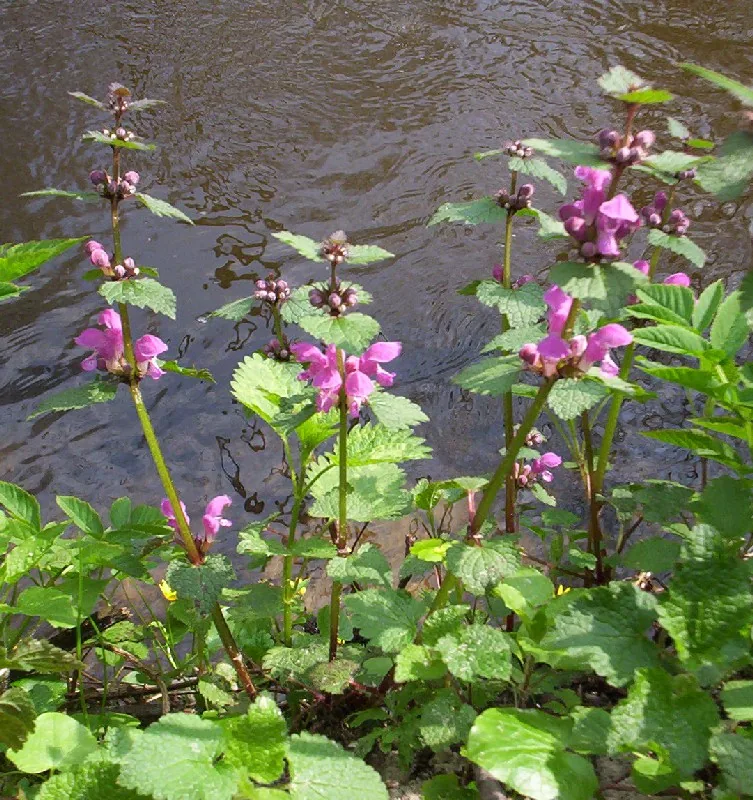
Spotted dead nettle is a low, creeping groundcover built for the shade, prized as much for its silver-patterned leaves as for the pink, mauve, or white flowers that lift above them in late spring. As a mint family member, it carries that lineage's fast, mat-forming growth. Its name misleads many gardeners, because the foliage mimics a stinging nettle yet delivers no sting whatever.
Few plants handle a difficult site this gracefully. Reaching 6 to 9 inches (15 to 23 cm) tall, it weaves into a tight carpet that covers ground beneath shrubs and along the dim north wall of a house where lawn fails. Because the stems take root as they travel, a handful of starts soon merges into one unbroken sheet of leaves.
Give it cool, moist, shaded soil and it returns months of color with next to no demand on you. Force it into hot, dry, sun-struck ground and the leaves scorch and thin. Provide the shade it prefers and the only real task that remains is restraining its keen spread inside the bed you set aside for it.
Care
The short version: part to full shade, cool and evenly moist soil that drains well, a single shearing after the flowers fade, and an edge to keep the spreading mat where you want it.
Light
Site it in part to full shade. A bit of morning or dappled sun is fine, but full sun scorches and thins the leaves, which is why this plant excels in the heavier shade where lawn grass falters.
Water
Hold the soil cool and evenly moist, irrigating about every 5 to 10 days and stepping that up through a dry spell. It will handle dry shade once established, yet the leaves brown and thin under heat stress, so never let it dry out completely when temperatures climb.
Soil
Set it in humusy, well-drained loam rich in organic matter, at a pH anywhere between 6.0 to 7.5. Its one intolerance is wet or compacted ground, where standing moisture opens the door to crown rot.
Temperature
It is exceptionally hardy, enduring anything from -40°F to 84°F (-40°C to 29°C). Cold poses no concern, though prolonged summer heat and humidity can melt the mat out in patches.
Humidity
Everyday outdoor humidity suits it, so there is no target reading. The greater priority is air movement, since stagnant, muggy air trapped among crowded leaves is what triggers leaf spot and blight.
Feeding
A modest feeder, it seldom asks for supplements. One application of balanced general-purpose fertilizer in spring covers its needs, and overfeeding only drives soft, floppy growth.
Pruning
Shear or cut the plants back hard after they bloom. That single pass strips away worn foliage, closes any bare gaps, and frequently prompts a fresh round of flowers.
Repotting
It seldom requires repotting, but a potted specimen signals the moment when the center goes bare and dead or the roots pack the container and dry out rapidly. Divide it and replant into fresh soil at that point.
Size & spacing
Each plant stays low at 6 to 9 inches (15 to 23 cm) tall yet stretches 12 to 24 inches (30 to 61 cm) across, so space them generously enough to merge into a carpet without crowding.
When to plant
Spotted dead nettle is a hardy perennial that returns reliably from zone 3 all the way to zone 8. Set it out in spring as soon as the soil is workable, watch for bloom from late spring into summer, and shear it afterward to renew the foliage through the rest of the season.
Northern hemisphere
Southern hemisphere
Typical months for a temperate climate: start earlier in warm zones, later where spring frosts linger.
- Plant: spring
- Harvest: Late spring into summer
Hardiness
USDA hardiness zones: 3–8
Temperature: down to -40°C
Troubleshooting
Almost every problem with dead nettle traces back to a poor site or excess moisture. Browning foliage typically signals conditions that are too hot and dry, while chewed holes and spotting indicate slugs or damp-weather fungus. Find the match below and correct the conditions before resorting to anything harsher.
Foliage burning at the edges with thin, bare gaps in the carpet
What you are seeing is leaf scorch, the predictable result of asking a shade plant to grow where the site runs too hot, too dry, or too bright. Add summer heat and humidity and you also risk melt-out, the collapse and thinning of whole stretches within a mass planting. Cut the stand back hard so it regenerates clean foliage, irrigate to hold even soil moisture, and shift anything sitting in a sun-baked position into shade.
Fix:
- Cut or shear plants back to stimulate fresh new foliage growth
- Increase watering to keep soil evenly moist
- Relocate or shade plants sited in hot, dry, sunny areas
Confused with the invasive yellow archangel
Gardeners often mistake spotted dead nettle for yellow archangel (Lamium galeobdolon), a different member of the genus that is genuinely invasive and carries that listing across the western US. Two traits separate them cleanly: flower color and spreading habit. Yellow archangel blooms yellow and surges outward on rooting runners, whereas spotted dead nettle flowers pink, mauve, or white and stays well-behaved. Set out Lamium maculatum cultivars and dig out any yellow archangel that turns up.
Fix:
- Identify and remove yellow archangel where present
- Choose Lamium maculatum cultivars rather than L. galeobdolon
A wandering mat that pushes past the bed line
The mechanism is simple: dead nettle travels on sprawling stems that strike roots at every node touching soil, so the carpet broadens under its own momentum. Read it as vigorous rather than thuggish, because it answers easily to a little management. Lift or trim the stems crossing the edge, drop in edging to set a firm boundary, and divide a clump that has run past the room you gave it.
Fix:
- Pull or cut back encroaching stems at bed edges
- Install edging to contain the planting
- Divide and thin overgrown stands
Torn holes and spotted foliage where the shade stays wet
Slugs are the prime culprits, rasping ragged holes through the tender leaves anywhere the shade holds moisture. That same damp, humid air sets up leaf spot and leaf blight, and aphids make occasional appearances. Deploy slug traps or bait, clip away foliage that has spotted or blighted, and thin the planting so air circulates and the leaf surfaces dry sooner.
Fix:
- Control slugs with traps or baits
- Remove and dispose of spotted or blighted foliage
- Improve air circulation and avoid overhead watering
Toxicity
Reassuring news for animal households: spotted dead nettle is not toxic. It appears on no ASPCA poison list, and the name aside, it bears no stinging hairs, so it is safe for both people and pets. A curious cat or dog that downs a large mouthful of leaves should suffer nothing worse than a passing stomach upset.
Safe for
People · Cats · Dogs · Horses · Rabbits · Livestock · Birds
Cats None
Considered safe around cats. Should a cat work through a large mouthful of foliage, expect at most a short bout of stomach upset and nothing further.
Dogs None
Carries no real hazard for dogs. A determined chewer that eats a sizeable helping of leaves may show only mild, brief digestive upset.
Horses Safe
Holds no toxicity for horses, and grazing on it has produced no reports of poisoning.
Rabbits Safe
The soft leaves are fine for rabbits to nibble, provided they do not displace the hay and greens that should anchor the diet.
Livestock Safe
Cattle, goats, and sheep graze it without trouble, since it holds none of the toxins that affect pasture animals.
Birds Safe
Presents no threat to birds. Backyard hens and wild visitors alike can peck at the leaves with no concern.
People Safe
Harmless to people, and the young leaves are in fact edible. The name notwithstanding, it bears no stinging hairs, so working with it bare-handed is perfectly fine.
Despite the name it is a dead nettle with soft, non-stinging foliage and no stinging hairs, so handling is safe; pets nibbling foliage may have mild GI upset.
Varieties
Nearly every named dead nettle is chosen for its silver foliage and varies chiefly by flower color. Below are the selections you are most likely to meet, along with one impostor to keep out of the garden.
White Nancy
Lights up the deepest shade thanks to silvery-white leaves rimmed in green and crisp white flowers.
Beacon Silver
Sends up pink flowers above wide silver leaves that brighten a shadowy corner.
Pink Pewter
Keeps the silver foliage but trades in gentler, paler pink blooms.
Purple Dragon
The most dramatic selection, lifting large purple flowers over silver-marked leaves.
Orchid Frost
Pairs frosted silver leaves with warm orchid-pink flowers.
Yellow archangel (Lamium galeobdolon)
Skip this one: it is a distinct, genuinely invasive Lamium relative bearing yellow flowers and aggressive rooting runners, listed invasive in the western US, and it is no true spotted dead nettle cultivar.
How to propagate
Increasing your dead nettle demands hardly any work, given that the plant is busy spreading and rooting by itself as it grows.
DivisionEasy
Spring · 4-8 weeks
Division is the dependable, low-effort method for increasing your stock, and spring is the time to do it. Dig an established mat, separate it by hand or knife into clumps, and set those clumps where you want fresh cover; they take hold in roughly 4 to 8 weeks. The plant shoulders much of the labor too, because its sprawling stems strike roots unaided at any node meeting the soil.
Myths
Dead nettle stings like a nettle because the name says so.
Its leaves resemble a true stinging nettle closely enough to explain the name, but the resemblance stops at the surface. As a mint-family plant, spotted dead nettle has soft foliage and no stinging hairs at all, and it bears no relation to true stinging nettle (Urtica dioica). Pick it up bare-handed without hesitation.