Ornamental · Caryophyllaceae
Carnation
Dianthus caryophyllus
Provide cool air, full sun, and sharp drainage, and the carnation returns the favor with fragrant, ruffled bloom.
Full sun
USDA 4–9
0–4 ft · 0.2–1.2 m
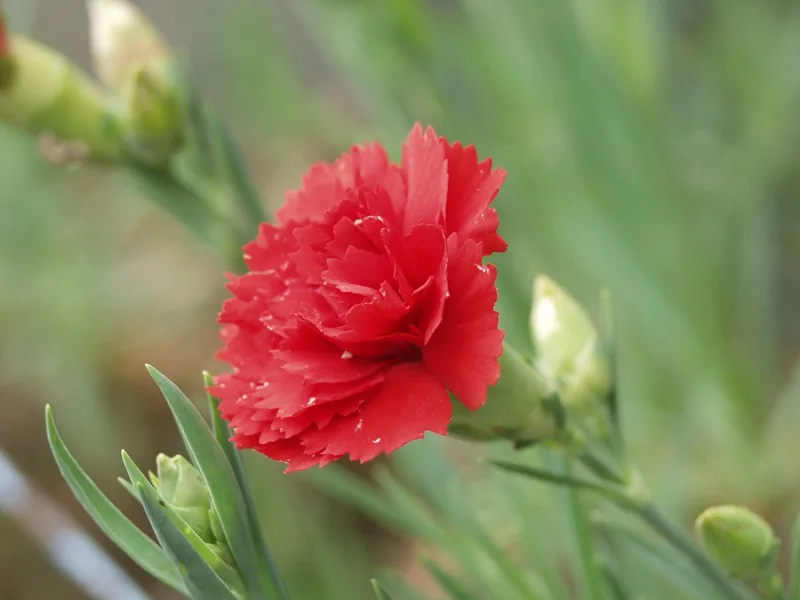
Overview
Carnations, along with the garden pinks they are related to, sit within the dianthus group, cultivated for centuries for their ruffled, clove-scented flowers. The group spans low cushions only a few inches high up to long-stemmed border types suited to cutting, giving you one form for the edge of a bed and another for the vase.
At their core these are cool-weather plants, performing best in full sun with their roots set in gritty, fast-draining soil. They favor the alkaline side, accepting a pH anywhere from 6.0 to 8.0, a preference that separates them from most of their bed companions.
Easy to grow yet short-lived, they decline after a few seasons unless you keep raising replacements. Feed them sparingly and keep their crowns dry, and they return weeks of fragrant bloom from late spring into summer.
Care
The short version: full sun, cool conditions, and gritty, well-drained soil on the neutral-to-alkaline side. Keep the soil evenly moist but never soggy, feed only lightly, and deadhead spent blooms to keep the flowers coming.
Light
Carnations need full sun, ideally six hours or more each day, to flower fully and hold themselves upright without flopping. In hot-summer areas a touch of afternoon shade is acceptable and also eases the heat they dislike.
Water
Target soil that stays evenly moist but never soggy, and irrigate through any extended dry spell. Standing wetness is the direct route to crown rot, so let the surface dry between waterings and keep the crown itself dry.
Soil
Set them in gritty, well-drained loam amended with some organic matter. Carnations are unusual in preferring neutral to slightly alkaline ground, a pH of 6.0 to 8.0, and sharp drainage matters more to them than fertility.
Humidity
Ordinary outdoor air serves them well, so there is no target to meet. Airflow matters more than humidity, because crowded, damp foliage is exactly the condition that lets rust take hold.
Feeding
Feed only lightly across the growing season and stop there. Too much fertilizer builds a floppy, gappy plant carrying weak stems instead of more flowers.
Pruning
Deadhead spent blooms to keep fresh ones forming, and pinch out the growing tips early to drive bushier growth. Once the main flush is over, shear the mat-forming pinks back to coax a light round of repeat bloom.
Size & spacing
Plants run from low cushions near 6 inches (15 cm) tall to border types reaching 4 feet (120 cm), spreading 6 to 30 inches (15 to 76 cm) wide. Give each plant room so air circulates freely and rust has no foothold.
When to plant
Carnations track the cooler part of the season. Sow seed indoors in late winter, move plants outside in spring once hard frost is past, and expect fragrant bloom from late spring through summer, extended further with steady deadheading.
Northern hemisphere
Southern hemisphere
Typical months for a temperate climate: start earlier in warm zones, later where spring frosts linger.
- Sow: Late winter to early spring, about 8 weeks before last frost
- Plant: Spring after danger of hard frost; mat-forming pinks can also be set out in early spring
- Harvest: Late spring through summer (roughly May to July), prolonged by deadheading
Hardiness
USDA hardiness zones: 4–9
Temperature: down to -34°C
Troubleshooting
The bulk of carnation problems begin at the roots or come from heat. Keep an eye on the crown, the lower stems, and the fresh growth, and you can intervene before a minor issue takes hold. Find the match below, then act while your action still counts.
Blackened, mushy stem base with the plant caving in
What you are seeing is crown or root rot, driven by soil that holds too much water, most often through a wet winter. Once the crown goes soft and dark the tissue is dead and the plant cannot recover, so lift it out and discard it. Correct the drainage and cut back on watering before anything new goes in that spot.
Fix:
- Remove and discard severely affected plants
- Improve soil drainage
- Reduce watering and avoid wet, soggy soil
Rusty orange pustules dotting leaves and stems
Those raised orange spots are rust, a fungal disease that establishes where leaves stay damp and stagnant air keeps them from drying. Strip off marked leaves the moment they appear, open up the spacing between plants so air moves through, and direct water at the soil to keep the foliage dry.
Fix:
- Remove and discard affected foliage
- Improve air circulation by spacing plants
- Avoid overhead watering to keep foliage dry
Yellowing foliage and decline through summer heat
Because carnations are intolerant of high heat, a plant that fades during a hot stretch is almost always reacting to heat stress rather than a pest or pathogen. Shield it with afternoon shade, hold the soil evenly moist through the worst of the season, and in warm regions choose heat-tolerant pinks such as the cheddar types.
Fix:
- Provide afternoon shade in hot regions
- Maintain even soil moisture during heat
- Choose heat-tolerant pinks such as cheddar pinks in warm climates
Twisted new shoots covered in tiny insects
The soft-bodied insects packed onto the buds and stems are aphids, and the sticky coating they deposit is honeydew. Knock them off with a forceful jet of water, prune away any heavily colonized shoots, and treat with insecticidal soap if they return. Hold back on feeding too, because the soft, lush growth that heavy fertilizer produces is precisely what attracts them.
Fix:
- Spray plants with a strong stream of water
- Remove heavily infested shoots
- Use insecticidal soap if needed
Toxicity
Carnations are only mildly toxic, which makes them a low-risk plant to keep at home. A curious cat or dog that chews the foliage may get a brief stomach upset, and the sap can raise a mild skin rash, yet the petals are edible enough to serve as a garnish for people. Keep pets from grazing the leaves and there is little cause for concern.
Toxic to
Cats · Dogs · Horses · Rabbits · Livestock · Birds
Safe for
People
Cats Mild
A cat that samples the leaves or flowers can drool, vomit, or develop short-lived diarrhea, and contact with the sap may raise a mild rash on the skin. These reactions stay mild and generally resolve without treatment.
Dogs Mild
Dogs show the same pattern: some vomiting or loose stool after chewing the plant, and occasionally mild skin irritation where the sap touches them. None of it is serious, though a call to the vet makes sense if the symptoms persist.
Horses Caution
No specific case of poisoning in horses has been documented, but the same mild irritant could unsettle the stomach. Keeping them off it while grazing is the prudent choice.
Rabbits Caution
There is no record of rabbits being harmed by it, yet the plant offers them no food value either, so it is better kept out of their reach.
Livestock Caution
Cattle, goats, and sheep have no documented cases of carnation poisoning, but the irritant compound could still produce mild stomach upset where they graze a stand of it.
Birds Caution
Carnations carry no flag as a bird hazard, though so little is known about their effect on birds that keeping pet birds clear of the foliage is the safer course.
People Petals safe
The petals are edible and commonly served as a garnish, so the plant presents no real danger to people. The single caveat is the sap, which can leave sensitive skin slightly irritated, so rinse your hands after extended handling.
Sap may cause mild skin irritation in sensitive people; wash hands after handling.
Helpline numbers

United States
ASPCA Animal Poison Control: (888) 426-4435 (fee applies)

United Kingdom
Animal PoisonLine: 01202 509000 (fee applies)

Australia
Animal Poisons Helpline: 1300 869 738
Varieties
Carnations and pinks exist in hundreds of forms, from tall florist types down to low fragrant mats. The few below earn a place in your memory.
Clarion
A border carnation bearing clear yellow double flowers held on sturdy upright stems above gray-silver foliage.
Bath's Pink
A mat-forming cheddar pink whose fragrant fringed soft-pink flowers withstand heat, humidity, and drought far better than most dianthus.
Firewitch
A cheddar pink valued for vivid magenta single flowers, blue-gray foliage, strong fragrance, and genuine cold hardiness.
How to propagate
Given how short-lived carnations are, keeping a supply of new plants on hand pays off, whether you divide an aging clump or root a handful of cuttings.
Stem cuttingsModerate
Take terminal cuttings in early summer · Several weeks to root
Cuttings are how you reproduce named cultivars, which do not come true from seed. Take a healthy shoot tip in early summer and set it into moist mix; over several weeks it roots into a plant genetically identical to its parent.
DivisionEasy
Early spring as new growth begins · One growing season
Since carnations are short-lived, dividing established clumps every few years keeps the planting renewed. Lift and split them in early spring as new growth begins, and the divisions root in over a single growing season.
Myths
Carnations are tough plants that thrive in hot summer climates.
The reverse holds true. These are cool-weather plants that falter under high heat, which makes them an unreliable choice for hot southern gardens. Reach for heat-tolerant pinks like the cheddar types if your summers run warm.
Feed carnations heavily and you'll get the best blooms.
Heavy feeding pushes tall, floppy stems and open gaps in the plant instead of extra flowers. A light hand at feeding gives you the sturdiest growth and the best bloom.