Tree · Sapindaceae
Bloodgood Japanese Maple
Acer palmatum
The why behind keeping a Bloodgood maple healthy, from soil moisture to leaf color.
Partial shade
Every 5–10 days
USDA 5–8
15–20 ft · 4.6–6.1 m
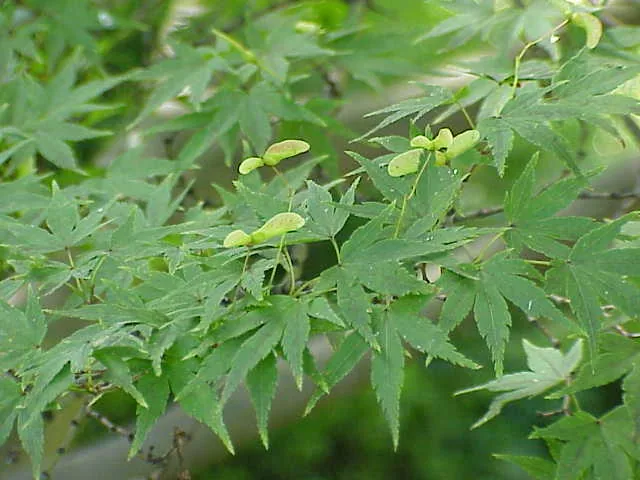
Overview
Bloodgood Japanese Maple (Acer palmatum) is an upright deciduous tree grown above all for color: it carries deep burgundy to blackish-red leaves through summer, then shifts to scarlet in fall. That color depends on light. A few hours of sun keep the reds rich, while the thin leaves still need protection from the harshest exposure to stay intact.
Expect a mature specimen to reach 15 to 20 feet (180 to 240 inches) tall and 12 to 20 feet (144 to 240 inches) wide, and to take its time getting there given a slow growth rate. That measured pace, combined with cold tolerance across USDA zones 5 to 8, makes it a long-lived perennial fixture in the temperate landscape rather than a quick screen.
The care logic is straightforward once you read the tree's biology. Thin foliage loses water fast, so the priorities are steady soil moisture, slightly acidic well-drained loam, and shelter from heat and wind. Get those right and this is a low-maintenance tree; ignore them and the leaves tell you immediately through scorched margins.
Care
The short version: Give Bloodgood Japanese Maple part shade with afternoon protection in hot climates, since its thin leaves scorch when they lose water faster than the roots resupply it. Keep the soil evenly moist, watering every 5 to 10 days and deeper in dry spells, in slightly acidic, well-drained loam at pH 5.5 to 6.5. Mulch the root zone to hold moisture and cool the roots, feed lightly in spring while avoiding excess nitrogen, and prune only when dormant in late fall to mid winter.
Light
Site this maple in partial shade, though it tolerates full sun and partial sun. The balance matters: a few hours of sun keep the burgundy pigment rich, but the thin leaves lose water quickly under intense exposure. In hot climates give it afternoon shade, when sun and heat are most punishing, to prevent the scorch that follows when transpiration outpaces the roots.
Water
Keep the soil consistently moist but never waterlogged, watering every 5 to 10 days, because this tree is not drought tolerant and its fine roots cannot mine dry soil for water. During dry spells water deeply rather than lightly, so moisture reaches the full root zone and the leaf margins do not dry out and scorch. Mulch over the roots holds that moisture and keeps them cool.
Soil
Plant in moist, organically rich, slightly acidic, well-drained loam at a pH of 5.5 to 6.5. The acidity keeps nutrients available to the roots, while the rich organic matter both feeds the tree and holds moisture against the canopy's steady water demand. Good drainage is non-negotiable, since standing water stresses the roots and invites the conditions that favor wilt.
Temperature
This is a cold-hardy tree suited to USDA zones 5 to 8, handling from -20°F to 95°F (-29°C to 35°C). It is the upper end of that range that asks for care: high heat drives the foliage to lose water faster, so pair hot sites with afternoon shade and steady soil moisture to keep the leaves from burning.
Humidity
Average humidity suits this tree, and no special raising of moisture in the air is needed. What protects the foliage in dry or hot conditions is not misting but soil moisture and wind shelter, since drying wind strips water from the leaves and pushes them toward scorch.
Feeding
Feed in spring with a balanced slow-release fertilizer or compost, applied seasonally. Go light, and avoid excess nitrogen: a flush of soft, fast new growth is exactly what aphids and scale prefer, so overfeeding trades vigor for pest pressure. Compost also builds the organic matter that helps the soil hold moisture.
Pruning
Keep pruning to a minimum, removing only dead, damaged, or crossing branches. Do this in late fall to mid winter while the tree is dormant, when there is no active growth to disrupt and the wounds are less of an entry point for stress. Avoiding root and trunk wounds at the same time lowers the risk of opening a path for Verticillium.
Repotting
Landscape trees never need repotting, but container specimens benefit from a refresh every 2 to 3 years as their roots fill the pot. Watch for roots circling the pot or escaping the drainage holes, water running straight through, and slowed growth with wilting between waterings; these mean the root mass has outgrown its soil and can no longer hold enough moisture.
Size & spacing
Allow room for a mature spread: this tree reaches 15 to 20 feet (180 to 240 inches) tall and 12 to 20 feet (144 to 240 inches) wide. Its slow growth rate means that footprint arrives gradually, but plan for the full size at planting so the canopy can develop its shape without crowding.
When to plant
Timing follows the tree's dormancy and the temperate northern hemisphere seasons. Plant in spring or fall once the danger of hard frost has passed, so roots establish in mild soil rather than fighting summer heat. The calendar below marks bloom and the ripening of samaras as well as the two planting windows.
Northern hemisphere
Southern hemisphere
Typical months for a temperate climate: start earlier in warm zones, later where spring frosts linger.
- Plant: Spring or fall, after danger of hard frost has passed
- Harvest: Reddish-purple flowers in April; red samaras ripen September-October
Hardiness
USDA hardiness zones: 5–8
Temperature: down to -29°C
Troubleshooting
Most problems on this maple trace back to water balance in thin foliage or to stress that opens the door to pests and disease. The three issues below cover the common ones: scorch from heat and dry soil, Verticillium wilt, and sap-feeding insects. Read the confirm note before acting, because the fix differs sharply depending on the cause.
Verticillium wilt clogging the water-conducting tissue
When a tree wilts and dies back on one side, suspect Verticillium, a soil-borne fungus that enters through the roots and plugs the vascular tissue that carries water upward. With its plumbing blocked, the affected branches starve for water and collapse. There is no chemical cure, so the response is sanitation and reducing stress on the rest of the tree.
Fix:
- Prune out and destroy affected branches
- Keep the tree vigorous with proper watering and avoid overfertilizing
- Improve drainage; there is no chemical cure for verticillium
Aphids and scale feeding on sap
Sticky foliage is a sign of sap-feeding insects. Aphids and scale pierce the tissue, draw out sugary sap, and excrete the excess as honeydew, which coats the leaves and feeds black sooty mold. Heavy feeding on tender new growth is what distorts it. Knock the pests back and the tree recovers, since these insects rarely kill an established maple.
Fix:
- Dislodge aphids with a strong spray of water
- Treat with horticultural oil or insecticidal soap
- Encourage natural predators such as lady beetles
Scorched leaf edges from heat and dry soil
Leaf margins brown and turn crispy when the canopy loses water faster than the roots can resupply it. Sun, heat, and drying wind pull moisture from the thin foliage, and when the soil is already dry the tissue at the edges dies first. Steady soil moisture and afternoon shelter are what keep the leaves intact.
Fix:
- Water deeply and consistently to keep soil evenly moist
- Apply mulch over the root zone to retain moisture and cool roots
- Provide afternoon shade in hot climates
- Shelter the tree from strong drying winds
Toxicity
The toxicity picture here is reassuring. Acer palmatum is not listed on ASPCA toxic-plant lists, and other maples in genus Acer, including red maple and Amur maple, are classified non-toxic to cats and dogs. The one practical caution is mechanical, not chemical: a chewed twig can splinter and cause choking or digestive upset, so discourage pets from gnawing branches.
Safe for
People · Cats · Dogs · Horses · Rabbits · Livestock · Birds
Cats Safe
No toxic response is expected; Acer palmatum is absent from ASPCA toxic-plant lists. Watch only for a splintered twig that a chewing cat could choke on.
Dogs Safe
Maples in genus Acer are classified non-toxic to dogs, so the foliage poses no poisoning risk. The one caution is chewed branches that may splinter and irritate the gut.
Horses Safe
No toxic effect is on record for this species; the only physical hazard is a splintered chewed twig rather than any poison in the leaves.
Rabbits Safe
Considered safe, with nothing toxic documented. Keep an eye out for splintered woody pieces that could lodge or upset digestion if gnawed.
Livestock Safe
No poisoning is expected from this maple. As with any chewed branch, a splinter could cause choking or mild digestive upset.
Birds Safe
Treated as safe, with no toxicity reported. The practical concern is splintering wood from chewed twigs, not the leaves themselves.
People Safe
No toxic reaction is documented for this maple. The only sensible caution is sharp splinters from broken or chewed twigs.
Although foliage is non-toxic, chewed twigs can splinter and cause choking or digestive upset, so discourage pets from chewing branches.
Varieties
Red-leaf Japanese maples are not interchangeable, and the difference comes down to how they are propagated. 'Bloodgood' is a grafted, true-to-type selection valued for holding its dark color through summer, while seed-grown forms vary and the laceleaf types take a different shape entirely. The three below show that range.
Bloodgood
An upright tree prized because it holds deep burgundy to blackish-red leaves through summer better than most red cultivars, then turns scarlet in fall and sets red samaras.
Atropurpureum
A seed-grown red-leaf form, so it varies more in color and shape from plant to plant than the grafted, true-to-type 'Bloodgood'.
var. dissectum (Tamukeyama)
A weeping laceleaf form with finely cut foliage that stays low and mounding rather than growing upright like 'Bloodgood'.
How to propagate
Propagating this cultivar is a study in why nurseries do the work. Because 'Bloodgood' will not come true from seed, grafting onto seedling rootstock is the dependable method, while softwood cuttings are possible but rarely succeed. Both options demand skill and patience.
GraftingDemanding
Late winter to early spring (bench grafting) onto seedling rootstock · Several months for the graft union to take; one or more seasons to establish
Grafting onto Acer palmatum seedling rootstock is the only way to keep 'Bloodgood' true to type, which is why every tree you buy began this way. Bench grafting runs from late winter into early spring; the union needs several months to knit, after which the young tree spends a season or more settling in. It is demanding work better left to nurseries than attempted at home.
Stem cuttingsDemanding
Early summer from softwood growth · Several weeks to months to root, with low success rates
You can try softwood cuttings in early summer, but expect disappointment. They take several weeks to months to root and most simply fail, so grafting remains the reliable choice for this cultivar.
Myths
Japanese maples must be planted in deep shade or the leaves will burn.
These trees handle full sun to part shade, and a few hours of sun actually keep the red color rich. In hot climates the real need is afternoon shade to spare the leaves from scorch, not full-day darkness.
Japanese maple foliage is poisonous to pets.
Acer palmatum appears on no ASPCA toxic-plant list, and maples across genus Acer are treated as non-toxic to cats and dogs. The only real hazard is a chewed twig that splinters, not the leaves.