Ornamental · Dryopteridaceae
Autumn Fern
Dryopteris erythrosora
Sited in moist shade, the autumn fern opens each season with copper-red new fronds.
Partial shade
Every 5–7 days
USDA 5–9
18–30 in · 45–76 cm
Overview
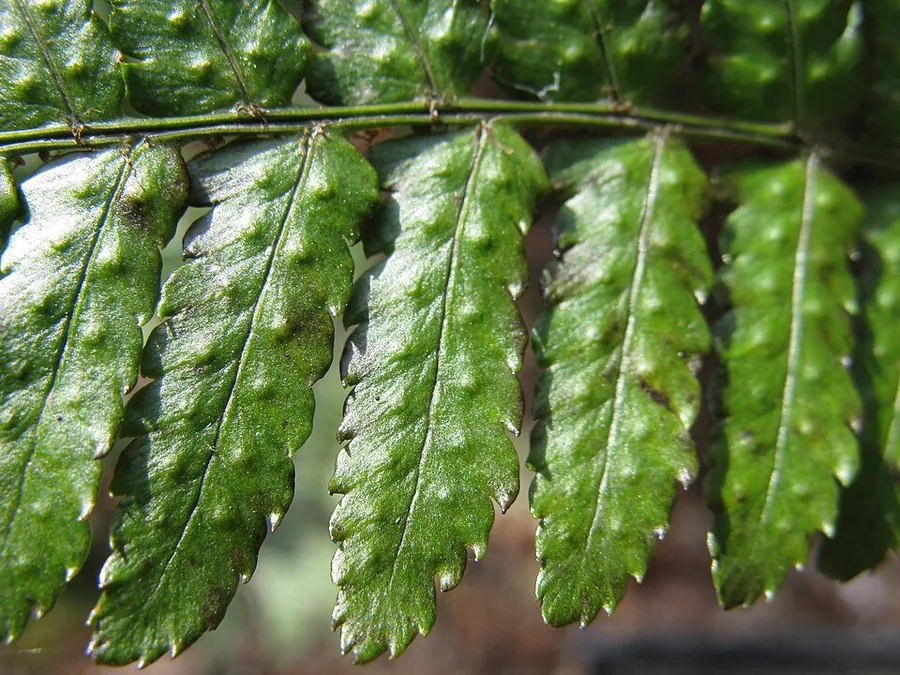
The autumn fern is a durable East Asian woodland species grown chiefly for the copper-red pigmentation of its emerging fronds. Those fronds break dormancy bronze to orange-red in spring, then darken to a glossy green as chlorophyll fills in over the season. The clump holds its architecture through cold and remains evergreen at the milder end of its range, so the planting reads furnished year round.
Its reputation for being easy rests on a narrow set of requirements. Supply the shade and consistent moisture that match its woodland-floor origin and little else is asked of it, and an established clump withstands dry shade and short droughts more readily than most ferns because its rhizome stores reserves. Deer typically pass it by, which adds to its dependability along a woodland edge.
One trait warrants assessment before planting: the species advances by creeping underground rhizomes and can colonize beyond its intended footprint. North Carolina Extension flags it as potentially weedy, so consult regional guidance before introducing it to the landscape.
Care
The short version: part to full shade in rich, humusy soil held at even moisture. Irrigate through the first season to establish the root system, clear spent fronds in late winter, and the plant is largely self-sufficient thereafter.
Light
Site it in part to full shade, replicating the dappled light of its woodland-floor habitat. It accepts morning sun, but harsh afternoon exposure scorches the fronds unless the soil stays reliably moist, because the higher light load drives transpiration the roots cannot meet under drought.
Water
Hold the soil at even moisture, particularly through the first growing season while the root system establishes. A cycle of every 5 to 7 days suits most positions, and once anchored the fern endures short dry spells and dry shade better than most because the rhizome buffers the shortfall.
Soil
Grow it in humus-rich, well-drained loam with a high organic fraction. A slightly acidic pH of 5.0 to 6.5 is optimal, and abundant leaf mold or compost holds moisture in the root zone while preserving the drainage that prevents suffocation.
Temperature
It is markedly cold-hardy, withstanding winter lows to -20°F (-29°C) and summer warmth to roughly 86°F (30°C). That tolerance spans USDA zones 5 through 9, and it persists as an evergreen toward the warmer end of the range.
Humidity
Ambient humidity of 40% to 70% maintains frond condition. Ferns generally suffer in dry air, so a shaded, sheltered position over moist soil supports it more effectively than targeting any fixed humidity figure, since the microclimate governs the leaf boundary layer.
Feeding
It is a light feeder with modest nutrient demand. A spring topdressing of compost or leaf mold supplies it adequately, or a single balanced slow-release application as growth resumes meets the need without forcing soft growth.
Pruning
Maintenance pruning is minimal. In late winter to early spring, ahead of the new fronds unfurling, remove tattered, old, or winter-damaged fronds so the emerging croziers have unobstructed space to expand.
Repotting
For container culture, repot every 2 to 3 years, or sooner once roots protrude from the drainage holes and the medium dries abnormally fast. A rhizome crowding and lifting at the surface is a further indication the root mass has outgrown its volume.
Size & spacing
A mature clump reaches 18 to 30 inches (45 to 76 cm) in height with a spread of 24 to 35 inches (60 to 90 cm). Allow for that footprint at planting, and account for the rhizome's capacity to extend the colony over time.
When to plant
Because the autumn fern neither flowers nor sets a harvest, planting is the only timing decision the gardener makes. Establish it in spring once frost has passed, or in early autumn while residual soil warmth still allows the roots to anchor before dormancy.
Northern hemisphere
Southern hemisphere
Typical months for a temperate climate: start earlier in warm zones, later where spring frosts linger.
- Plant: Spring after last frost, or early autumn
Hardiness
USDA hardiness zones: 5–9
Temperature: down to -29°C
Troubleshooting
Nearly every disorder in this fern registers in the fronds, and the great majority resolve to excess light, wind exposure, or a moisture imbalance at the roots. Diagnose from the pattern the fronds present and the correction usually follows directly. Match the symptom below and intervene before further fronds decline.
Marginal scorch and bleaching on exposed fronds
Bleached or browning frond margins indicate sun scorch, and it almost always pairs with dry soil because the two stresses compound: strong afternoon light raises transpiration faster than dry roots can resupply water, so the thinnest margin tissue dies back first. Shift the plant into deeper shade or screen the harsh exposure, then water deeply and mulch so the soil holds moisture between waterings. Cut the worst fronds out to redirect the crown's energy into fresh growth.
Fix:
- Relocate or shade plants receiving harsh afternoon sun
- Water deeply and mulch to retain soil moisture
- Trim badly damaged fronds to encourage fresh growth
Uniform frond yellowing with general decline
Generalized chlorosis across the whole plant signals a moisture problem at the roots, and it presents from either extreme. Waterlogging excludes oxygen from the root zone and the roots suffocate, while repeated drying kills the fine feeder roots outright, and both leave the crown unable to supply the fronds, so confirm which condition applies before correcting it. Amend with organic matter or lift the fern clear of standing water to restore drainage, then hold the soil at even moisture through a consistent routine.
Fix:
- Improve drainage by adding organic matter or relocating from standing water
- Establish a consistent watering routine to keep soil evenly moist
Frond margins shredded on the wind-exposed flank
Tearing concentrated on one side of the clump is mechanical damage from strong, drying wind, which abrades the thin frond margins and accelerates moisture loss through the cut edges. The diagnostic clue is its placement on the windward side with no discoloration or pest evidence to accompany it. Remove the abraded fronds and relocate the plant behind a windbreak or into a sheltered woodland pocket, where still air keeps the delicate foliage intact.
Fix:
- Remove damaged fronds
- Provide a sheltered planting position or windbreak
Toxicity
No source documents this fern as toxic, and its close relatives such as Boston fern hold non-toxic listings, which is encouraging context. The same record, however, does not affirmatively confirm this exact species as safe, so the accurate position is that the data is incomplete. Until it is resolved, exclude pets, livestock, and children from chewing the fronds as a measured precaution.
Toxic to
Cats · Dogs · Horses · Rabbits · Livestock · Birds · People
Cats Caution
No published source identifies this fern as toxic to cats, and congeneric true ferns such as Boston fern carry a non-toxic listing. The caution stands because the species itself remains unverified: a cat that chews the fronds may drool or vomit briefly, so exclude it from access until the record clears the plant.
Dogs Caution
The literature records no canine toxicity, and related shield ferns are classed non-toxic. Mechanical and fiber-related irritation can still follow ingestion of any fern, so a dog that chews the fronds may show a mild gastric upset, which justifies discouraging the behavior.
Horses Caution
No source resolves this fern's status for horses in either direction. Absent that confirmation, exclude grazing horses from the planting and monitor for drooling or lethargy if any is consumed.
Rabbits Caution
No toxicity entry extends to rabbits, leaving the species unverified rather than cleared for them. Withhold it entirely, and regard a chewed frond as cause to observe the animal.
Livestock Caution
Cattle, goats, and sheep have no documented response to this fern, favorable or otherwise. Treat that silence as grounds to fence the planting off from grazing stock rather than as evidence of safety.
Birds Caution
The record offers no data on avian tolerance of this fern. Keep pet and backyard birds away from the fronds pending a reliable assessment.
People Caution
No part of this fern is documented as edible, and no source endorses it as food. Prevent children from chewing the fronds, and do not classify it among wild edibles.
No documented toxicity, but no confirmed safety data for this exact species; discourage pets and children from chewing the fronds as a general precaution.
Helpline numbers

United States
ASPCA Animal Poison Control: (888) 426-4435 (fee applies)
Poison Control: (800) 222-1222



Canada
Poison Centres: 1-844-764-7669
Varieties
A small number of named selections accompany the typical species, each diverging in coloration or growth habit.
'Brilliance'
This selection flushes its new spring fronds in a more saturated red than the typical species and retains that pigmentation further into the season.
var. prolifica
A narrow, finely divided form that produces bulbils, or small plantlets, along the rachis, giving it a vegetative route to spread in addition to spores.
How to propagate
The autumn fern propagates readily, and dividing an established clump is by a clear margin the fastest means of increase.
DivisionEasy
Spring or early autumn · 1 to 2 growing seasons
Division is the most reliable method because it carries intact crowns and roots into each new plant. Working in spring or early autumn, lift an established clump and separate it into sections that each retain roots and fronds, allowing one to two growing seasons for the divisions to root out and bulk up. Spore propagation from the maturing sporangia on the frond undersides is also possible, but the gametophyte stage makes it a markedly slower and more exacting process.
Myths
The common name refers to fronds coloring copper during autumn.
The coppery bronze to orange-red pigment develops on the emerging fronds at the spring flush, then resolves to a glossy deep green as the season matures. The name references the spring color, not autumn foliage. The genuinely autumnal feature is the ripening of the orange-red spores on the frond undersides.
Ferns as a group are poisonous to both cats and dogs.
Numerous true ferns within the same family, including Boston fern and sword fern, hold non-toxic listings from the ASPCA. No source, however, confirms the status of this exact species, so prudence dictates excluding pets from the fronds rather than extrapolating from its relatives.