Houseplant · Araceae
Velvet Cardboard Anthurium
Anthurium clarinervium
The velvety, white-veined leaves are the draw, and they hold up only when the plant gets the warmth, humidity, and disciplined watering its epiphytic roots evolved to expect.
Bright indirect
65–85°F · 18–29°C
USDA 11–12
1–4 ft · 0.3–1.1 m
Overview
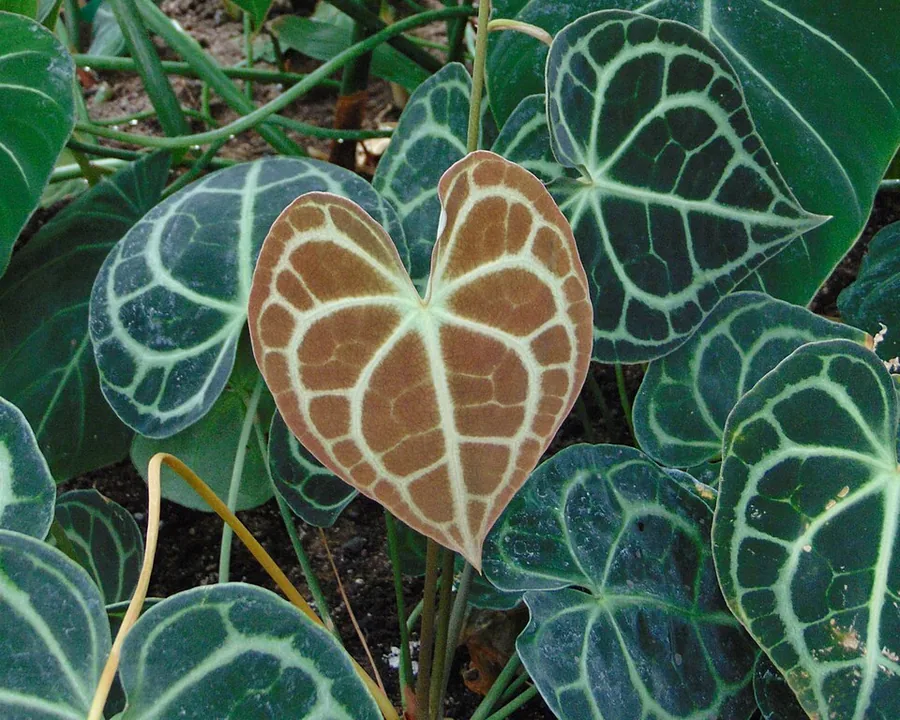
The velvet cardboard anthurium is cultivated for foliage rather than bloom. Each heart-shaped blade is thick and rigid, much like cardboard, presenting a deep, velvety green surface laced with pale, almost white veins. The species originates in the limestone hills of Chiapas in southern Mexico, where it grows as an epiphyte, anchoring to rock and bark rather than rooting into deep soil, and that habit explains the cultural preferences described below.
Growth is slow and the plant is demanding. Mature specimens stay compact at 1 to 3.5 feet (30 to 107 cm) tall with a restrained spread, which suits a bright shelf or table over a floor position. Because its roots and foliage developed in an airy, humid, dappled habitat, the plant tolerates dry air, waterlogging, and direct sun poorly, and it signals each stress promptly on the leaves.
Match its native conditions and it produces one new leaf after another, each somewhat larger than the last. Manage it as an epiphyte confined to a pot, supply bright indirect light and humid air, and it persists as a long-lived houseplant.
Care
The short version: bright indirect light, a coarse and fast-draining medium, humidity above 50%, and steady warmth meet its needs. Water thoroughly, then let the top half of the pot dry before the next application.
Light
Supply bright, indirect light for most of the day. The plant persists in medium indirect light at a reduced pace, but direct sun scorches the foliage and produces pale, bleached patches that do not recover, because the velvety surface absorbs more than it can dissipate.
Water
Water thoroughly, then allow the top half of the pot to dry before watering again. The roots require oxygen as much as moisture, so a continuously wet medium is the principal hazard. Saturated soil is the fastest route to root rot and loss of the plant.
Soil
Use a coarse, fast-draining medium formulated for epiphytes, combining peat moss, pine bark, and perlite to retain air around the roots. The species prefers an acidic profile near pH 6.0 or slightly lower, and a heavy, dense potting soil restricts air and smothers the roots.
Temperature
Hold the plant in the warm, stable range of 65°F and 85°F (18°C to 29°C). It has no tolerance for frost or cold drafts, so position it clear of chilly windows and doorways through winter.
Humidity
Humidity is the most commonly underprovided factor. The plant requires humidity above 50%, and dry indoor air manifests as brown, crispy leaf tips where transpiration outpaces uptake. Set the pot on a tray of moist gravel, group it with other plants, or run a humidifier nearby.
Feeding
The genus requires very little fertilizer. A dilute, balanced houseplant fertilizer during the spring and summer growth suffices, and excess feeding does more harm than benefit.
Pruning
Pruning is minimal. Remove any leaf that yellows, browns, or sustains damage, cutting it at the base to keep the plant tidy and redirect resources to healthy tissue.
Repotting
Repot only once the roots have filled the pot, which for so slow a grower is infrequent. When repotting, advance a single pot size into fresh, coarse medium so the roots do not sit in a large, slow-draining volume of wet soil.
Size & spacing
Indoors the plant reaches 1 to 3.5 feet (30 to 107 cm) in height with a compact spread of 9 to 12 inches (23 to 30 cm). That restrained footprint suits a bright tabletop or shelf rather than the floor.
Troubleshooting
Nearly every disorder in this anthurium reduces to water, air, or light. Because the foliage registers stress first, inspect the leaves on a regular schedule. Identify the pattern below and correct the underlying condition before a minor symptom becomes terminal.
Wilting despite a saturated medium
Drooping in wet soil points to root rot, because waterlogging excludes the air the roots require and overwatering or a slow-draining mix lets it persist. Reduce watering, lift the plant, and excise any root that is brown, soft, or mushy. Repot into a coarse, fast-draining epiphytic medium and let it dry slightly between waterings so the roots can breathe.
Fix:
- Reduce watering frequency
- Repot into a coarse, very well-drained epiphytic/soilless mix
- Remove rotted roots
Photobleached patches on sun-struck leaves
Direct sun overloads the velvety foliage and scorches it, leaving pale, bleached patches where the tissue has burned. Relocate the plant to bright but indirect light and shade it from the harsh midday sun. The damaged tissue will not regenerate, but subsequent growth emerges clean once the light intensity suits the leaf.
Fix:
- Move to bright, indirect light
- Shield from direct midday sun
Honeydew, webbing, or stippling on the foliage
Anthuriums host mealybugs, spider mites, scale, whiteflies, aphids, and thrips, sap feeders whose activity leaves sticky honeydew, fine webbing, or stippled, distorted new growth. Isolate the plant from the rest of the collection, wash the insects off, and treat with insecticidal soap or horticultural oil, repeating as the label directs. Routine inspection of new plants and foliage interrupts a population before it builds.
Fix:
- Isolate the plant
- Wash off pests and treat with insecticidal soap or horticultural oil
- Repeat treatments per product label
Browning, crisp tissue at the leaf margins
Low humidity drives this, since the foliage loses water at the margins faster than the roots replace it, and the plant wants humidity above 50%. Raise ambient moisture with a tray of moist gravel, a grouping of plants, or a humidifier. Site it away from heating and cooling vents, whose moving, dried air accelerates the loss.
Fix:
- Raise humidity (humidity tray of moist gravel, grouping plants, or a humid enclosure)
- Avoid placement near heating/cooling vents
Toxicity
Every part of the plant is poisonous if chewed or swallowed. As with other members of the arum family, the tissue holds insoluble calcium oxalate crystals that mechanically sting the mouth and throat on contact. Keep it away from pets and children, and wash your hands after handling it, since the sap can irritate skin.
Toxic to
Cats · Dogs · Horses · Rabbits · Livestock · Birds · People
Cats Moderate
When a cat bites a leaf, the released calcium oxalate crystals burn the mouth at once, producing swelling of the lips, tongue, and throat, heavy drooling, vomiting, and difficulty swallowing.
Dogs Moderate
The crystals embed in a dog's oral tissue on the first chew, which triggers drooling, pawing at the face, vomiting, and a sore, swollen tongue and lips.
Horses Moderate
Horses develop the same painful irritation of the mouth and throat, with swelling and drooling that impairs swallowing, though the species does not vomit.
Rabbits Toxic
The same calcium oxalate crystals render the plant unsafe for rabbits, so keep it well beyond the reach of any rabbit allowed to roam the house.
Livestock Toxic
Grazing animals such as goats and sheep suffer too, as the crystals inflame the mouth and gut. The plant should remain out of their reach.
Birds Toxic
Pet birds face the same hazard, since a single inquisitive nibble delivers the caustic irritation to a small, sensitive mouth.
People Caution
No part of the plant is edible, and chewing it burns the mouth and throat, while contact with the sap can leave skin red and itchy, so wash your hands after handling it and keep it away from young children.
Sap may cause contact dermatitis; wash hands after handling and keep out of reach of pets and children
Helpline numbers

United States
ASPCA Animal Poison Control: (888) 426-4435 (fee applies)
Poison Control: (800) 222-1222



Canada
Poison Centres: 1-844-764-7669
How to propagate
Propagation proceeds by seed or by division of an established clump. Neither is rapid, and the approved sources provide little species-specific detail, so treat both routes as genus-level guidance.
SeedModerate
Not specified in approved sources · Unknown
Seed propagation is feasible for this anthurium but rewards patience and a careful hand. Approved sources record seed as a genus-level method yet specify no timing for the species, so the grower should expect to calibrate the schedule empirically.
DivisionModerate
Unknown · Unknown
Division is the conventional means of increasing foliage anthuriums of this type. Lift a mature specimen, separate a section that carries its own roots, and pot it on, treating the method as provisional since the approved sources document no detailed protocol.
Myths
Anthuriums need to be kept constantly wet because they are tropical.
Tropical origin does not imply waterlogging. These plants are epiphytes that anchor to rock and bark in habitat, so their roots evolved to need air and a coarse, fast-draining medium. Water thoroughly, then let the medium dry slightly before the next application, because constant saturation rots the roots faster than any other error.