Vegetable · Dioscoreaceae
Yam
Dioscorea
Given sustained warmth, a tall support, and a full 8 to 11 month season, Dioscorea channels its energy into heavy, storable tubers.
Full sun
Every 5–7 days
68–86°F · 20–30°C
240–330 days
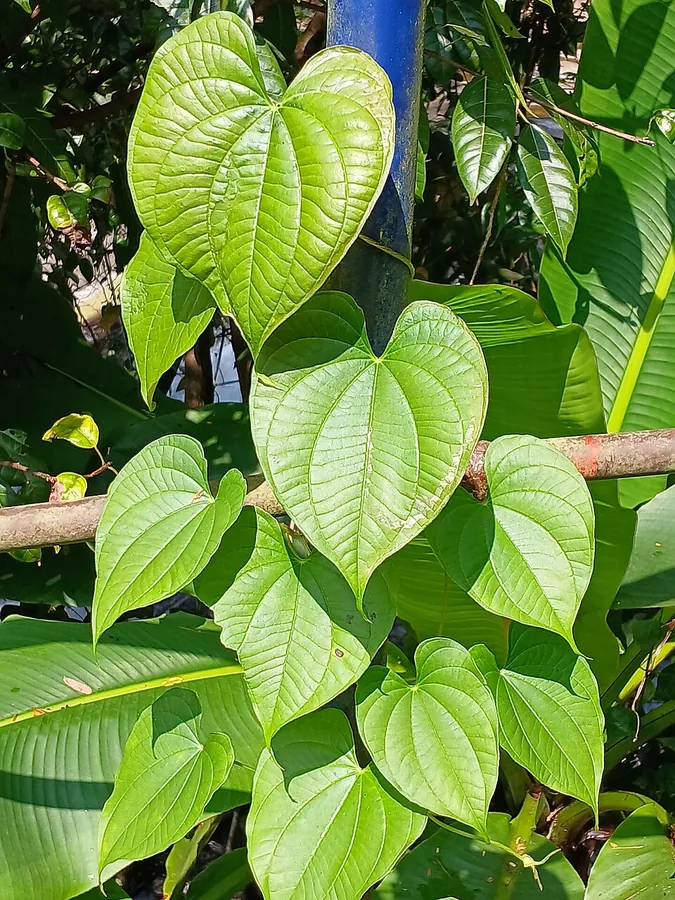
Overview
The true yam is a twining tropical vine of the genus Dioscorea, cultivated for the starchy tubers it lays down underground and grown across Africa, Asia, and the Caribbean for thousands of years. Despite the shared common name, it sits in the family Dioscoreaceae and shares no lineage with the sweet potato. West and Central Africa account for the great majority of world production, much of it white Guinea yam.
This is a vigorous, nutrient-demanding climber. The vines ascend to 7 feet and considerably higher given adequate support, which is why a tall, sturdy trellis is installed at planting rather than added later. The tubers themselves can reach remarkable size, the winged yam occasionally exceeding 100 pounds, though cultivated kitchen types are far smaller.
Yield depends on heat and a long, uninterrupted season. As a warm-season crop the plant needs 8 to 11 months to mature its tubers, which restricts it to frost-free climates or an indoor head start where the season is short. The cooked tuber is a nutritious staple, but it must never be consumed raw.
Care
The short version: full sun and warm soil drive the canopy that feeds the tubers, and a tall trellis set at planting supports the climb. Hold the deep, loose, well-drained soil evenly moist across the season, supply monthly potassium-rich feed, then reduce watering as the vines senesce toward harvest.
Light
Full sun is optimal, because the photosynthetic canopy it supports is what drives the long climb and the sizing of the tubers below. Partial shade is tolerated, but reduced light limits both vine vigor and final yield.
Water
Maintain evenly moist soil throughout the long growing season, on the order of every 5 to 7 days, while the vines and tubers are actively bulking. Taper the water as the foliage yellows toward harvest, and avoid waterlogging, which rots the tubers.
Soil
Grow in a deep, loose, well-drained sandy loam high in organic matter; the open structure lets the tubers expand without forking against obstructions. Target a slightly acid pH of 5.5 to 6.5, and on heavier ground form mounds or ridges to improve drainage.
Temperature
As tropical plants, yams perform between 68°F and 86°F (20°C to 30°C) and have no frost tolerance. Because growth stalls in cold ground, the soil must be thoroughly warm before setts are planted.
Humidity
High humidity of 60% to 90% matches the plant's tropical origins. That same moisture, combined with a dense canopy, favors anthracnose, so pair it with generous spacing and open trellising to keep the foliage drying quickly.
Feeding
Feed monthly through the growing season with a balanced fertilizer high in potassium, the nutrient most directly tied to tuber development. Consistent supply across the long season supports steady bulking better than a single concentrated application.
Pruning
Pruning is minimal. Train the twining vines onto a tall, sturdy trellis or stakes installed at planting, then limit intervention to removing dead or diseased foliage and keeping the vines clear of the ground, which reduces disease contact.
Size & spacing
On support the vines extend 7 to 30 feet (2 to 9 m), while each plant occupies roughly 2 to 4 feet (60 to 120 cm) at the base. Allotting that spacing improves air movement through the canopy and lowers disease pressure.
When to plant
Yam development is governed by temperature across a long season. In short-summer regions, pre-sprouting the setts under warmth advances them before transplanting, which should wait until frost has passed and soil temperatures have risen. Tubers reach harvest 8 to 11 months on, signaled by yellowing and dieback of the vines.
Northern hemisphere
Southern hemisphere
Typical months for a temperate climate: start earlier in warm zones, later where spring frosts linger.
- Sow: In cool climates, pre-sprout seed-tuber pieces (setts) in warm, shaded conditions about 4-6 weeks before planting out.
- Plant: Plant setts outdoors after all danger of frost once soil is warm (roughly mid-to-late spring); install a tall trellis or stakes at planting time.
- Harvest: Harvest tubers 8-11 months after planting, when the vines yellow and die back.
Hardiness
USDA hardiness zones: 9–11
Temperature: down to -7°C
Troubleshooting
Yam problems concentrate in two places: foliar disease under humid conditions and tuber defects revealed at harvest. Because both are largely driven by moisture and soil structure, early leaf intervention and correct soil preparation prevent most losses. Match the symptom below and act while the response still alters the outcome.
Dark lesions and blight advancing up the foliage
This is yam anthracnose, caused by Colletotrichum and the most damaging foliar disease of water yam, which establishes where warm, wet conditions coincide with prolonged leaf wetness in a dense canopy. Lesions progress from the lower foliage upward and can extend into the stems. Remove severely affected leaves, increase airflow through wider spacing and orderly trellising, and rely on tolerant cultivars and clean planting material to limit its spread.
Fix:
- Remove and destroy badly infected foliage
- Improve airflow by spacing and tidy trellising
- Plant tolerant cultivars and apply an appropriate fungicide where warranted
Small, forked, or rotted tubers at harvest
Deformed or rotting tubers trace back to wet or compacted ground, at times compounded by root-knot nematodes feeding on developing roots. Saturated soil rots the flesh, while stony or shallow soil physically forks and distorts it. Cultivate in deep, loose, well-drained mounds, harvest as soon as the vines die back, and cure the tubers in dry, airy conditions before storage.
Fix:
- Harvest promptly once vines die back and cure tubers in a dry, airy place
- Discard rotted tubers
- Rotate out of infested ground and improve drainage before replanting
Perforated foliage with sap-feeding pests on stems
Ragged, holed leaves indicate leaf-feeding beetles, whereas clusters in the leaf axils are mealybugs or soft scale withdrawing sap. Examine the leaf undersides and stem joints to determine which is present. Dislodge light infestations by hand or with water, treat persistent ones with insecticidal soap, and maintain plant vigor so damage is tolerated.
Fix:
- Hand-pick or hose off light infestations
- Treat persistent outbreaks with insecticidal soap or an appropriate insecticide
- Encourage natural predators
Toxicity
The cooked tuber is a safe dietary staple, but the raw tuber is not. Raw flesh contains bitter saponins and skin-irritating crystals, and wild or bitter species additionally carry the toxic alkaloid dioscorine. Cook every yam before eating, keep raw tubers and trimmings away from pets and children, and wash hands after handling cut raw flesh, which can irritate skin.
Toxic to
Cats · Dogs · Horses · Rabbits · Livestock · Birds
Safe for
People
Cats Caution
Ingesting the raw tuber or a length of vine can leave a cat drooling and off its food for a period, owing to the bitter saponins and irritant crystals. Only small amounts of cooked yam are appropriate to offer.
Dogs Caution
Chewing the raw tuber or foliage can produce mild drooling and gastrointestinal upset, as the raw flesh carries bitter saponins and irritant crystals.
Horses Caution
The raw tuber and vines are best kept inaccessible; a horse that grazes them may develop mild digestive upset.
Rabbits Caution
Raw yam is too saponin-rich and irritant for a rabbit's digestive tract, so confine it to its usual forage and exclude tubers and foliage from the hutch.
Livestock Caution
Cattle, goats, and sheep may browse the foliage or stray raw tubers, which can cause transient digestive upset, more pronounced with bitter wild types.
Birds Caution
Poultry can react to raw tuber scraps and peelings, so exclude trimmings from the run and cook any material offered to them.
People Cooked tuber safe
Cooked yam is a nutritious staple consumed worldwide. The tuber must never be eaten raw; bitter or wild types require leaching and thorough cooking, and hands should be washed after handling cut raw flesh, which can irritate skin.
Always cook yams before eating and never eat the raw tuber. Wild and bitter yams contain dioscorine and may need soaking/leaching plus long cooking to be safe. Handling cut raw tubers can irritate skin.
Helpline numbers

United States
ASPCA Animal Poison Control: (888) 426-4435 (fee applies)
Poison Control: (800) 222-1222


Canada
Poison Centres: 1-844-764-7669
Varieties
Yam denotes a genus of cultivated edible species rather than a set of horticultural cultivars. The species below are the ones most often encountered in cultivation and trade.
Dioscorea alata (water / winged / greater yam)
The most widely cultivated yam worldwide, identifiable by its squarish, winged stems and very large tubers whose flesh ranges from white to purple.
Dioscorea rotundata (white Guinea yam)
The principal dietary staple of West and Central Africa, the region responsible for the great majority of global yam production.
Dioscorea esculenta (lesser yam)
A spiny vine bearing smaller, tender tubers with a sweeter flavor than the larger yam species.
Dioscorea bulbifera (air potato)
Cultivated chiefly for the aerial bulbils produced along its vines, though many forms are bitter and toxic, and it has become invasive in the southeastern US.
How to propagate
Yam is propagated vegetatively from tuber material rather than from seed, so a clean, disease-free stock of planting tubers is the foundation of a healthy crop.
Bulbs & cormsModerate
Spring, after frost danger has passed and soil is warm · 3-6 weeks to sprout
Yams are established from setts, sections of seed tuber or small whole tubers of roughly 100 to 300 grams, set into warm spring soil once frost has passed. Pre-sprouting under warm, shaded conditions accelerates emergence, and setts require about 3 to 6 weeks to sprout.
Bulbs & cormsModerate
Spring · 3-6 weeks to sprout
Certain species, notably D. alata and D. bulbifera, also produce aerial bulbils in the leaf axils. These can be collected and planted in spring as small tubers, sprouting on the same 3 to 6 week schedule.
Myths
Yams and sweet potatoes are the same plant.
The two belong to entirely separate families: the true yam is a Dioscorea in the Dioscoreaceae, while the sweet potato is Ipomoea batatas in the morning glory family. Compounding the confusion, most produce marketed as "yam" in US supermarkets is actually sweet potato.
A yam tuber can be eaten raw like a carrot.
Raw yam contains bitter saponins and skin-irritating crystals, and wild or bitter species carry the toxic alkaloid dioscorine. Cooking is mandatory before consumption, and some wild types additionally require soaking and leaching before they are safe to eat.