Ornamental · Primulaceae
Primrose
Primula vulgaris
Sited in cool shade with steady moisture, primrose opens among the first blooms of the temperate spring.
Partial shade
Every 2–4 days
USDA 4–8
3–6 in · 8–15 cm
Overview
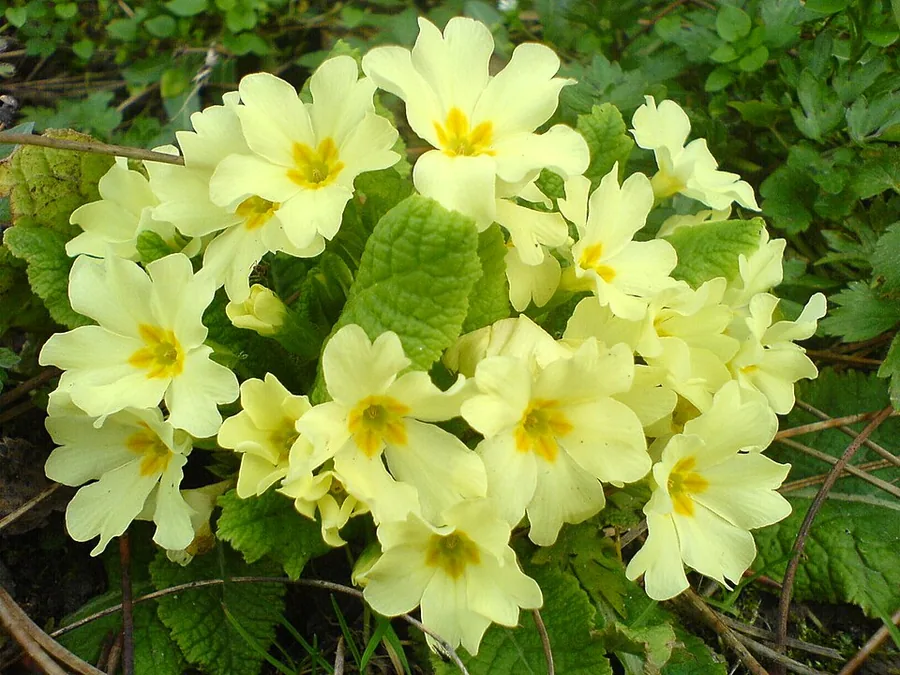
Primula vulgaris flowers early because it completes much of its growth cycle before summer, breaking into bloom in early to mid spring. The plant holds a low rosette of wrinkled leaves and lifts short flowering stalks straight from that basal crown. Its wild coloring is pale yellow, while selection has extended the garden strains across nearly the full spectrum, which explains their heavy presence in early-season sales.
As a cool-weather perennial, primrose is adapted to shade and moisture rather than heat, so it performs under a tree canopy, against a north wall, or in a damp pocket that stays cool. Its cold hardiness runs from zone 4 through 8, which lets it overwinter through hard frosts, but its low heat tolerance is the limiting factor once summer temperatures climb.
In a suitable site the plant is undemanding, provided its two core needs are met: a soil kept moist and rich, and periodic division to relieve crowding. Meet those and it strengthens season to season. Placed in hot, dry ground, it loses vigor, because the conditions run directly counter to its cool, moist native preference.
Care
The short version: grow primrose in cool partial shade and a rich, evenly moist soil, apply one spring feeding as growth resumes, and divide the clumps every few years to relieve the crowding that suppresses flowering.
Light
Primrose is adapted to partial shade, and full sun overexposes the foliage, scorching leaves and shortening the flowering period. It tolerates full shade and limited morning sun, but performs best under the filtered light of a deciduous canopy, where light is ample in early spring yet moderated later.
Water
The root system has no tolerance for drought, so the soil must stay evenly moist; watering every 2 to 4 days in warm weather sustains that state. A spring mulch reduces surface evaporation and insulates the roots, both of which help hold the moisture the plant depends on.
Soil
Grow primrose in an organically rich, well-drained loam that retains moisture without waterlogging, since the plant needs constant moisture yet rots in standing water. Incorporating compost before planting raises both fertility and water-holding capacity, which lean or sharply drained soils lack.
Temperature
Cold is not the constraint here: the plant is hardy to -29°F (-34°C) and stays vigorous below 75°F (24°C). Heat is the limit, because sustained warmth above its comfort range induces decline, so shade and shelter buffer the summer temperatures that shorten its life.
Humidity
Ambient outdoor humidity is adequate, and no target range applies. Soil moisture governs performance far more than air humidity, while open airflow around the crown lowers the localized humidity that favors the mold and rot to which primrose is susceptible.
Feeding
A single spring application at the resumption of growth meets the plant's nutrient demand for the season. Use a balanced fertilizer or compost worked into the soil; because growth and flowering concentrate in spring, that one feeding supplies the bloom and carries the plant afterward.
Pruning
Deadheading removes spent flowers and keeps the plant tidy, and clearing tattered or diseased foliage reduces inoculum for disease. Dividing after bloom in spring serves a dual function, grooming the plant while renewing crowns that have begun to congest.
Repotting
Crowns thicken and congest over time, and the exhausted center flowers poorly as competition rises. Lifting and dividing every 2 to 3 years in spring after flowering resets that decline, splitting the spent clump into vigorous, well-spaced pieces.
Size & spacing
Mature dimensions are small, 3 to 6 inches (8 to 15 cm) in height and 3 to 9 inches (8 to 23 cm) in spread. That compact habit suits close spacing as edging or shade groundcover, where adjacent rosettes merge into a continuous low layer.
When to plant
Primrose is keyed to the cool part of the season. Sow in late winter, since the seed germinates slowly and benefits from a chilling period, transplant in spring once hard frost has passed, and expect bloom in early to mid spring, ahead of the summer heat that ends its active phase.
Northern hemisphere
Southern hemisphere
Typical months for a temperate climate: start earlier in warm zones, later where spring frosts linger.
- Sow: Late winter (seed can be slow and benefits from a cold/chilling period)
- Plant: Spring, after frost danger eases, into cool moist soil
- Harvest: Early to mid spring (around April)
Hardiness
USDA hardiness zones: 4–8
Temperature: down to -34°C
Troubleshooting
Nearly every primrose problem stems from the cool, damp, shaded conditions the plant requires, because those same conditions favor slugs, root-rotting pathogens, and gray mold. Diagnose from the leaves, flowers, and crown early, and intervene before the damage compounds.
Wilting and collapse from rotted roots and crown
Waterlogged soil drives root rot, and the cool, damp, crowded conditions that follow allow gray mold to colonize the crowns. Roots that have gone soft and brown will not recover, so remove and discard those plants. Correcting drainage and increasing spacing lowers root-zone saturation and canopy humidity, which checks further spread.
Fix:
- Remove and discard severely affected plants
- Improve drainage and avoid waterlogging
- Increase spacing and airflow to reduce humidity around foliage
Ragged feeding holes in leaves and flowers with slime trails
Slugs and snails produce this damage, and they proliferate in precisely the cool, moist shade primroses require. Collect them by hand in the evening when they feed, remove the leaf litter that shelters them during the day, and reduce watering so the surface offers them a less hospitable environment.
Fix:
- Hand-pick slugs and snails in the evening
- Remove leaf litter and debris that provide daytime shelter
- Reduce excess moisture and improve airflow around plants
Distorted shoots, stippled leaves, and fine webbing
Two arthropods account for these symptoms. Aphids feed on soft new growth and distort it, while red spider mites stipple the foliage and spin fine webbing as conditions turn warm and dry. A forceful water spray dislodges both, insecticidal soap addresses persistent colonies, and holding the plant cool and moist removes the dry stress that favors mites.
Fix:
- Rinse foliage with a strong spray of water
- Treat persistent infestations with insecticidal soap
- Maintain adequate humidity and moisture to discourage spider mites
Toxicity
Primrose rates as mildly toxic, so ingestion by a pet generally produces no more than transient gastrointestinal upset. The more relevant hazard is dermal: the foliage contains primin, a contact allergen capable of irritating sensitive skin. Handle the plant with gloves and prevent pets from grazing on it.
Toxic to
Cats · Dogs · Horses · Rabbits · Livestock · Birds · People
Cats Mild
Ingestion by a cat typically produces mild gastric upset with vomiting. The reaction is self-limiting and resolves once access to the plant ends.
Dogs Mild
A dog that consumes the foliage may vomit or show reduced appetite. Signs remain mild, though a substantial ingestion warrants veterinary contact.
Horses Mild
Grazing on primrose can cause mild gastrointestinal upset in horses. The effect is minor, but excluding the plant from paddocks and reach remains prudent.
Rabbits Caution
The compounds implicated in cats and dogs can produce loose stools or gastric upset in rabbits, so primrose is not a safe browse. Keep it away from a rabbit's enclosure.
Livestock Caution
Cattle, goats, and sheep seldom seek primrose out, but incidental ingestion can cause mild digestive upset. Fencing it off from grazing animals removes the risk.
Birds Caution
Evidence that birds consume primrose is scant, and the plant is not established as safe forage. Keep it clear of pet birds and poultry inclined to peck vegetation.
People Caution
The concern for people is dermal rather than dietary. The foliage carries primin, a contact allergen that can leave sensitive skin reddened, itchy, or blistered, so wear gloves and wash the hands after handling.
Toxic principle is listed as unknown; signs are mild. Separately, primrose species (notably Primula obconica) contain primin, a contact allergen that can cause skin irritation or allergic dermatitis in some people, so wear gloves when handling and wash hands after contact.
Helpline numbers

United States
ASPCA Animal Poison Control: (888) 426-4435 (fee applies)
Poison Control: (800) 222-1222



Canada
Poison Centres: 1-844-764-7669
Varieties
Primrose spans the unimproved wild species and the color-selected garden hybrids. The two groups below account for most of what is grown.
Primula vulgaris (common species)
The wild species bears pale yellow, faintly fragrant flowers roughly an inch across on individual short stalks that emerge directly from a low rosette of wrinkled, spoon-shaped leaves.
Polyanthus and modern hybrids
Selected primarily for flower color, these hybrids span blue, red, pink, purple, white, and gold, commonly with a contrasting eye, and constitute the bulk of the bedding and container stock in commerce.
How to propagate
Primrose propagates readily, either by dividing an established crown or by the slower route of seed.
DivisionEasy
Spring, after flowering · One growing season
Division is the most reliable method for increasing primrose and for restoring vigor to aging crowns. Lift a mature plant in spring after flowering, separate it into rooted sections, and replant them immediately so establishment continues without check. Each section roots in and develops over one growing season.
SeedModerate
Late winter to spring · Several months to a year to reach flowering size
Seed propagation demands patience, since germination is slow and improves with the cool conditions the seed requires; sow in late winter or spring to supply them. Reaching flowering size takes several months to a year, and the species breeds true from seed far more consistently than the hybrids, which segregate.
Myths
All plants sharing the name primrose carry identical toxicity.
The common name spans botanically unrelated genera. ASPCA classifies Primula vulgaris as toxic to cats, dogs, and horses, whereas Cape Primrose, a Streptocarpus with no relation to Primula, appears on its non-toxic list for the same species. The vernacular name is not a reliable guide to risk, so verify the botanical name.