Vegetable · Brassicaceae
Mustard Greens
Brassica juncea
A cool-season sowing timed to spring or fall carries mustard greens from seed to peppery harvest in about a month.
Full sun
Every 2–4 days
39–75°F · 4–24°C
30–50 days
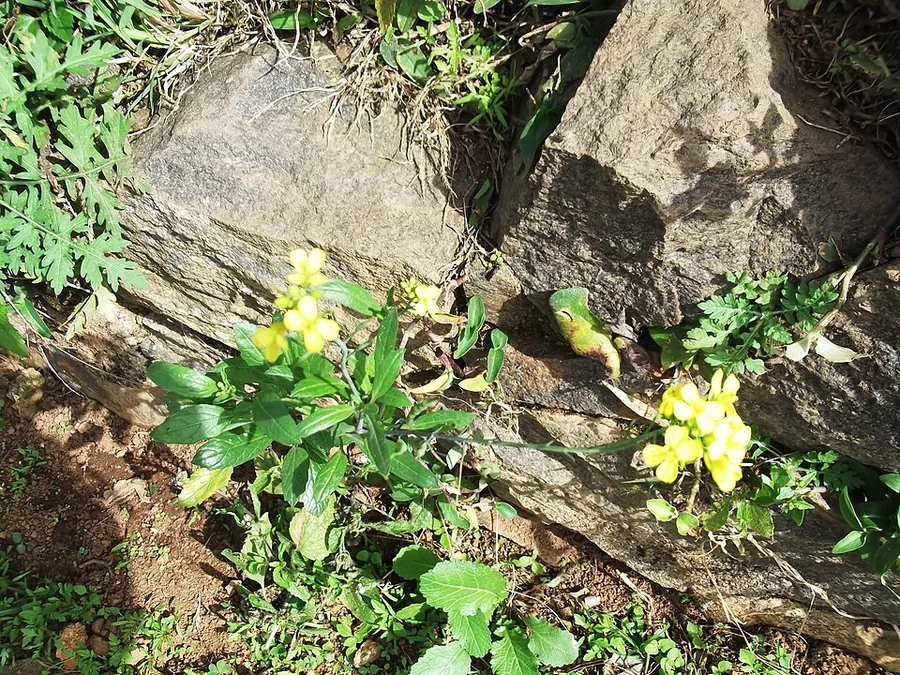
Overview
Mustard greens are a fast-growing leafy vegetable in the cabbage family, cultivated for their peppery, slightly spicy leaves. Native to Asia, the species is now grown throughout the world's temperate gardens and performs equally in a Southern row or a Northern raised bed. Under cool conditions it moves from seed to plate faster than almost any other vegetable, a consequence of its rapid growth rate and short cycle.
That speed is its defining trait. A single sowing reaches a first cutting in 30 to 50 days, and taking the outer leaves young leaves the growing point intact to push further growth. Allowed to mature, a plant reaches roughly 12 to 18 inches (30 to 45 cm) in height, though close spacing and repeated cutting instead yield a continuous supply of tender baby leaves.
Heat is the crop's limiting factor. Warm temperatures and lengthening days trigger the reproductive switch, and once the plant bolts the leaves become tough and sharply bitter as resources move to the flower stalk. Timing the crop to the cool ends of the year and holding the soil evenly moist keeps the plant vegetative and the flavor clean.
Care
The short version: full sun and cool weather, soil held evenly moist so the flavor stays mild, rich ground amended with compost, and a prompt harvest before summer heat turns the leaves bitter.
Light
Mustard greens perform best in full sun, but tolerate partial shade, which becomes useful as the season warms. Afternoon shade in late spring lowers leaf temperature and delays the heat-driven signal to bolt.
Water
Hold the soil evenly moist and water early so the foliage dries before nightfall, which denies fungal spores the extended leaf wetness they need to infect. Avoid letting the plants dry and recover, because that moisture stress concentrates the pungent compounds and turns the flavor sharp.
Soil
Grow them in rich, well-drained ground worked with ample organic matter. A pH near 6.0 to 6.8 is ideal, and though the crop tolerates soil up toward neutral, the high fertility is what sustains the fast leaf growth the plant is grown for.
Temperature
This cool-season grower is happiest between 39°F and 75°F (4°C to 24°C). It withstands light frost, which converts starches to sugars and sweetens the leaves, but warmth at the upper end of the range initiates bolting.
Humidity
Average humidity of about 40% to 70% is sufficient. Airflow outweighs any specific figure, since stagnant air over crowded, damp leaves prolongs leaf wetness and favors the fungal problems early watering is meant to prevent.
Feeding
Incorporate a nitrogen-rich balanced fertilizer at planting to drive fast leaf growth. A light nitrogen side-dressing midway sustains that flush, but apply it sparingly, as excess nitrogen produces the soft growth aphids preferentially colonize.
Pruning
Cut the outer leaves young and repeatedly, which keeps the growing point active and yields tender regrowth from the center. Once bolting begins, pinch out the flower stalk, though by that stage the leaves have generally turned strong and bitter.
Repotting
Not applicable; direct-sown as a fast garden crop, not container-grown/repotted.
Size & spacing
Plants reach about 12 to 18 inches (30 to 45 cm) tall and roughly as wide. Space full-size plants around 12 inches (30 cm) apart, or sow more densely and harvest the stand as baby leaves.
When to plant
Mustard greens are a cool-season crop that will not hold up in heat. Sow the first planting in early spring, roughly three weeks before your last frost, and follow with a second sowing in late summer for a fall harvest. Cut the leaves young, and complete the harvest before summer warmth forces the plant to bolt.
Northern hemisphere
Southern hemisphere
Typical months for a temperate climate: start earlier in warm zones, later where spring frosts linger.
- Sow: 3-4 weeks before the last spring frost, or direct-sow
- Plant: Early spring (about 3 weeks before last frost) and again in late summer for a fall crop; a cool-season vegetable.
- Harvest: Cut leaves young at about 4-6 weeks; harvest the whole plant before summer heat causes it to bolt.
Hardiness
USDA hardiness zones: 2–11
Temperature: down to -46°C
Troubleshooting
Most problems in mustard greens present on the leaves, where a brief daily inspection catches them early. Match the symptom below to its cause, then intervene while the planting can still be saved.
Seedling collapse traced to bored, decaying roots
Seedlings that wilt and collapse without an obvious cause above ground are usually losing their root systems to cabbage maggots, white larvae that tunnel through the roots and sever the plant's water supply. Remove and destroy infested plants, since they will not recover once the roots are compromised. Row covers laid at sowing bar the egg-laying flies, and omitting fresh manure withholds the odor that attracts them.
Fix:
- Remove and destroy infested plants
- Protect remaining plants with row covers
Fine shot-hole stippling across young foliage
Those pinprick wounds are the feeding scars of flea beetles, small dark insects that hop off the instant they are disturbed. Seedlings suffer worst because their limited leaf area cannot absorb the loss the way an established plant can. Exclude the beetles with floating row cover at sowing and keep growth rapid, since a vigorous plant replaces damaged tissue faster than the beetles can remove it.
Fix:
- Cover seedlings with floating row cover
- Apply kaolin clay or labeled insecticide if damage is heavy
- Maintain vigorous growth so plants outgrow light feeding
Ragged holes chewed through the leaves
Large ragged holes and dark frass are the hallmark of cabbageworms and cabbage loopers, green caterpillars whose coloring conceals them against the foliage. Handpicking removes the individuals you locate, and Bt kills the rest by disrupting their gut once ingested. The durable solution is insect netting, which prevents the parent moths from ever laying eggs on the crop.
Fix:
- Handpick caterpillars
- Apply Bacillus thuringiensis (Bt)
- Use row covers to exclude egg-laying moths
Premature flowering stem with harsh, toughened foliage
An elongating central stem and a harsh edge to the flavor mark the onset of bolting, the shift to reproduction that warm temperatures and lengthening days set in motion. The process cannot be reversed, so harvest before the leaves sour further. Grow in the cool of spring or fall, shade the bed as temperatures rise, and select bolt-resistant cultivars to delay the transition.
Fix:
- Harvest promptly before flavor degrades; bolting cannot be reversed
Distorted leaf tips coated in sticky honeydew
Distorted tips and a sticky glaze are signs of aphids feeding on the leaf undersides, and the residue is the honeydew they excrete as they draw sap. A firm spray of water dislodges the colony, insecticidal soap clears the ones that return, and lady beetles keep numbers down thereafter. Reducing nitrogen matters here, because the soft, sap-rich growth heavy feeding produces is precisely what aphids target.
Fix:
- Dislodge with a strong spray of water
- Apply insecticidal soap
- Encourage lady beetles and other natural predators
Toxicity
Mustard greens are a food crop and safe to keep in the home. No part of the plant is poisonous to cats, dogs, or other pets, and the leaves are edible in their own right. The single qualification concerns livestock grazed heavily on the foliage, where the goitrogens common to all brassicas can accumulate to a harmful dose.
Safe for
People · Cats · Dogs · Horses · Rabbits · Livestock · Birds
Cats None
Non-toxic to cats. The ASPCA does not list mustard greens among species poisonous to cats, so an incidental nibble carries no risk.
Dogs None
Non-toxic to dogs. A grazed leaf causes no harm, though a large quantity of any leafy green may transiently upset the digestive tract.
Horses Safe
Safe for horses at normal intake, as the plant carries no compounds that pose a toxic threat.
Rabbits Safe
Suitable for rabbits in moderation. Introduce the leaves gradually alongside hay and other greens to let the gut adjust.
Livestock Mild
Valuable forage and safe in mixed rations, but sustained heavy grazing on the brassica foliage allows goitrogens to accumulate and interfere with thyroid function. Keep it a minor component of a varied diet.
Birds Safe
Safe for birds. Backyard poultry readily consume the leaves, which serve as a nutritious supplement.
People Safe
Edible and safe for people. The peppery leaves are eaten cooked or raw, and no part of the plant is toxic.
Like other brassicas the foliage contains glucosinolates/goitrogens; this is mainly a dietary concern for livestock grazed heavily on it, not a household-pet poisoning hazard.
Varieties
Mustard greens are available in smooth, curled, and red-tinged forms, and a few cultivars recur across seed catalogs. The ones below are worth knowing.
Florida Broadleaf
A fast-maturing Southern standard that produces large, smooth, broad green leaves suited to young cutting.
Southern Giant Curled
Its frilled, heavily curled bright green leaves show greater frost tolerance than the flat-leaved types.
Giant Red
Selected for both color and pungency, it bears purple red tinged leaves with a strongly peppery flavor.
Tendergreen
A mild, fast smooth-leaf type grown as a spinach-mustard where a gentler flavor is preferred.
How to propagate
Mustard greens are raised directly from seed, and few vegetables germinate faster or more dependably.
SeedEasy
Direct-sow in early spring and again in late summer for a fall crop · Germinates in about 5-10 days and seedlings establish within roughly 2 weeks
Mustard greens propagate readily from seed with minimal effort. Sow shallowly into cool, moist soil in early spring and repeat in late summer for a fall crop; germination follows in 5 to 10 days, and seedlings establish in roughly two weeks. Thin to about 12 inches (30 cm) apart for full-size plants, or hold tighter spacing for a cut-and-come-again stand of baby leaves.
Myths
Mustard greens are toxic to household cats and dogs.
Brassica juncea is a routine edible vegetable, and the ASPCA does not classify it as toxic to cats or dogs. The goitrogen concern applies to livestock grazed heavily on the foliage, where the dose accumulates, not to a pet that samples a leaf. For a household with pets, mustard greens are safe.
Mustard greens reach peak growth in hot summer weather.
This is a cool-season crop whose growth and flavor peak in spring and fall. Summer heat triggers bolting, and the reproductive shift renders the leaves harsh and bitter. Schedule the sowings for the cool ends of the season for the best quality.