Houseplant · Arecaceae
Bamboo Palm
Chamaedorea seifrizii
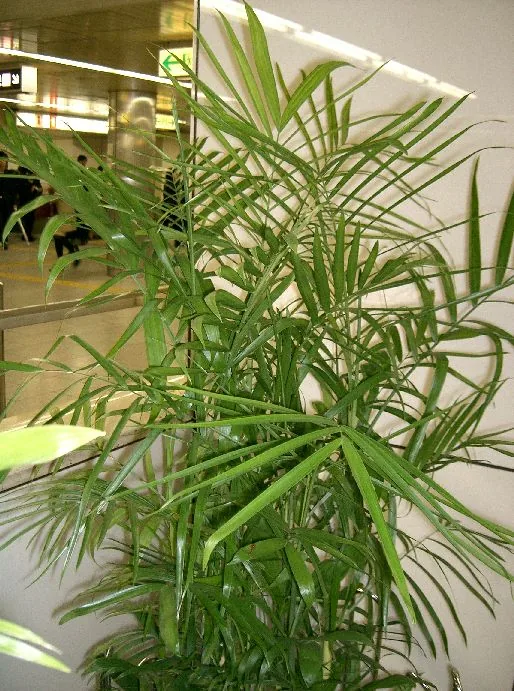
Match its forest-floor origins with bright indirect light and clean water, and the bamboo palm builds a soft, feathery green corner.
Medium indirect
61–81°F · 16–27°C
USDA 10–11
3–10 ft · 0.9–3 m
Overview
The bamboo palm takes its name from slim, jointed canes that mimic bamboo, yet it sits firmly in the palm family. As a clumping species native to the forests of Mexico and Central America, it evolved in the broken shade cast by taller canopy trees. That understory origin is precisely why it tolerates interiors so well, performing in the medium light that most rooms provide.
Its appeal lies in an effortless tropical form: a cluster of slender stems carrying arching fronds of narrow leaflets that knit into a soft green screen, ideal for softening a bare corner or occupying an unused summer fireplace. Growth is slow and self-limiting indoors, with mature size landing anywhere from 3 to 10 feet (91 cm to 3 m) built up over years, not seasons.
Its requirements are modest: consistent moisture, reasonable humidity, and water low in fluoride and dissolved salts, since the foliage stores those compounds at the leaf tips. Meet those conditions and brown tips are usually the only complaint you will field. This is a genuinely forgiving palm, which explains its standing among the most low-maintenance indoor plants.
Care
The short version: medium indirect light clear of direct afternoon sun, a mix kept lightly moist but never soggy to keep the roots sound, watering with distilled water or rainwater so dissolved salts cannot scorch the leaf tips, and a few light feedings through the warm season.
Light
Provide medium, indirect light, the level found a few feet back from a bright window. Drawing on its understory heritage, it accepts low light and partial shade more readily than most palms, but keep it clear of direct afternoon sun, whose intensity scorches the fronds.
Water
Hold the mix lightly moist but never waterlogged, watering thoroughly once the surface dries and emptying any water that collects in the saucer, since standing water deprives the roots of oxygen and brings on root and stem rot. The tips are sensitive to fluoride and salts, so use distilled water or rainwater wherever you can to keep those compounds from concentrating.
Soil
Pot it in a well-drained potting mix that retains a little moisture without holding free water. Drainage is the priority here, because heavy, saturated soil starves the roots of air and leads to rot.
Temperature
Ordinary room warmth suits it well, in the range of 61°F to 81°F (16°C to 27°C). Hold it above the low 60s through winter and shield it from cold drafts and chilled window glass.
Humidity
Average indoor humidity is workable, though it prefers moderate to high and responds better with more. Dry winter air drives moisture from the foliage faster than the roots replace it, producing brown tips, so cluster it with other plants or keep it away from heat vents.
Feeding
Feed through the warm growing season with a slow-release palm fertilizer that releases nitrogen, potassium, and magnesium gradually rather than in one flush. Two or three modest applications across spring and summer suffice, and heavier feeding only adds salts that scorch the tips.
Pruning
Cut away dead or damaged fronds and any spent canes at the base. Each stem extends from a single central growing point, so never sever the crown or growing tip; remove it and that cane dies outright.
Repotting
Repot every 2 to 3 years, or sooner if roots circle the pot or escape the drainage holes and the soil dries unusually fast. Step up only one pot size, as this palm grows well slightly snug at the roots.
Size & spacing
Indoors it rises slowly to between 3 and 10 feet (91 cm to 3 m) tall, the clump widening 3 to 6 feet (91 to 183 cm) across. Leave room around it so air circulates through the canes and the fronds are not pressed against a wall.
Troubleshooting
A well-sited bamboo palm largely manages itself, so when problems arise they register on the foliage first. Brown tips and faded, speckled fronds are by far the two most common, and each reads clearly once you know the signs. Identify the symptom below, then correct the underlying cause rather than simply pruning off the damage.
Dusty, speckled fronds threaded with fine webbing
Warm, arid indoor conditions are exactly what spider mites prefer, and a feeding population leaves the foliage finely stippled and lightly webbed. Confirm them by examining the leaf undersides for moving specks, or by rapping a frond over a sheet of white paper and watching them drop. Hose the plant down forcefully, lift the humidity around it, and apply insecticidal soap or horticultural oil on repeat until the colony is cleared.
Fix:
- Rinse foliage with a strong stream of water, including undersides
- Raise humidity around the plant
- Treat with insecticidal soap or horticultural oil, repeating as directed
Crispy brown tips and edges advancing along the fronds
In most cases the culprit is accumulated salts and fluoride drawn up from tap water, not how often you water. Because these compounds concentrate at the leaf extremities as moisture transpires, the damage begins at the tips of the oldest fronds while the midsection holds its color, and a white crust often forms on the soil or pot rim. Leach the pot thoroughly with distilled water or rainwater, adopt that water for routine use, and lighten the feeding.
Fix:
- Flush the pot thoroughly with distilled water or rainwater to leach salts
- Switch to distilled water or rainwater for routine watering
- Raise local humidity and avoid placing near heat vents
- Reduce fertilizer rate and frequency
Toxicity
For households with pets or young children, this is a reassuring choice. The ASPCA records the bamboo palm as non-toxic to cats, dogs, and horses, and no part of the plant holds toxins that would harm other animals. A chewed frond may prompt minor stomach upset from the coarse fiber, but poisoning is not a concern.
Safe for
People · Cats · Dogs · Horses · Rabbits · Livestock · Birds
Cats None
The ASPCA classes this palm as non-toxic to cats, so a sampling chew presents no poisoning risk. A cat that overeats the fibrous fronds may bring them back up purely from the coarse plant material, but there is no toxin involved.
Dogs None
Dogs fall under the same non-toxic listing, so they face no danger from this palm. At worst, a mouthful of chewed frond may produce brief, mild digestive upset from the fiber alone.
Horses None
The plant carries no compounds that threaten horses and is recorded as safe for them. Its small leaflets also offer little to attract a grazing animal in the first place.
Rabbits None
Nothing in the foliage is poisonous to a rabbit. The fibrous, stringy leaves are not a natural forage, so most rabbits ignore them rather than feed on them.
Livestock None
Grazing stock run no risk of poisoning from this palm. As a tropical indoor plant it seldom comes within their reach, and any stray leaflet eaten holds no toxins.
Birds None
Pet birds can rest among the fronds safely, as the plant contains nothing toxic to them. The occasional nibbled leaf tip causes no harm.
People None
There is no poisoning hazard to children or adults from this plant. It is not cultivated as food, yet a leaf reaching a young child's mouth is harmless.
How to propagate
Bamboo palm propagates by dividing an established clump or by sowing fresh seed, and neither route is quick. Both reward patience far more than technique.
DivisionModerate
Spring to early summer during active growth · Several weeks to a few months to root and resume growth
Its clumping habit makes division straightforward: lift an established specimen and separate basal suckers that have already developed their own root systems. Carry this out in spring or early summer while the palm is in active growth, then allow each division several weeks to a few months to establish and push new growth.
SeedModerate
When fresh ripe seed is available; warm conditions · Germination is slow and may take several weeks to months
Seed propagation succeeds only with fresh, ripe seed, as viability falls off quickly. Sow into a warm, moist, well-drained medium and expect a slow, uneven response; germination commonly stretches across several weeks to months before any seedlings emerge.
Myths
The plant marketed as bamboo palm is actually a type of bamboo.
No bamboo is involved. The jointed, cane-like stems merely resemble it, but botanically this is a clumping palm placed in the family Arecaceae. True bamboos sit in the grass family and share no relation.
Anything labeled bamboo palm refers to one single species.
The label is applied loosely across several palms. Chamaedorea seifrizii, the parlor palm Chamaedorea elegans, and the areca palm Dypsis lutescens are all sold under it, though each is a separate species with its own growth habit.