
Introduction
You want to grow your own vegetables but the sheer number of vegetable garden layout options has you stuck before you even plant a seed. Rows or raised beds? Square foot grids or container gardens? The choices feel endless and every garden blog seems to push something different.
I spent my first 3 years of vegetable gardening trying every layout I could find. Some worked great while others produced barely enough tomatoes to fill a salad bowl. University research from Iowa State now confirms what I learned the hard way. Block planting and raised bed garden designs can nearly double your harvest compared to traditional single rows.
Garden planning works just like creating a floor plan for your home. The placement of each room affects how you move through your daily life. Your garden layout determines how easily you water, weed, and harvest your crops throughout the season. A poor layout means more work and less food on your table.
This guide covers the 10 best vegetable garden layouts based on real growing conditions and scientific yield data. You will find options for small spaces, large plots, and everything in between. Each layout matches different needs so you can pick one that fits your yard, your time, and your goals for a productive vegetable garden this season.
10 Best Vegetable Garden Layouts
The best raised bed garden layout for you depends on your space, your soil, and your time. A busy professional with a small patio needs a different setup than a retiree with a half acre of yard. Missouri Extension research found that raised beds produce nearly double the harvest per square foot. That means you can grow more food in less space when you pick the right layout.
I have tested 8 of these 10 layouts in my own gardens over the past decade. Each one works best for specific situations. Container gardening saved me when I lived in an apartment with just a balcony. Square foot gardening helped when I first moved to a house with terrible clay soil. Vertical vegetable garden structures came next when my space ran out but my seed collection kept growing.
Some gardeners also need beds that work with mobility issues. NC State Extension recommends beds 28 to 34 inches tall with a maximum 2 foot reach depth for wheelchair users. The layouts below cover block planting in open ground and kitchen garden design for beauty lovers. You will find options for small balconies and large family plots alike.
Raised Bed Layout
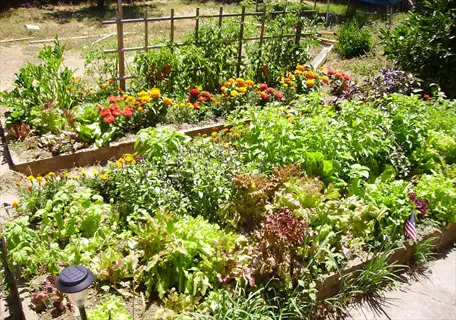
- Best For: Gardeners dealing with poor native soil, drainage issues, or those wanting a clean defined growing space with minimal weeding requirements.
- Dimensions: Standard raised beds measure 4 feet (1.2 m) wide for access from both sides and 8 feet (2.4 m) long, with depth of 12 to 24 inches (30 to 61 cm) for most vegetables.
- Yield Advantage: University research shows raised beds can produce nearly twice the harvest per square foot compared to traditional in-ground rows due to intensive planting and improved soil conditions.
- Material Options: Use untreated cedar or redwood for longevity, galvanized steel for modern appearance, or concrete blocks for permanent installation without wood rot concerns.
- Spacing Strategy: Leave 2 to 3 feet (61 to 91 cm) between beds for comfortable walkways and wheelbarrow access during planting, maintenance, and harvest seasons.
- Ideal Crops: Tomatoes, peppers, lettuce, herbs, and root vegetables like carrots and beets thrive in the loose well-draining soil that raised beds provide.
Square Foot Garden Layout
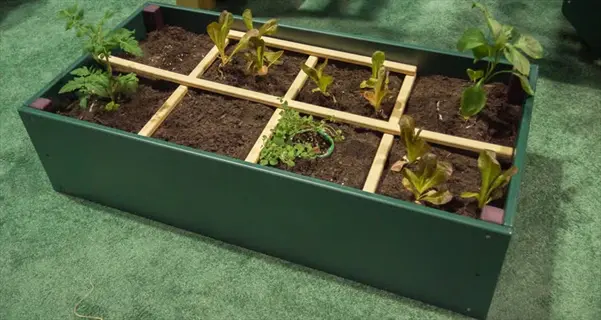
- Best For: Beginners who want a structured approach to spacing and gardeners maximizing production in small areas like patios, decks, or compact backyards.
- Dimensions: Traditional square foot gardens use 4 by 4 foot (1.2 by 1.2 m) beds divided into 16 one-foot squares, each planted with a specific number of seeds or seedlings.
- Planting Density: Depending on mature plant size, each square holds 1 large plant like tomato, 4 medium plants like lettuce, 9 small plants like spinach, or 16 tiny plants like radishes.
- Soil Mix: The classic blend uses equal parts compost, peat moss or coconut coir, and coarse vermiculite for nutrient-rich lightweight growing medium.
- Maintenance Advantage: Grid layout makes succession planting simple since you replant individual squares as crops finish rather than waiting for entire rows to complete.
- Companion Benefit: Block planting in squares improves pollination for crops like squash and peppers while the dense coverage shades soil to naturally suppress weed germination.
Traditional Row Layout
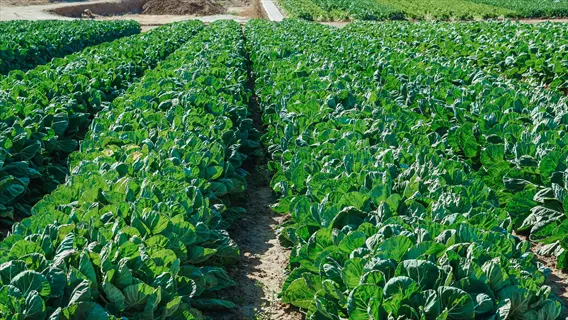
- Best For: Large-scale gardeners with ample space who use mechanical cultivation tools like tillers, cultivators, or tractors for soil preparation and weed management.
- Dimensions: Rows typically span 30 to 36 inches (76 to 91 cm) apart to accommodate walking paths and cultivation equipment, with plants spaced along the row according to variety needs.
- Efficiency Trade-off: While row gardens use more total space than intensive methods, they allow easier access for pest inspection, harvesting, and incorporating organic matter between rows.
- Best Crops: Corn, potatoes, beans, peas, and sprawling crops like melons and winter squash work well in rows where their spreading habits have room to develop.
- Weed Management: Wide pathways between rows allow cultivation with hoes or wheel cultivators to control weeds mechanically without disturbing crop roots.
- Modern Adaptation: Reduce row spacing from 30 to 24 inches (76 to 61 cm) to increase plant density by 25% while still maintaining walkable access paths.
Container Garden Layout
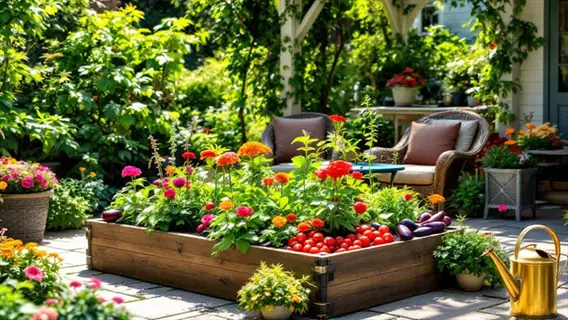
- Best For: Apartment dwellers, renters, or anyone gardening on balconies, patios, rooftops, or driveways where in-ground planting is not an option.
- Container Sizes: Use 5 gallon (19 L) pots minimum for tomatoes and peppers, 3 gallon (11 L) for herbs and lettuce, and half-barrel planters for vining crops like cucumbers.
- Drainage Essential: All containers need drainage holes at the bottom and should be elevated on pot feet or bricks to prevent waterlogging that causes root rot.
- Watering Needs: Container gardens dry out faster than ground plantings, often requiring daily watering during hot weather especially for smaller pots and full-sun locations.
- Mobility Benefit: Wheeled plant caddies allow you to move containers to follow sunlight patterns or protect plants from extreme weather events like hail or frost.
- Space Arrangement: Group containers of varying heights with tallest in back, use vertical wall planters for herbs, and incorporate railing boxes to maximize every available surface.
Vertical Garden Layout
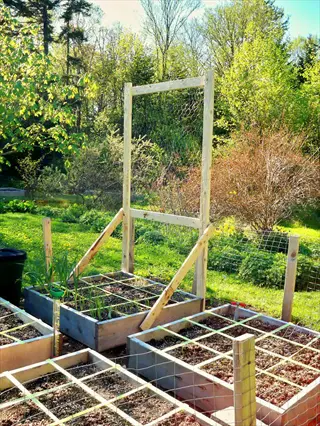
- Best For: Small-space gardeners who want to triple their growing capacity by using vertical surfaces like walls, fences, trellises, and overhead structures.
- Structure Options: A-frame trellises, cattle panels, string supports, wall-mounted pocket planters, and living wall systems each suit different vining or climbing crops.
- Ideal Crops: Pole beans, peas, cucumbers, small melons, indeterminate tomatoes, and climbing squash varieties all produce more when grown vertically with proper support.
- Sun Considerations: Position vertical structures on the north side of your garden to prevent shading lower-growing plants, or use them as living shade for heat-sensitive lettuce.
- Harvest Convenience: Vegetables hanging at eye level are easier to spot and pick than ground-level crops, reducing back strain and preventing overlooked produce from becoming overripe.
- Air Circulation: Lifting foliage off the ground improves airflow around plants, reducing fungal disease pressure and making pest inspection and treatment more effective.
In-Ground Block Layout
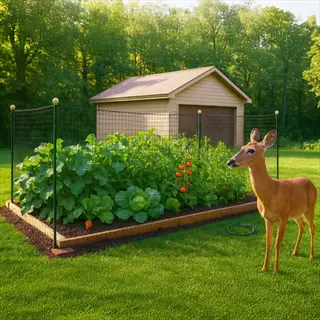
- Best For: Gardeners with good native soil who want higher yields than row planting without the expense of building raised bed frames or purchasing imported soil.
- Block Dimensions: Create beds 3 to 4 feet (0.9 to 1.2 m) wide so you can reach the center from either side without stepping on and compacting the growing area.
- Yield Advantage: Iowa State Extension confirms that block planting enhances pollination rates and shades soil to reduce weed growth compared to single-row arrangements.
- Path Integration: Establish permanent pathways between blocks using mulch, stepping stones, or grass strips rather than walking through planting areas each season.
- Soil Improvement: Add 2 to 4 inches (5 to 10 cm) of compost annually to block beds since you never till the walking paths, concentrating amendments where roots actually grow.
- Rotation Planning: Divide your garden into four or more distinct blocks to facilitate crop rotation, moving plant families to different blocks each year to break disease cycles.
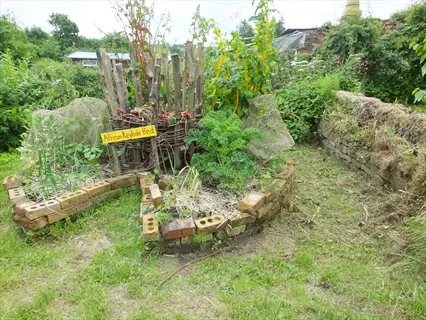
Keyhole Garden Layout
- Best For: Gardeners seeking water-efficient designs for arid climates or those wanting a circular aesthetic with a built-in composting system at the center.
- Design Structure: The circular bed surrounds a central composting basket, with a pie-slice shaped path cut out for access, creating a keyhole shape when viewed from above.
- Dimensions: Standard keyhole gardens measure 6 feet (1.8 m) in diameter with raised walls 2 to 3 feet (61 to 91 cm) high and a central basket made from wire mesh.
- Watering System: Kitchen scraps and gray water added to the center basket decompose and leach nutrients outward to surrounding plants with every watering.
- Climate Origin: Developed for African communities facing drought conditions, keyhole gardens use 50% to 75% less water than traditional beds while maintaining productivity.
- Construction Materials: Build walls from stacked stones, bricks, recycled materials, or woven branches filled with alternating layers of soil, compost, straw, and manure.
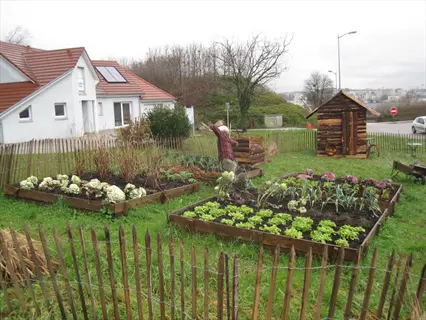
Potager Garden Layout
- Best For: Gardeners who value aesthetics equally with productivity and want their vegetable garden to serve as an ornamental landscape feature visible from the home.
- Design Elements: Potager gardens combine vegetables, herbs, flowers, and fruits in geometric patterns with defined pathways, focal points, and structural elements like arbors.
- French Tradition: This kitchen garden style originated in France where formal parterre designs were adapted to include edible plants alongside traditional ornamentals.
- Layout Patterns: Common designs include four quadrants around a central feature, radiating spokes from a circular center, or repeated rectangular beds in symmetrical arrangements.
- Edging Materials: Define bed boundaries with low boxwood hedges, lavender borders, brick edging, or decorative metal fencing to create the structured appearance that defines potager style.
- Plant Combinations: Mix colorful vegetables like rainbow chard, purple cabbage, and red lettuce with flowering herbs like chives, borage, and calendula for year-round visual interest.
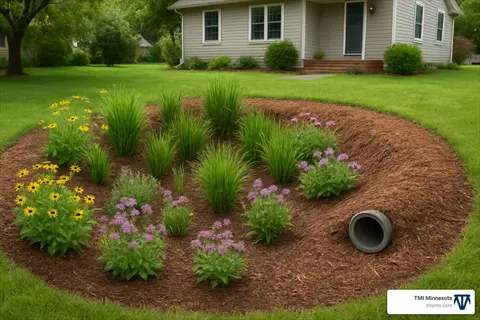
Hugelkultur Mound Layout
- Best For: Permaculture gardeners seeking self-fertilizing beds that require minimal watering once established while recycling woody debris and organic materials.
- Construction Method: Layer buried logs and branches with nitrogen-rich materials like grass clippings, then top with compost and soil to create raised mound-shaped beds.
- Mound Dimensions: Finished hugelkultur beds rise 3 to 6 feet (0.9 to 1.8 m) tall and can be any length, with planting surfaces on the top and sloped sides.
- Water Retention: The buried wood acts like a sponge, absorbing moisture during rain and releasing it slowly to plant roots during dry periods over multiple growing seasons.
- Decomposition Benefit: As wood breaks down over 5 to 10 years, it releases nutrients and creates air pockets that improve drainage and root penetration throughout the mound.
- Nitrogen Consideration: Fresh wood temporarily ties up soil nitrogen during early decomposition, so use well-rotted logs or add extra nitrogen fertilizer during the first two growing seasons.
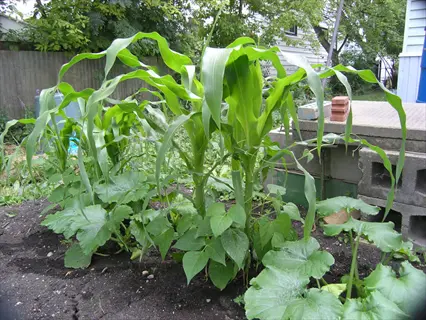
Three Sisters Layout
- Best For: Gardeners interested in traditional polyculture methods that combine corn, beans, and squash for mutual support, nitrogen fixation, and ground cover benefits.
- Planting Arrangement: Corn grows in the center providing a climbing pole for beans, while squash spreads at ground level shading soil and deterring pests with prickly leaves.
- Mound Spacing: Create mounds 4 feet (1.2 m) apart in each direction, planting 4 corn seeds in the center, 4 bean seeds around them, and 2 squash seeds at the edges.
- Nitrogen Cycle: Bean roots host bacteria that convert atmospheric nitrogen into plant-available form, feeding the heavy nitrogen needs of corn and squash companions.
- Historical Origin: Indigenous peoples of North America developed this companion planting system over thousands of years, creating a sustainable food production method still effective today.
- Modern Adaptations: Substitute pole varieties of other vegetables for traditional crops, such as using sunflowers instead of corn or cucumbers instead of squash for similar structural benefits.
Your best layout choice comes down to matching your situation with the right design. Start with one method that fits your current space and experience level. You can always add more beds or try different approaches in future seasons as you learn what works in your climate and soil.
Choosing the Right Garden Location
Your garden location selection matters more than any other choice you make this season. Rutgers Extension says site selection is the most critical factor for success. Just like real estate, location drives 90% of your results. You cannot fix bad sun exposure with better soil or fancy raised beds.
I learned this lesson the hard way during my first 2 years of gardening. My original plot sat behind a row of trees that looked fine in winter. Once summer leaves filled in, my tomatoes and peppers barely produced a handful of fruit. That shady spot wasted months of work because I picked the wrong location from the start.
A south-facing garden gets the most sunlight in the Northern Hemisphere. Virginia Tech research shows that south facing slopes stay warmer and face fewer frost problems. Garden orientation alone can add weeks to your growing season in cold climates.
Different crops have different vegetable garden sun requirements based on what part of the plant you eat. Full sun vegetables like tomatoes, peppers, and squash need 8 or more hours of direct light each day. Shade tolerant vegetables like lettuce can get by with just 4 to 5 hours. The table below breaks down what each type of vegetable needs.
Track sunlight in your potential garden spots for at least 2 full days before you build anything. Watch from morning until evening and note when shadows fall across the area. Many gardeners find their sunniest spot is not where they first expected it to be.
Raised Bed Design and Dimensions
Getting your raised bed dimensions right from the start saves you years of trouble in the garden. Measure your own reach and mobility before building beds at standard sizes. I built my first beds too wide and spent an entire season straining my back to weed the center rows.
The standard 4x8 raised bed works well for most people because you can reach the center from either side without stepping on the soil. Missouri Extension recommends 4 feet wide for two sided access and just 3 feet if you can only reach from one side. Stepping on your raised bed soil compacts it and ruins the loose texture that roots need to grow strong.
Raised bed depth matters more than most new gardeners realize. Short beds of 6 to 12 inches work fine for lettuce and herbs with small root systems. Deep rooted crops like tomatoes, carrots, and peppers do best with raised bed depth of 18 to 24 inches. That extra depth also helps the soil hold more water during hot summer days.
Your choice of raised bed materials depends on budget and how long you want the beds to last. Cedar and redwood resist rot for 10 to 15 years without any treatment. Galvanized steel beds last even longer and have become popular since lumber prices spiked. Concrete blocks create permanent beds but take more effort to set up level.
An accessible raised bed for wheelchair users needs different specs. NC State Extension recommends beds 28 to 34 inches tall. Keep the reaching depth under 2 feet so you can tend crops without strain.
Leave at least 2 feet between beds for walking paths. A raised bed width of 4 feet with 2 foot paths lets you move a wheelbarrow through your garden with ease. Tight paths seem fine in spring but cause problems once plants fill in during summer.
Maximizing Space with Vertical Growing
Cities build skyscrapers when land gets expensive. Your garden can do the same thing. A vertical vegetable garden lets you triple your harvest from the same ground footprint. This approach works great for climbing vegetables like beans, cucumbers, and peas that want to grow upward.
I tripled my cucumber harvest the year I switched to trellis gardening on a simple cattle panel arch. The plants stayed cleaner and got better air flow. The cucumbers hung where I could spot them without bending down. Penn State Extension confirms that these methods let you maximize garden space beyond ground level.
Vining vegetables also stay healthier when grown on supports. Leaves dry faster after rain or morning dew. This cuts down on fungal diseases that spread in damp conditions. You can pack more plants into tight spaces because they grow up instead of out across your beds.
Use succession planting and interplanting to keep your garden productive. Plant lettuce beneath young tomato vines in spring. The lettuce finishes before the tomato canopy fills in and blocks the light. Then you can plant a fall crop of spinach as summer winds down.
Trellis Systems
- A-Frame Trellis: Build from two panels hinged at top, standing 6 to 8 feet (1.8 to 2.4 m) tall, providing support on both sides for pole beans, peas, or small-fruited cucumbers.
- Cattle Panel Arch: Bend 16-foot (4.9 m) livestock panels into arched tunnels over pathways, creating shaded walkways underneath while growing climbing crops overhead.
- String Trellis: Suspend heavy-duty twine from overhead supports to ground stakes, allowing indeterminate tomatoes and vining crops to climb single-stem vertical lines.
- Wall-Mounted Systems: Attach wooden lattice, metal grids, or modular pocket planters to fences or building walls to utilize otherwise unused vertical surfaces.
Succession Planting
- Staggered Sowing: Plant the same crop every 2 to 3 weeks rather than all at once, extending your harvest window and preventing overwhelming gluts of produce.
- Quick Turnover Crops: Radishes mature in 25 days, lettuce in 45 days, and spinach in 40 days, allowing multiple harvests from the same space each growing season.
- Fall Extension: Add 1 to 2 weeks to seed packet maturity dates when planting for fall harvest since decreasing daylight slows growth compared to spring conditions.
- Winter Planning: In mild climates, plant cool-season crops in late summer for fall and winter harvest, keeping beds productive after warm-season crops finish.
Interplanting Strategies
- Timing Combinations: Pair slow-growing tomatoes with fast-maturing lettuce that harvests before the tomato canopy fills in and shades the space below.
- Root Depth Pairing: Combine lettuce and onions with deep-rooted tomatoes so plants access nutrients and water from different soil layers without competition.
- Height Layering: Grow low spreaders like strawberries beneath tall upright crops like corn or sunflowers to harvest multiple crops from the same ground footprint.
- Relay Planting: As one crop finishes, transplant seedlings of the next crop into the space rather than waiting for the entire bed to become available.
Container Stacking
- Tiered Plant Stands: Position containers at multiple heights using benches, shelving units, or plant stands to grow more in the same floor space.
- Hanging Baskets: Suspend containers from overhead structures for trailing crops like cherry tomatoes, strawberries, and trailing herbs that benefit from air circulation.
- Vertical Pocket Planters: Install fabric or plastic pocket systems on walls and fences for herbs, lettuce, and strawberries that thrive with limited root space.
- Window Box Mounting: Attach planter boxes to railings, windowsills, and fence tops to add growing space without using any ground area at all.
Planning Garden Size for Your Family
Figuring out garden size for family needs works just like figuring out how many bedrooms you need in a house. A couple needs less space than a family of 6. Iowa State Extension suggests starting with 100 square feet for your first beginner vegetable garden. That gives you enough room to learn without getting overwhelmed by weeds and watering.
I made the classic mistake of planting way too much in my first year. I had zucchini coming out of my ears and neighbors started hiding when they saw me coming. The next year I cut back to just the vegetables my family would actually eat fresh. Our waste dropped and our enjoyment went way up.
Most extension sources recommend 100 to 200 square feet of vegetables per person if you want to eat fresh all summer. That works out to about 10 to 15 tomato, pepper, and squash plants for each person in your home. A single 4x8 raised bed with 32 square feet of space can feed one person for the season if you plant smart.
Your yield per raised bed depends on what you grow and how you manage the space. Lettuce produces about 2 pounds per square foot. Tomatoes can give you 5 to 10 pounds per plant with good care. Think about how much to plant based on what your family eats each week. Plant more of what you love and skip the crops nobody touches.
Start small and grow your garden size each year as your skills improve. This builds your garden productivity without burning you out. A well tended small garden beats a weedy large one every time. Add one new bed each season until you find the right balance for your family and your schedule.
Companion Planting and Crop Rotation
Companion planting and crop rotation help you pick the best vegetable placement in your garden. Some plants share space well like good roommates. Others compete and make each other weaker. Knowing what vegetables to plant together helps you dodge problems before they start.
Iowa State research shows crop rotation cuts soil pathogens by 40% to 60%. Yields go up by 27% to 48% over time with proper rotation. The 3 to 4 year rule exists because disease spores can live that long in soil. Moving plant families to different garden zones each year breaks the cycle.
Not all companion planting claims hold up to science. Many popular pairings lack any real proof. But some do work based on research. Onions near carrots help mask the scent that attracts carrot rust flies. Interplanting vegetables with different root depths lets plants share soil without fighting.
Your plant spacing matters just as much as which plants you pair together. Crowded plants compete for light, water, and food. They also trap moisture around leaves and spread disease faster. Give each plant the space it needs and your whole garden will stay healthier through the season.
Nightshade Family (Solanaceae)
- Members: Tomatoes, peppers, eggplants, and potatoes all belong to this family and share common diseases like early blight, late blight, and verticillium wilt.
- Rotation Rule: Avoid planting any nightshade family member in the same location for 3 to 4 years to break disease cycles and reduce pathogen populations.
- Nutrient Needs: Heavy feeders that deplete nitrogen and phosphorus, so follow with legumes or add compost before replanting this family.
- Spacing Note: These plants need 18 to 24 inches (46 to 61 cm) between them for adequate air circulation and to reduce fungal disease pressure.
Brassica Family (Cruciferae)
- Members: Cabbage, broccoli, cauliflower, kale, Brussels sprouts, and radishes share susceptibility to clubroot, black rot, and cabbage family pests.
- Rotation Rule: Move brassicas to a new bed each year and do not return to the same spot for at least 3 years to prevent clubroot spore buildup in soil.
- Companion Benefit: Scientific research supports planting onion family members nearby to help mask the scent that attracts cabbage moths and flea beetles.
- Timing Advantage: Most brassicas prefer cool weather, making them ideal for spring and fall planting to rotate through beds that held warm-season crops.
Legume Family (Fabaceae)
- Members: Beans, peas, lentils, and peanuts host bacteria on their roots that convert nitrogen from air into a form plants can use.
- Soil Benefit: Research shows legumes can add up to 200 pounds (91 kg) per acre of nitrogen to soil, reducing fertilizer needs for following crops.
- Rotation Placement: Plant legumes before heavy nitrogen feeders like corn, tomatoes, or leafy greens to take advantage of the nitrogen they leave behind.
- Inoculant Option: Adding rhizobium bacteria inoculant at planting time increases nitrogen fixation in soils that have not grown legumes before.
Allium Family (Amaryllidaceae)
- Members: Onions, garlic, leeks, scallions, and chives share similar growing needs and pest risks including onion maggot and thrips.
- Companion Role: Strong scent from alliums has documented pest blocking effects against carrot rust fly when planted near carrot family members.
- Growth Habit: These plants have thin upright leaves that allow interplanting with other vegetables without stealing much light or space.
- Rotation Need: While less disease prone than other families, rotating alliums prevents buildup of soil pests and maintains soil nutrient balance.
Cucurbit Family (Cucurbitaceae)
- Members: Cucumbers, squash, melons, pumpkins, and zucchini share vulnerability to powdery mildew, cucumber beetles, and squash vine borers.
- Space Requirements: Vining members need big ground space or vertical support, spreading 4 to 8 feet (1.2 to 2.4 m) from the central plant crown.
- Rotation Importance: Squash vine borers overwinter in soil, so moving cucurbits to fresh ground each year cuts pest pressure the following season.
- Pollination Need: Cucurbits require bee pollination, so planting in blocks rather than single rows improves fruit set by grouping flowers together.
Divide your garden into 4 or more garden zones to make rotation easier. Label each zone and track what plant families grew there each year. This simple record keeps you from making the same mistake twice and helps your soil health improve season after season.
5 Common Myths
You need a large backyard to grow enough vegetables to make gardening worthwhile for your family.
A well-planned four by eight foot raised bed can produce over one hundred pounds (45 kg) of vegetables in a season using intensive planting methods.
Companion planting combinations passed down through generations are all scientifically proven to work.
University research shows many popular companion planting claims lack scientific evidence while a few combinations like beans adding nitrogen to soil have verified benefits.
Raised beds are always superior to traditional in-ground gardens for growing vegetables.
Raised beds excel in poor soil or drainage conditions but in-ground gardens with good native soil require less watering and can produce equally well.
You must follow exact spacing recommendations on seed packets or plants will fail.
Spacing guidelines are averages and intensive methods like square foot gardening intentionally reduce spacing to increase yields while shading out weeds.
Row planting is the most efficient layout method for home vegetable gardens.
Research from university extensions shows block planting and raised beds can produce two to three times more vegetables per square foot than traditional single rows.
Conclusion
The right vegetable garden layout can double your harvest compared to planting without a plan. You now have 10 proven designs to pick from based on your space, your soil, and your time. Each one works for different situations so you can match your layout to your life.
Garden planning comes down to 4 key factors. First check your sunlight and pick a spot that gives fruiting crops 8 or more hours of direct sun. Think about who will work the beds and build at heights that match your body. Test your native soil and choose raised beds if drainage or quality is poor. Be honest about how much time you can spend each week on care.
Research backs up the methods in this guide. Raised bed garden designs boost yields in poor soil. Block planting helps bees pollinate your crops. Vertical growing triples your harvest in tight spaces. Crop rotation keeps your soil healthy year after year. Your productive vegetable garden starts with picking the right approach for your situation.
Even a small bed can feed you fresh vegetables all summer when you plan it well. Start with one garden design that fits your space right now. You can always add more beds next year as your skills grow. The best garden is the one you actually plant, tend, and harvest this season.
External Sources
Frequently Asked Questions
Which vegetables should not be planted next to each other?
Some vegetables compete for nutrients or attract pests that harm neighboring plants. Tomatoes and brassicas like cabbage should be separated. Onions and garlic inhibit bean and pea growth. Fennel should be isolated from most vegetables.
How deep do garden beds need to be for vegetables?
The required depth depends on what you grow:
- Shallow-rooted crops like lettuce need 6 to 12 inches (15 to 30 cm)
- Medium-rooted vegetables like beans need 12 to 18 inches (30 to 46 cm)
- Deep-rooted plants like tomatoes benefit from 18 to 24 inches (46 to 61 cm) or more
Can I plant tomatoes and cucumbers together?
Tomatoes and cucumbers can grow near each other successfully. They have similar water and sunlight needs. Provide adequate spacing of 24 to 36 inches (61 to 91 cm) between plants to ensure good air circulation and prevent disease spread.
What is the easiest vegetable to grow for beginners?
Several vegetables are forgiving for new gardeners:
- Radishes mature in under a month
- Lettuce grows quickly in cool weather
- Zucchini produces abundantly with minimal care
- Green beans are reliable and low maintenance
- Tomatoes thrive with basic watering and sun
How often should I water my vegetables?
Most vegetables need about one inch (2.5 cm) of water per week from rain or irrigation. Sandy soils may require two inches (5 cm) weekly. Water deeply and less frequently rather than shallow daily watering to encourage deep root growth.
What is the best position for a vegetable garden?
The ideal position receives full sun for six to eight hours daily, has good drainage, and is protected from strong winds. South-facing locations in the Northern Hemisphere receive the most consistent sunlight throughout the day.
What is the best direction for a vegetable garden to face?
Gardens should face south in the Northern Hemisphere for maximum sun exposure. Orient rows east to west so plants do not shade each other. Place tall crops on the north side to prevent them from blocking sunlight to shorter vegetables.
What should I do with my vegetable garden in the fall?
Fall garden care includes:
- Remove spent plants to reduce overwintering pests
- Add compost or aged manure to enrich soil
- Plant cover crops to prevent erosion
- Mulch perennial vegetables for winter protection
- Plan crop rotation for the following spring
What not to plant with carrots?
Avoid planting carrots near dill once it flowers as this can reduce carrot seed production. Keep carrots away from parsnips to prevent shared pest problems. Carrots grow well with onions, leeks, and lettuce which help deter carrot fly.
What vegetables can be planted in fall?
Cool-season vegetables thrive when planted in fall:
- Garlic cloves for spring harvest
- Spinach and lettuce in mild climates
- Onion sets for early summer bulbs
- Fava beans in regions with mild winters
- Overwintering varieties of peas and cabbage