Ornamental · Scrophulariaceae
Nemesia
Nemesia strumosa
Give it cool weather, steady moisture, and full sun, and nemesia floods a spring bed with color.
Full sun
Every 2–4 days
39–75°F · 4–24°C
USDA 2–11
Overview
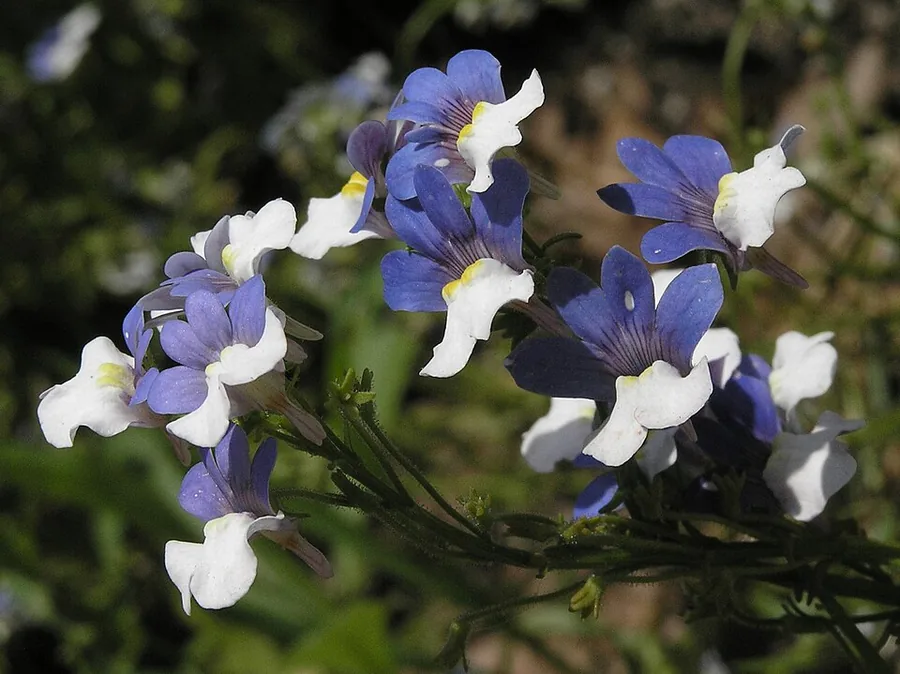
Nemesia is a low, fast-growing member of the figwort family from southern Africa, where the bright, two-lipped flowers earned it the name Cape jewels. At a mature height of just 6 to 12 inches it holds naturally to the front of a border, a window box, or a container that lets it trail. The flowers span nearly the full color range and continue as long as conditions stay mild.
Its performance turns on a single trait: nemesia grows as a cool-season annual. Planted around the last frost, it flowers from spring into early summer, then declines as heat accumulates because warmth beyond its comfort range shuts down bloom. Cool-summer regions extend that window, while hot-summer regions do best working it as a spring or fall crop.
Once established in a suitable site, nemesia demands little. Full sun, an organically rich soil, and even moisture meet its core needs, and pinching young growth to build density plus regular deadheading to keep the plant flowering sustain a long, productive bloom season.
Care
The short version: site it in full sun under cool conditions, in an organically rich soil kept evenly moist yet well-drained, feed a balanced fertilizer through the growing season, and pinch it young to build a bushy habit.
Light
Nemesia flowers most freely in full sun, since strong light drives the bud production that keeps the display going. A little afternoon shade helps in hot-summer areas, but deep shade thins the bloom and stretches the stems into a leggy habit.
Water
Hold the soil evenly moist but never soggy, watering every 2 to 4 days and more often under heat as evaporation climbs. Deliver water at the base and keep the foliage dry, because free moisture on the leaves is what allows powdery mildew to establish.
Soil
Grow it in humusy, well-drained soil, loamy or sandy and high in organic matter, so moisture is held without waterlogging the roots. The plant is indifferent to pH across 6.0 to 8.0, but it will not tolerate a saturated root zone.
Temperature
This is a cool-weather species, most productive between 39°F and 75°F (4°C to 24°C). It withstands light cold, but growth and flowering falter once daytime heat pairs with warm nights beyond that range.
Humidity
Ambient outdoor humidity is adequate, so there is no target figure to manage. The controlling factor is air movement, since still, saturated air around crowded plants is the condition under which mildew develops.
Feeding
Apply a balanced fertilizer monthly through the growing season to sustain the nutrient demand of continuous bloom. Yellowing leaves or a purple cast signal deficiency and confirm that a feeding is due.
Pruning
Pinch the growing tips once or twice while young to force branching and a fuller form, and deadhead spent flowers to keep the plant setting new buds rather than seed. When bloom slows or heat sets in, cut back by a third to a half to remove tired growth and trigger a fresh flush.
Size & spacing
Nemesia stays compact at 6 to 12 inches (15 to 30 cm) tall with a comparable spread. Allow 6 to 12 inches (15 to 30 cm) between plants so air circulates through the canopy and mildew pressure stays low.
When to plant
Nemesia is governed by temperature, performing in cool weather and declining once summer heat builds. Start seed indoors in late winter, transplant around the last frost, and expect flowering from spring into early summer until rising heat ends the display.
Northern hemisphere
Southern hemisphere
Typical months for a temperate climate: start earlier in warm zones, later where spring frosts linger.
- Sow: Start seeds indoors 8 to 10 weeks before the last frost date.
- Plant: Set out seedlings or starter plants around the last frost date as a cool-season annual.
- Harvest: Blooms spring into early summer; in hot climates best in spring or fall, with summer heat causing dieback.
Hardiness
USDA hardiness zones: 2–11
Temperature: down to -46°C
Troubleshooting
Most nemesia problems reduce to a single imbalance in heat or water. Monitor the whole plant through the summer heat and the foliage across the rest of the season. Match the symptom below and intervene while a correction still changes the outcome.
Collapse from rotted roots and stem bases
Waterlogged soil starves the roots of oxygen and opens the door to root rot, which leaves the tissue brown and mushy. Tissue this far gone cannot recover, so discard the worst plants and lift the sound ones into soil amended with compost, where added structure restores drainage. Watering only to demand and allowing the profile to drain between applications keeps the root zone aerated.
Fix:
- Improve drainage with organic matter
- Avoid overwatering
- Replant healthy plants in well-drained soil
Wilting and bloom failure at the onset of summer heat
As a cool-season plant, nemesia responds poorly once hot, humid days combine with warm nights, and the plant slides into decline. Afternoon shade lowers canopy temperature while evenly moist soil eases the water stress that follows. Cutting the plant back by a third to a half removes the flagging tissue and redirects reserves into new shoots, which often flush again as temperatures drop.
Fix:
- Provide afternoon part shade
- Cut plants back by one-third to one-half to encourage new growth
- Keep soil evenly moist during heat
White powdery colonies on leaves and stems
The white bloom on the foliage is powdery mildew, a fungus that establishes where leaf surfaces stay damp and air stagnates around the canopy. Directing water to the soil line keeps the foliage dry and denies the spores the moisture they need to germinate, while adequate spacing moves humid air off the leaves. A neem oil application checks a colony that has already taken hold.
Fix:
- Water at the soil line and keep foliage dry
- Improve spacing and air circulation
- Apply neem oil if needed
Distorted shoots with honeydew or leaf stippling
Curled tips, sticky honeydew, and silvery stippling are the signatures of aphids or thrips drawing sap from the tender growth. A firm jet of water dislodges a light population from the shoots, and insecticidal soap or neem oil suppresses a heavier one on contact. Inspecting the plants every few days catches colonies while numbers are still low and damage is limited.
Fix:
- Spray with insecticidal soap
- Apply neem oil
- Rinse off light infestations with water
Toxicity
Good news for pet owners and parents: nemesia is non-toxic to people and animals alike. The ASPCA does not list it among toxic plants, so it can be grown in a bed accessible to a cat, dog, or rabbit without concern.
Safe for
People · Cats · Dogs · Horses · Rabbits · Livestock · Birds
Cats None
Nemesia carries no toxins that would poison a cat, so a curious nibble presents no real hazard. Any plant eaten in volume can still produce transient gastrointestinal upset, and nemesia is no exception.
Dogs None
No part of nemesia is toxic to dogs, which makes a shared garden bed entirely safe for them. A chewed stem tends to yield only mild drooling or a brief digestive upset from the ingested fiber.
Horses Safe
Nemesia holds no toxins known to affect horses, so its presence in a grazed area poses no risk.
Rabbits Safe
Rabbits can browse nemesia without consequence, as the plant contains nothing that harms them.
Livestock Safe
Cattle, goats, and sheep are unaffected by nemesia growing in or adjacent to their pasture.
Birds Safe
Nemesia presents no toxicological threat to birds that sample its seed or foliage.
People Safe
Nemesia is cultivated as an ornamental rather than a food crop, yet it is not poisonous, and a child who tastes a flower is not harmed.
Varieties
Named nemesia selections are grouped mainly by mature height and flower color. The few below appear often enough to be worth recognizing.
Blue Gem
A compact selection topping out at 6 to 9 inches and bearing clear, true-blue flowers.
Carnival
A denser, bushier form of 9 to 12 inches that flowers in a bright, varied color range.
Triumph
A dwarf selection marketed as a mixed-color blend suited to confined spaces and edging.
How to propagate
Nemesia propagates readily, either from a late-winter sowing of seed or from a handful of cuttings taken off an existing plant.
SeedEasy
Start indoors 8 to 10 weeks before last frost, or sow outdoors in spring. · Germinates in roughly 1 to 2 weeks; flowering within a couple of months.
Seed is the standard means of raising nemesia. Sow indoors 8 to 10 weeks before your last frost or direct sow outdoors in spring, and because the seed germinates in darkness, cover it lightly and hold it moist. Emergence follows in 1 to 2 weeks, and the plants reach flowering within a couple of months.
Stem cuttingsModerate
Take soft-stem cuttings in summer. · Roots form in about 4 to 6 weeks.
Cuttings reproduce a chosen plant true to type, at the cost of more time and attention. Collect 4 inch soft-stem cuttings in summer, treat the bases with rooting hormone, and hold them under consistent moisture while roots develop over the next 4 to 6 weeks.
Myths
Nemesia is a true perennial that comes back on its own every year.
Botanically it is a tender perennial of southern African origin, yet garden practice almost never treats it as one. It seldom survives either a hot summer or a cold winter, which is why it is cultivated as a cool-season annual and replanted each season.
Nemesia loves summer heat like most bedding annuals.
Its physiology favors cool conditions, and it deteriorates under hot, humid days paired with warm nights. High summer temperatures commonly cause dieback, which a hard cutback and afternoon shade can partly offset while the plant waits out the heat.