Ornamental · Scrophulariaceae
Diascia
Diascia barberae
A cool-season twinspur that flowers hardest in mild weather and never threatens your pets.
Full sun
Every 2–4 days
USDA 8–11
8–12 in · 20–30 cm
Overview
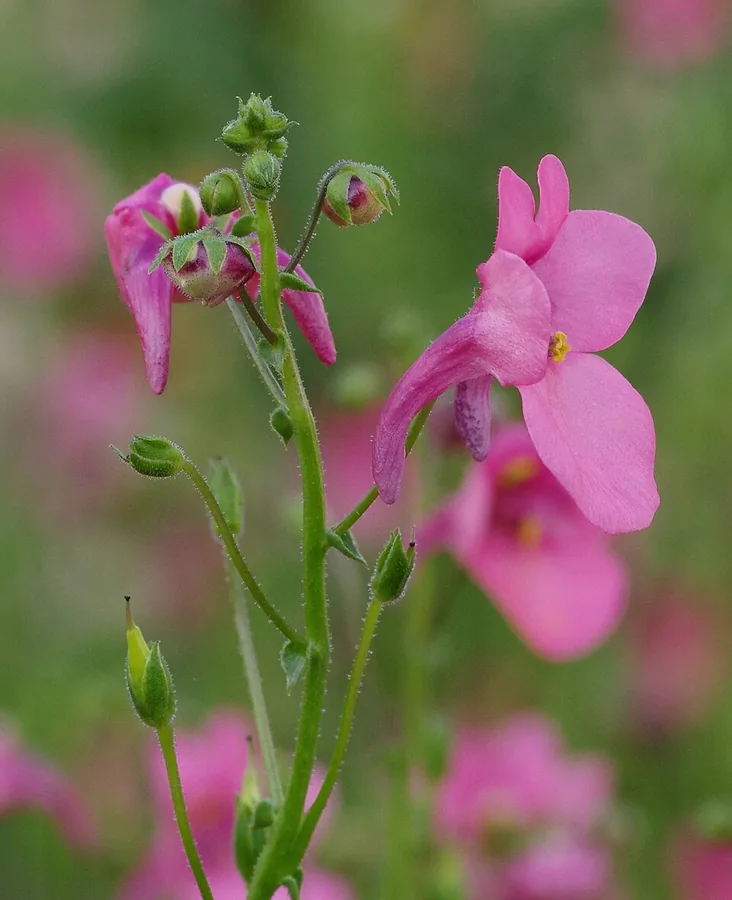
Diascia, known as Twinspur, comes from South Africa and grows low and spreading. Each small flower carries a pair of backward-pointing spurs, the detail that earned the common name, and the blooms arrive in loose sprays of coral, pink, rose, and orange.
Its habit suits the front of a border and, even more, the edge of a container or a hanging basket where the stems tumble over the rim. The plant is a tender perennial, so it earns its keep as a season-long performer wherever frost ends the year.
Grown as an annual in most gardens, Diascia is a cool-season bloomer: it flowers hardest through mild spring and fall and tends to coast in the worst of summer heat. It is not frost-tolerant, which shapes both when you plant it and how you carry it from one year to the next.
Care
The short version: give Diascia full sun and soil that stays evenly moist, since dry roots shut down flowering. Feed monthly through the season, pinch and deadhead to keep it dense and blooming, and shear it back if heat stalls the show to draw out a fresh fall flush. It is safe around every pet and child.
Light
Full sun is ideal, and it is what drives the heaviest bloom. Diascia will tolerate partial shade, and in hot-summer regions a little afternoon shade actually helps the plant cope. Push it into deeper shade, though, and you pay for it: low light thins the flowering and stretches stems into floppy, leggy growth as they reach for the sun.
Water
Keep the soil evenly moist and never let it dry out, because dry roots cause the plant to stop flowering. Containers and hanging baskets dry fastest, so check them often. Watering every 2 to 4 days suits most settings, with more frequent watering through hot weather when both demand and evaporation climb.
Soil
Aim for moderately fertile, organically rich soil that holds steady moisture yet drains freely, so the roots stay damp without sitting in water. Diascia is easy on pH and grows well anywhere from 6.0 to 8.0, which spans slightly acidic through alkaline ground.
Temperature
The plant runs comfortably across a range of 10°F to 90°F (-12°C to 32°C). Because it is a cool-season grower, flowering eases off near the top of that band, and it has no frost tolerance, so cold below freezing ends the display.
Humidity
Ordinary outdoor humidity is all Diascia asks; there is no target level to hit. What does matter is air movement: good airflow keeps the foliage dry, and dry foliage gives slugs and snails far less reason to settle in.
Feeding
Feed monthly through the growing season with a balanced general-purpose fertilizer made for container and bedding plants. Steady, moderate feeding supports the long bloom run without forcing soft, sappy growth.
Pruning
Pinch the stems of young plants to force branching and a bushier shape, then deadhead spent flowers through the season to keep new buds coming. When summer heat slows the bloom, shear the plant back; the cutback prompts fresh growth and a renewed flush of flowers as fall approaches.
Size & spacing
Plan for a low mound about 8 to 12 inches (20 to 30 cm) tall that spreads 12 to 18 inches (30 to 46 cm) wide at a moderate pace. Space plants to match that spread so the spreading stems can knit together without crowding.
When to plant
Diascia keys its schedule to frost, because it cannot take any. Start seed indoors 6 to 8 weeks ahead of your last spring frost, or sow it outdoors a week or two before that date. Set plants out once frost danger has passed, and expect bloom from April until frost closes the season.
Northern hemisphere
Southern hemisphere
Typical months for a temperate climate: start earlier in warm zones, later where spring frosts linger.
- Sow: 6-8 weeks before the last spring frost; seed may also be sown outdoors 1-2 weeks before the last frost date
- Plant: After danger of frost has passed in spring
- Harvest: Spring through summer to fall (April to frost)
Hardiness
USDA hardiness zones: 8–11
Temperature: down to -12°C
Troubleshooting
Most trouble with Diascia is cosmetic and traceable to its cool-season nature or to a lapse in routine care. The three patterns below cover what you are most likely to see, along with the mechanism behind each so the fix makes sense.
Heat has paused the bloom, not a disease
Diascia is a cool-season bloomer, so when midsummer temperatures climb the plant slows or halts flowering to ride out the heat. The foliage stays sound, which tells you this is a seasonal rest rather than pest or disease damage. Shearing the planting back and holding even moisture sets it up to flower again as the weather cools toward fall.
Fix:
- Shear the planting back to encourage a fresh flush of fall bloom
- Keep soil consistently moist during heat
Snails and slugs are grazing the foliage
Irregular holes torn through leaves and petals, paired with silvery slime trails, point to snails and slugs working the planting after dark or after rain. They favor damp, sheltered conditions, so the damage often follows wet stretches. Picking them off in the evening and setting traps or baits knocks the population down, while drier surfaces and better airflow make the planting far less inviting to them.
Fix:
- Hand-pick snails and slugs in the evening
- Use traps or appropriate slug baits
Too little pinching and too little light
Stretched stems with wide gaps between leaves and only scattered blooms usually trace back to two things: the plant was never pinched to force branching, and it is sitting in too much shade. Low light thins the bloom and pushes stems to stretch and flop as they reach for sun. Pinching young plants, deadheading through the season, and moving containers somewhere brighter restore a dense, free-flowering habit.
Fix:
- Pinch young plants to promote branching
- Deadhead spent flowers regularly
- Move container plants to a sunnier location
Toxicity
Diascia is non-toxic across the board. It does not appear on the ASPCA toxic list, and no poisoning cases are on record for any animal or for people. The worst plausible outcome is the mild, brief stomach upset that any leafy roughage can cause, which comes from the eating rather than from the plant.
Safe for
People · Cats · Dogs · Horses · Rabbits · Livestock · Birds
Cats None
No toxic effect. Diascia is not on the ASPCA toxic list, and a curious cat that nibbles a stem faces nothing worse than the mild, passing stomach upset any plant roughage can cause.
Dogs None
No toxic effect. A dog can chew the foliage or flowers without harm from the plant itself; the only possible result is the brief tummy upset that follows eating any greenery.
Horses Safe
Safe to graze near. No poisoning has been documented in horses, and the plant carries no known toxic compounds.
Rabbits Safe
Safe around rabbits, with no toxic principle recorded. A rabbit that samples it comes to no harm from the plant.
Livestock Safe
Safe for grazing livestock such as goats, sheep, and cattle. The plant is not known to poison them.
Birds Safe
Safe around birds. Nothing in the plant is known to harm them.
People Safe
Safe for people. It is not grown for eating, but a child who tastes a flower will come to no harm from it.
Varieties
Breeders have pushed Diascia toward hardier garden plants, fresh flower colors, and tidier shapes for pots. A few selections worth knowing follow below.
Coral Canyon
A hardier selection prized for tougher garden performance, it carries sheets of coral-pink flowers that hold up better than many of its kin.
Flirtation Orange
A favorite for beds and containers, this one trades the usual pink for warm orange blooms.
Diamonte series
A compact, mounding hybrid series bred for dense flowering in pots and hanging baskets.
Darla Rose
A vigorous grower chosen for heavy bloom, it covers itself in bright rose-pink flowers.
How to propagate
Diascia takes to two easy methods. Seed gives you bloom the same year, while softwood cuttings let you hold a named hybrid true and carry it through a cold winter indoors.
SeedEasy
Start indoors 6-8 weeks before the last frost, or sow outdoors 1-2 weeks before the last frost date · Several weeks to germinate and establish before blooming the same season
Seed is the simplest route and rewards you with flowers in the same season. Give seedlings several weeks to germinate and settle in before you expect bloom, and time the sowing to the last frost so plants are ready when the weather steadies.
Stem cuttingsEasy
Take softwood cuttings during the active growing season in spring or summer · Roots in roughly 2-4 weeks under warm, moist conditions
Softwood cuttings taken during active growth root readily in warm, moist conditions, usually within 2 to 4 weeks. This is the dependable way to overwinter a named hybrid in a cold climate and to keep that hybrid true to type, since seed will not always come back identical.
Myths
Diascia is poisonous to cats and dogs, so keep it away from pets.
False. The plant does not appear on the ASPCA toxic list, no poisoning cases have been documented, and it rates as pet-safe. You can plant it freely where animals roam.
It is a hardy perennial everywhere and will overwinter in any garden.
False. Outdoor winter survival is limited to USDA zones 8 to 11. In colder regions it is grown as an annual, so you replant each spring or root cuttings to carry a plant through.