
Introduction
Finding the Best Soil for Roses: Expert Tips for Lush Blooms begins with a truth most gardeners learn the hard way. What you plant in matters more than any fertilizer, spray, or pruning trick you will ever try. I spent years throwing money at fancy products at the garden center. Then I figured out the ground under my bushes was the real issue. Bad dirt held my garden back from reaching its full potential every single season.
Illinois Extension says it plain. "Poorly drained soils and wet feet spell death for roses." That one line changed how I grow mine. Rose soil works like a foundation for a house. Get it right and everything above ground grows strong and full of color. Get it wrong and no amount of feeding will save your bushes from wilting and dropping petals all summer long. I tested this myself and saw the proof with my own eyes in my backyard beds.
Most online guides skip soil biology and regional factors that shape how well your plants perform in the ground. They tell you to buy a bag of potting mix and call it done. This guide draws on real research from 4 state extension programs. It also looks at a study on beneficial fungi that boost bloom size and root strength. These findings can help you get better results in your own garden beds at home.
You can grow in clay, sand, or pots on a small patio and still get great results. Preparing soil for roses the right way saves you effort and cash every single season from spring through fall. You don't need a degree in plant science to make this work for you at home. Just follow the steps below and your bushes will reward you with bigger, brighter blooms this year and for many years to come.
Best Soil Types for Roses
Not all dirt works the same for growing strong bushes. The best loam soil for roses has about 40% sand, 40% silt, and 20% clay based on data from Missouri Extension. Colorado State Extension adds that great garden ground is about 50% solid material. The rest should be 25% water and 25% air in the gaps between particles.
Most of us don't have perfect loam in our yards. I know mine was packed clay when I started out. The good news is you can fix almost any soil texture with the right mix of work and amendments. The table below shows what each type brings and how to make it better for your bushes.
Want to know your soil texture at home? Fill a jar with garden dirt and water, shake it up, then let it sit for 24 hours and watch the layers form. Sand drops to the bottom first, silt lands in the middle, and clay stays on top. This quick test shows you what you're working with so you can pick the right fix from the chart below.
If you have clay soil for roses, don't try mixing in sand to fix it. Colorado State Extension research shows that any blend below 70% sand packs even tighter than plain clay. Raised beds with fresh loam and compost give you the best results when your native ground fights back against every shovel.
Sandy soil for roses drains fast and lets nutrients wash right through before roots can grab them. The fix is simple. Mix in aged manure and compost at a 1:2 ratio with your native sand. Add a thick layer of organic mulch on top and your well-drained soil roses will hold water and food much better through hot summer months.
Soil pH and Nutrient Balance
Think of soil pH for roses as a gatekeeper that controls what your plants can eat. At a pH between 6.0 and 6.5, the gate opens wide and all 16 nutrients flow to the roots with ease. Move outside that sweet spot and the gate starts to close on key minerals your bushes need to bloom and grow.
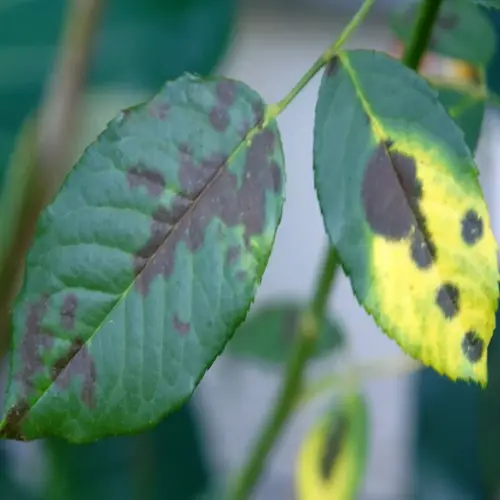
I learned this lesson when my hybrid teas showed yellow leaves with green veins one spring. Soil testing roses with a quick kit showed my pH had dropped to 4.8 after years of pine needle mulch. Below pH 5.0, toxic levels of aluminum, zinc, and manganese flood the root zone and burn your plants from the inside out. A bag of lime fixed my problem in about 3 months.
Acidic soil roses need all 3 major nutrients to thrive. Nitrogen phosphorus potassium roses use for growth, blooms, and disease defense come from the ground. Your bushes also need trace elements like iron and magnesium. Nevada Extension lists these as critical for strong canes and bright flowers.
Nutrient absorption works best when your soil chemistry stays in balance. Get a soil test done in the fall so any pH changes can settle through winter. This gives sulfur or lime several months to shift the pH before your spring planting season starts. The table below breaks down what each nutrient does and what signs to watch for when something runs low.
Organic Amendments That Work
Knowing how to amend soil for roses starts with picking the right organic matter for your ground type. Aged manure roses grow in acts as the workhorse that fixes both sandy and clay soils at the same time. Peat moss roses benefit from adds water holding power in dry climates. Leaf mold works best as a surface mulch that feeds soil microbes over many months.
I've used aged manure in my own beds for years now. Missouri Extension calls it "one of the best soil additives" for bushes. Spread 2 to 4 inches of organic matter roses need before tilling it into the ground. The key ratio is 1 part amendment to 2 parts native soil when you fill your planting holes.
Oregon State Extension warns against going too heavy with soil amendments for roses in single planting holes. Roots need to push out into your native dirt for long term health and drought resistance. Too much compost for roses in one spot traps water and creates a soggy pocket that rots roots. Amend the whole bed instead of just one hole for the best results over time.
Aged Manure
- Best for: Both clay and sandy soils; rated the top rose soil additive by University of Missouri Extension for its balanced nutrient profile.
- Application rate: Spread 2 to 4 inches over the planting area and till into the top 12 inches (30 centimeters) of soil before planting.
- Key benefit: Provides slow-release nitrogen, improves soil structure, feeds beneficial soil organisms, and increases water-holding capacity in sandy ground.
- Important note: Use only well-aged or composted manure that has cured for at least 6 months; fresh manure burns roots and introduces weed seeds.
Garden Compost
- Best for: General soil improvement in any soil type; the most versatile amendment available for rose gardeners everywhere.
- Application rate: Mix at a 1:2 ratio of compost to native soil when backfilling planting holes, per Oregon State and Missouri Extension guidance.
- Key benefit: Good compost contains 40% to 60% organic matter by dry weight, which improves drainage in clay and water retention in sand simultaneously.
- Important note: Avoid using compost as the sole backfill; roses need to establish roots in native soil for long-term stability and drought resistance.
Peat Moss
- Best for: Alkaline and arid soils where you need to lower pH and increase water-holding capacity for moisture-loving rose varieties.
- Application rate: Blend with native soil at no more than one-third by volume; excessive peat creates overly acidic conditions below pH 5.0.
- Key benefit: Excellent water retention capacity makes it valuable in sandy or fast-draining soils common in desert and southern climates.
- Important note: Peat is a non-renewable resource harvested from bogs; coconut coir offers a sustainable alternative with similar water retention properties.
Leaf Mold
- Best for: Surface mulching and long-term soil building; feeds the soil food web that supports mycorrhizal fungi critical to rose health.
- Application rate: Apply 2 to 5 inches (5 to 13 centimeters) as mulch around rose bases, keeping material 3 inches away from stems to prevent rot.
- Key benefit: Breaks down slowly and steadily, releasing nutrients while maintaining soil moisture and suppressing weeds around rose plantings.
- Important note: Leaf mold takes 6 to 12 months to produce from raw leaves; start a dedicated pile each fall for the following season.
Alfalfa Meal
- Best for: Established roses that need a natural growth boost during active growing season without risk of chemical burn.
- Application rate: Apply 1 to 2 cups per rose bush sprinkled around the drip line and lightly scratched into the soil surface every 4 to 6 weeks.
- Key benefit: Contains triacontanol, a natural fatty acid growth stimulant, plus balanced nitrogen that promotes vigorous cane growth and larger blooms.
- Important note: Available at farm supply stores as rabbit or horse feed, often at a fraction of the cost of packaged rose-specific fertilizer products.
Drainage and Water Management
Roots need to breathe just like leaves do. Waterlogged soil roses sit in pushes out the oxygen that roots need to stay alive. That's why drainage for roses matters more than any fertilizer you can buy at the store. I've lost more bushes to wet feet than to bugs, cold, or disease put together in my years of growing.
Missouri Extension says an 18 inch hole filled with water should empty in 90 to 120 minutes for roses. Illinois Extension gives a wider window of 5 to 6 hours. Both schools agree on the core point. If water still sits in that hole the next day, you need raised beds roses can thrive in or a new spot in the yard for your plants.
Overwatering roses kills more plants than drought does in most home gardens. Root rot roses get from soggy ground spreads fast once it starts. You can't fix it with sprays or pruning after the damage is done. Water deep but less often to push roots down where the ground stays cool and moist. Nevada Extension says to reach the full 18 to 24 inch root zone depth each time you water your beds.
Standing Water After Rain
- Cause: Compacted or clay-heavy soil that prevents water from percolating through the root zone within a reasonable time frame.
- Quick test: Dig an 18-inch (46-centimeter) hole, fill it with water, and time how long it takes to drain all the way for a reliable drainage check.
- Solution: Build raised beds at least 12 inches (30 centimeters) high filled with a loam-compost blend to lift roots above the waterlogged native soil level.
- Prevention: Avoid tilling wet clay soil because compaction worsens with each pass; wait until soil crumbles when squeezed rather than forming a sticky ball.
Soil Dries Out Too Fast
- Cause: Sandy or gravel rich soil with large particles that allow water to pass straight through before roots can absorb adequate moisture and nutrients.
- Quick test: Water a test area and check moisture depth after one hour by inserting a probe or digging a small hole to see how far water penetrated.
- Solution: Incorporate aged manure and compost at a 1:2 ratio with native sandy soil and apply 3 to 5 inches (8 to 13 centimeters) of organic mulch on top.
- Prevention: Irrigate deep but less often to encourage deep root growth rather than weak surface roots that dry out between watering sessions.
Bathtub Effect in Clay
- Cause: Amending only the planting hole in heavy clay creates a pocket that fills with water from surrounding unamended clay, rotting roots from below.
- Quick test: After planting, check the hole bottom for standing water one day after heavy rain by carefully probing beside the root ball with a long stick.
- Solution: Amend the entire bed rather than individual holes, or install drainage tile below the amended area to channel trapped water away from roots.
- Prevention: Colorado State Extension research shows the only safe sand-clay ratio is above 70%; otherwise the mixture packs denser than pure clay.
Uneven Moisture Zones
- Cause: Sloped or terraced gardens where water runs off high spots and pools in low spots, creating dry pockets and saturated zones in the same bed.
- Quick test: Place several small containers across the bed during irrigation to measure water distribution and identify dry spots receiving less than 1 inch of water.
- Solution: Install drip irrigation with emitters spaced even around each rose, delivering water right to root zones at a slow, consistent rate.
- Prevention: Nevada Extension recommends irrigating to the full 18 to 24 inch (46 to 61 centimeter) root zone depth to ensure deep, even saturation.
Good well-drained soil roses grow in does not mean bone dry ground. It means water moves through at a steady pace without pooling or rushing. Think of it like a sponge that holds moisture but still lets air reach every root. That balance keeps your bushes strong and free from the rot that kills so many garden plants each year.
Container and Raised Bed Soil
Container roses soil needs to drain faster than what you use in the ground. I grow 6 bushes in pots on my patio and learned this the hard way when 2 died from root rot in their first summer. The best potting mix for roses combines good structure with fast water flow so roots stay moist but never sit in a puddle at the bottom of the pot.
For a basic 5 gallon pot, combine 3 parts potting soil for roses, 1 part perlite, and 1 part compost. Run water through the mix until it flows from the bottom within 30 seconds to test your drainage. If it takes longer than that, add more perlite until you get the flow right. Florida Extension says to plant at the same depth as the nursery pot to avoid burying the graft.
Rose soil for pots loses nutrients fast because water flushes them out with every session. You need to feed container bushes more often than those in the ground. Raised bed soil roses grow in holds nutrients better since the volume is much larger. The best soil for roses in containers gets a refresh every 2 to 3 years when the mix compacts. I swap mine out each spring and my potted bushes bloom twice as hard after the change.
Soil Biology and Mycorrhizae
Here's what no other guide about rose growing covers. Mycorrhizae for roses act like an extended root system under the ground. These tiny fungi send threads far past the root ball to pull water and minerals from dirt your roots can't reach on their own. About 80% of all land plants on Earth team up with these beneficial fungi roses depend on for peak health.
A peer reviewed study by Abdel Salam and team in 2017 proved just how much these fungi matter. Roses with mycorrhizae grew 38% more flower mass than those without the fungi in their soil. Flower size jumped by 45% too, from 8.83 cm to 12.83 cm across. Under hard drought, the fungi treated plants still bloomed while the others produced zero flowers at all.
The soil microbiome under your bushes needs care to stay strong and active. Oregon State Extension warns that new home sites lose most of their natural fungi during building work. You can rebuild this living soil roses thrive in with 3 steps. Add compost, cut back on tilling, and grow cover crops between seasons. I saw my own soil microbiome bounce back in just 2 seasons using this method. Organic soil health starts with feeding the ground, not just the plant.
Here's the big warning about the phosphate mycorrhizae connection. Too much phosphorus is "deadly to mycorrhizal associations" says Dr. Chalker Scott at Washington State. She adds that roses rarely lack nutrients beyond nitrogen in most garden soils. Get a soil test before you add bonemeal to your beds. You don't want to kill the very fungi that help your bushes bloom.
5 Common Myths
Roses are heavy phosphorus feeders and always need extra bonemeal or superphosphate added to their soil.
University research from Washington State shows roses rarely lack nutrients beyond nitrogen, and excess phosphorus blocks absorption of iron, manganese, and zinc.
Adding sand to clay soil will improve drainage and make it suitable for growing healthy roses.
Colorado State Extension research shows any sand-clay mixture below 70 percent sand actually packs more densely than straight clay, creating worse drainage.
Buying commercial mycorrhizal inoculant products and adding them to your soil gives roses a proven growth advantage.
University of Maryland Extension and Washington State research found no significant benefit from packaged mycorrhizae when added to healthy soils with adequate organic matter.
All roses require acidic soil below pH 6.0 and will die if the soil is even slightly neutral or alkaline.
Roses grow well across a pH range of 5.5 to 7.0, with 6.0 to 6.5 being ideal; many varieties tolerate neutral soils without issue when other conditions are met.
Using coffee grounds as a soil amendment will reliably lower pH and provide roses with the acid they love.
Used coffee grounds have a nearly neutral pH of 6.5 to 6.8 and add only small amounts of nitrogen, so they do not meaningfully acidify soil for roses.
Conclusion
Great rose soil comes down to 3 things. Drainage, pH, and organic matter form the base that every strong bush needs to thrive in your yard. Get these 3 right and you've done more for your plants than all the fancy products in the garden store combined. I've seen this proven in my own beds and in the research from 4 state extension programs.
The science speaks for itself here. Preparing soil for roses with care leads to real gains you can see and measure. Roses growing with healthy soil fungi produce 38% more flower mass based on peer reviewed data. Good drainage is the single most critical factor in keeping your bushes alive and growing year after year. These 2 facts alone should guide every choice you make about your rose soil this season.
Most gardeners skip the one step that matters most. Soil testing before amending tells you what your ground needs and what it already has plenty of in it. The best soil for roses does not need every product on the shelf thrown at it. Using less fertilizer often gets you better results. Excess phosphorus kills the soil amendments for roses that do the most good in the ground.
Now that you know the science behind great growing conditions, every change you make builds a stronger base for years of blooms. Start with a simple soil test this season and use those results to pick the right fixes for your yard. Your bushes will reward that smart work with bigger flowers and stronger canes. You'll build the kind of garden that makes your neighbors stop and stare.
External Sources
Frequently Asked Questions
Which soil composition ensures optimal rose growth?
A well-drained loam with roughly 40 percent sand, 40 percent silt, and 20 percent clay, enriched with 2 to 4 inches of organic matter mixed to a 12-inch depth, gives roses the drainage, aeration, and nutrients they need.
Can commercial potting mixes be suitable for roses?
Many commercial mixes work well for container roses, but they often need added perlite for drainage and may lack micronutrients roses require for sustained blooming.
How frequently should I water potted roses?
Water potted roses when the top 1 to 2 inches of soil feel dry, which usually means daily in summer heat and every 2 to 3 days in cooler weather.
Which organic amendments benefit rose soil?
Aged manure, compost, leaf mold, and peat moss are the most effective organic amendments for roses, each improving soil structure, drainage, and nutrient content.
Could roses thrive in heavy clay soil?
Roses can grow in clay soil if you amend it heavily with compost and coarse organic matter to break up density and improve drainage, but pure unworked clay will cause root rot.
Which fertilizer for blooming roses is ideal?
A balanced fertilizer with nitrogen, phosphorus, and potassium plus micronutrients like iron and magnesium supports the best blooming, but always soil-test first to avoid excess phosphorus.
Can roses grow better in containers or garden beds?
Garden beds typically produce larger, more vigorous roses because of greater root space and more stable soil moisture, but containers allow flexible placement and work well with proper care.
What can I do to improve sandy soil for roses?
Add generous amounts of compost, aged manure, or leaf mold to sandy soil to increase its water-holding capacity and nutrient retention before planting roses.
Can compost alone be sufficient for rose nutrition?
Compost provides excellent soil structure and slow-release nutrients, but most roses also benefit from supplemental nitrogen during active growth since compost alone may not supply enough.
Which signs indicate poor rose soil quality?
Yellowing leaves, stunted growth, poor drainage with standing water, wilting despite watering, and sparse blooming all signal that your rose soil needs testing and improvement.