
Introduction
Black spot on roses is the most damaging fungal disease for outdoor rose gardens across the globe. If you grow roses, this Black Spot Roses: Prevention & Treatment Guide shows you proven methods that work in real gardens and not just in lab tests. You deserve a clear road to healthy blooms.
I lost 3 rose bushes to this disease before I figured out how fast the fungus moves. Penn State Extension research shows new spores form in as few as 10 days after the first infection. The full cycle repeats every 2 weeks. Think of it as a relay race among fungal spores. Each batch passes the baton to the next unless you break the chain early on.
Most rose disease treatment guides only cover one slice of the problem. This prevention and treatment guide puts resistant varieties and care calendars in one place. You also get fungicide tips and organic fixes. No more jumping between 5 different sites just to build a solid plan for your yard.
In my experience, the gardeners who beat this disease use a mix of smart plant choices and good timing. I've tested dozens of methods on my own rose beds over the past 7 years and tracked what gave the best results each season.
Below you'll find the best resistant rose picks to start with. From there, each section gives you a clear step forward against a disease that has plagued rose growers since 1815. Grab your pruning shears and let's get going.
8 Black Spot Resistant Roses
Picking the right rose is the fastest way to cut your black spot problems in half. I've grown over 20 disease resistant rose varieties in my own garden and watched how each one held up during wet summers. The 8 black spot resistant roses below earned their spots through hard data from university trials and years of real world testing.
Keep in mind that no rose is 100% immune to every strain of this fungus. Lab tests checked Knock Out roses against 3 races of the fungus. A plant that fights off one race might still catch another. Still, these picks give you the strongest starting point you can get.

Knock Out (RADrazz)
- Resistance: Knock Out roses show strong resistance to multiple races of Diplocarpon rosae in Earth-Kind trials conducted at the University of Minnesota, making them one of the most reliable choices for gardeners in humid climates.
- Growth Habit: This shrub rose grows 3 to 4 feet (0.9 to 1.2 meters) tall and wide, producing continuous blooms from spring through the first hard frost in a compact, rounded form.
- Bloom Details: Cherry-red single blooms appear in abundant clusters and are self-cleaning, meaning spent flowers drop naturally without requiring deadheading from the gardener.
- Climate Range: Thrives in USDA hardiness zones 5 through 9, tolerating both summer heat and moderate winter cold with minimal protection needed in most regions.
- Caveat: While highly resistant to black spot, Knock Out roses remain susceptible to Cercospora leaf spot according to UF/IFAS research, so monitor for brown leaf spots with concentric rings.
- Best For: Beginner gardeners and low-maintenance landscapes where reliable disease resistance and continuous color are the top priorities throughout the growing season.
HomeRun (WEKcisbako)
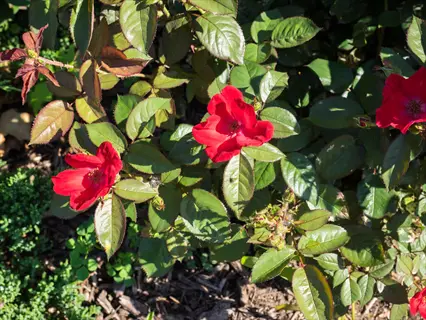
- Resistance: HomeRun shows verified resistance to black spot in university trials and was specifically bred as an improvement on Knock Out, with even stronger disease tolerance across multiple fungal pathogens.
- Growth Habit: Compact shrub reaching 3 to 4 feet (0.9 to 1.2 meters) in height, with dense branching that naturally promotes air circulation through the center of the plant.
- Bloom Details: Produces vibrant red single-petaled flowers continuously from late spring through fall, with each bloom lasting several days before self-cleaning from the plant.
- Climate Range: Performs well in USDA hardiness zones 4 through 9, offering slightly better cold tolerance than many other disease-resistant modern shrub roses available today.
- Caveat: Like Knock Out, HomeRun carries some susceptibility to Cercospora leaf spot, so pair it with good sanitation practices and monitor leaves for brown spots.
- Best For: Gardeners seeking an upgraded version of Knock Out with broader climate adaptability and proven resistance data from controlled university research programs.
Carefree Beauty
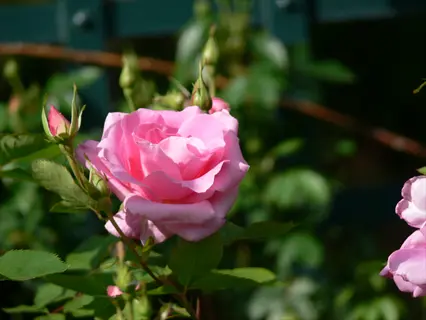
- Resistance: Carefree Beauty is an Earth-Kind designated cultivar with proven resistance to black spot across multiple testing locations, performing reliably in both humid and semi-arid climates.
- Growth Habit: This vigorous shrub rose grows 4 to 5 feet (1.2 to 1.5 meters) tall with an upright arching form that naturally allows good airflow around and through the canopy.
- Bloom Details: Semi-double medium pink flowers with a light fragrance bloom repeatedly throughout the growing season, followed by attractive orange-red rose hips in fall and winter.
- Climate Range: Performs in USDA hardiness zones 4 through 9, with particularly strong results in Texas and the Southern Plains where heat and humidity stress most rose varieties.
- Maintenance: Requires almost no fungicide applications in most climates, making it one of the most cost-effective choices for gardeners who prefer minimal chemical intervention.
- Best For: Gardeners in hot, humid climates who want a fragrant, repeat-blooming rose that thrives with little to no disease treatment throughout the entire growing season.
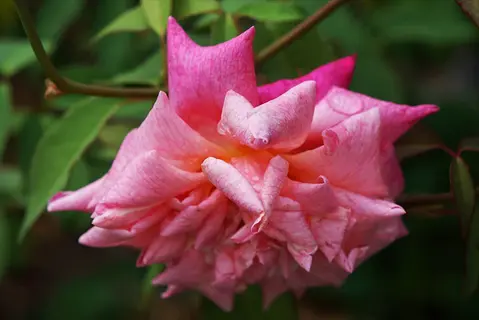
Mrs. B.R. Cant
- Resistance: UF/IFAS research identifies Mrs. B.R. Cant as one of the rare old garden roses showing dual resistance to both black spot and Cercospora leaf spot, a significant advantage over modern cultivars.
- Growth Habit: A vigorous tea rose growing 4 to 6 feet (1.2 to 1.8 meters) tall with a graceful spreading form typical of heritage tea roses, ideal for cottage-style gardens.
- Bloom Details: Deep silvery-rose colored double blooms with a classic tea rose fragrance appear repeatedly from spring through fall, each flower displaying an elegant cupped form.
- Climate Range: Best suited for USDA zones 7 through 10, thriving in warm Southern climates where black spot pressure is consistently high throughout the extended growing season.
- Heritage Value: Bred in 1901, this cultivar has survived over a century of disease pressure and remains one of the few roses with scientifically documented dual-disease resistance.
- Best For: Heritage rose enthusiasts in warm climates who value fragrance, classic form, and scientifically verified resistance to the two most common fungal diseases affecting roses.
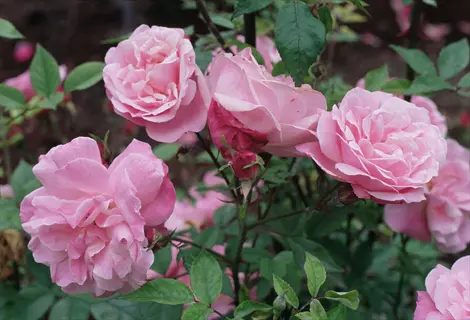
Spice (Old Garden Rose)
- Resistance: Alongside Mrs. B.R. Cant, UF/IFAS research identifies Spice as having confirmed dual resistance to both black spot and Cercospora leaf spot, offering reliable protection against two major diseases.
- Growth Habit: A compact old garden rose typically growing 3 to 4 feet (0.9 to 1.2 meters) with upright form and moderate vigor suitable for smaller garden spaces and border plantings.
- Bloom Details: Produces light pink, sweetly fragrant blooms with a spicy undertone that gives this cultivar its name, flowering in flushes throughout the warm growing season.
- Climate Range: Performs best in USDA zones 7 through 9, where warm temperatures and humidity would normally create ideal conditions for black spot infection on susceptible varieties.
- Unique Advantage: Having dual disease resistance means fewer fungicide applications are needed overall, reducing both maintenance cost and environmental impact in the garden.
- Best For: Gardeners seeking a compact, fragrant old garden rose with verified dual-disease resistance, especially useful in humid Southern regions where fungal pressure is relentless.
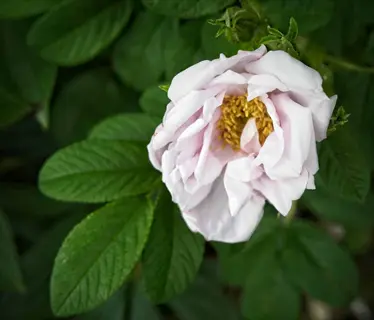
Rugosa Hybrids (Rosa rugosa)
- Resistance: Rosa rugosa and its hybrids are widely recognized across multiple university extension sources as among the most naturally disease-resistant roses available, with thick textured leaves that resist fungal colonization.
- Growth Habit: Most rugosa hybrids grow 4 to 6 feet (1.2 to 1.8 meters) tall and equally wide, forming dense thorny hedges that serve both ornamental and practical boundary purposes.
- Bloom Details: Single to semi-double flowers in white, pink, or magenta appear from late spring through fall, followed by large decorative rose hips rich in vitamin C.
- Climate Range: Exceptionally cold-hardy through USDA zones 2 through 7, making rugosa roses the top choice for Northern gardeners where other resistant varieties cannot survive harsh winters.
- Additional Benefits: Salt tolerance makes rugosa hybrids ideal for coastal gardens where foggy, humid conditions would normally promote black spot on other rose types throughout the season.
- Best For: Northern and coastal gardeners who need extreme cold hardiness or salt tolerance combined with natural disease resistance, especially in landscapes with minimal maintenance budgets.
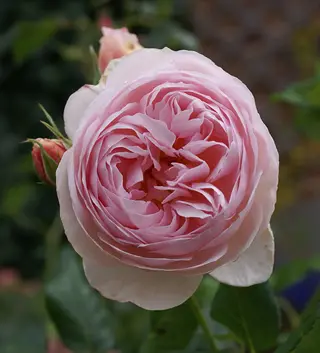
David Thompson (Rugosa)
- Resistance: David Thompson is specifically noted by Penn State Extension as a disease-resistant rugosa hybrid, combining the natural toughness of Rosa rugosa with improved bloom form and repeat flowering.
- Growth Habit: Grows 3 to 4 feet (0.9 to 1.2 meters) tall with dense, spreading form and the characteristically wrinkled, textured foliage that helps rugosa varieties resist fungal infections.
- Bloom Details: Medium pink double flowers with a strong, sweet fragrance bloom repeatedly from early summer through fall, making this one of the more ornamental rugosa selections available.
- Climate Range: Hardy in USDA zones 3 through 8, performing exceptionally well in cold Northern climates where gardeners have few disease-resistant options that also offer repeat blooms.
- Low Maintenance: Needs virtually no fungicide applications and tolerates poor soil, partial shade, and coastal exposure better than most other repeat-blooming fragrant rose varieties.
- Best For: Cold-climate gardeners who want a fragrant, repeat-blooming rose that requires no disease treatment and handles challenging growing conditions without complaint throughout the season.
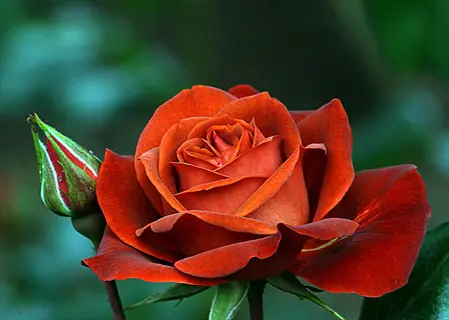
Floribunda Shrub Roses
- Resistance: Multiple university extension sources list floribunda roses as a class with generally better black spot resistance than hybrid teas, though individual cultivar resistance varies significantly.
- Growth Habit: Floribundas typically grow 3 to 5 feet (0.9 to 1.5 meters) tall with a bushy, well-branched form that naturally promotes the air circulation needed to reduce black spot risk.
- Bloom Details: Flowers appear in large clusters rather than individually, providing masses of color from late spring through fall with a wider range of colors and forms than most shrub roses.
- Climate Range: Most floribundas perform well in USDA zones 5 through 9, with certain cultivars bred specifically for heat tolerance in Southern gardens or cold tolerance in Northern regions.
- Selection Tip: Look for floribunda varieties that have received the All-America Rose Selections award or Earth-Kind designation, as both programs test specifically for disease resistance under garden conditions.
- Best For: Gardeners who want abundant color from cluster blooms, moderate disease resistance, and the widest selection of colors and flower forms among black spot resistant rose categories.
The Carefree Beauty rose and rugosa roses on this list need the least amount of care in my testing. If you want a true "plant it and forget it" option, those two types are your safest bets for a low effort garden that still looks great.
How Black Spot Infects Roses
You need to know how the black spot fungus lifecycle works if you want to stop it. The fungus goes by the name Diplocarpon rosae. It spreads faster than most gardeners think. From the moment a spore lands on a wet leaf to the point it makes thousands of new black spot spores, the whole cycle can finish in just 2 weeks.
Leaf wetness duration is the single biggest factor in whether an infection takes hold. UC IPM research shows leaves must stay wet for more than 7 hours for the fungus to get in. UF/IFAS data puts the sweet spot for growth at around 64 degrees Fahrenheit. The table below shows the full infection timeline from start to finish.
The key thing I've noticed in my own garden is how sneaky this infection timeline can be. Spots show up 3 to 16 days after a spore lands, which means damage you see today started weeks ago. That's why waiting for visible signs before you act puts you behind the fungus every time. University of Maryland research shows the fungus can't live in soil past 1 month. But it hides in fallen leaves and stem cracks all winter long.
Seasonal Prevention Calendar
A solid rose care calendar takes the guesswork out of black spot control. I used to wing it each spring and got hit hard by the fungus. Once I locked in a season by season plan, my roses stayed much healthier each year. This seasonal rose treatments guide gives you clear steps for every part of the growing cycle.
Penn State data says you should start your dormant spray roses program once daily highs hit the upper 50s. That's about 15°C for those outside the US. Spring rose care black spot tasks at bud break fungicide timing set the tone for the whole year. Fall cleanup roses duties matter just as much because spores hide in old leaves through winter.
Late Winter and Early Spring
- Cleanup: Remove all remaining fallen leaves and debris from around rose bushes, as overwintering spores survive primarily in leaf litter and infected cane lesions from the previous season.
- Pruning: Cut back canes 6 to 8 inches (15 to 20 centimeters) below any visible lesions or dark discolored areas during dry weather to remove as much harbored fungus as possible.
- Tool Sanitation: Disinfect pruning shears between each cut using 70% rubbing alcohol or a 10% bleach solution to prevent transferring spores from one cane to another.
- Dormant Spray: Apply a dormant fungicide spray such as lime-sulfur before new growth begins to kill overwintering spores on cane surfaces and reduce the initial infection load.
Spring Through Bud Break
- Trigger Point: Begin regular fungicide applications when daily high temperatures consistently reach the high 50s Fahrenheit (about 15 degrees Celsius), which signals the start of active fungal germination.
- Spray Schedule: Apply fungicide every 7 to 14 days depending on weather conditions, with more frequent applications during wet or humid periods and longer intervals during dry spells.
- Mulch Application: Apply 2 to 3 inches (5 to 7.5 centimeters) of fresh mulch around rose bases to create a physical barrier that prevents rain from splashing soil-borne spores onto lower leaves.
- Watering Switch: Transition to drip irrigation or soaker hoses if you have not already, and water only in the early morning so any wet foliage dries well before nightfall reduces evaporation.
Summer Growing Season
- Monitoring: Inspect roses at least twice per week for the first signs of black spots, focusing on lower and inner leaves where humidity stays highest and air circulation is most limited.
- Immediate Response: Remove any spotted leaves as soon as they appear, placing them in a sealed bag for trash disposal rather than composting, to interrupt the spore production cycle at its source.
- Fungicide Rotation: Alternate between at least two active ingredients from different chemical groups every other application to prevent the fungus from developing resistance to your treatment program.
- Air Flow Maintenance: Thin out dense interior growth throughout summer to maintain the air circulation that helps leaves dry faster and reduces the hours of wetness that black spot spores require.
Fall and Pre-Winter Preparation
- Thorough Cleanup: Collect and dispose of every fallen leaf around your roses before the first frost, since Diplocarpon rosae survives winter primarily in this debris rather than in the soil itself.
- Final Pruning: Remove any remaining infected canes and dispose of them with household trash rather than composting, because home compost piles rarely reach temperatures high enough to kill fungal spores.
- Soil Surface Preparation: After cleanup, apply a fresh layer of mulch to bury any remaining spore-containing debris and create a clean surface that reduces splash-up during late-season rains.
- Planning Ahead: Evaluate which roses performed worst during the season and consider replacing chronically infected plants with resistant cultivars to reduce overall disease pressure next year.
This calendar approach turned my garden around in just 2 seasons. The biggest change came from fall cleanup. Once I got strict about clearing every last leaf, the next spring started with far less disease pressure.
Fungicide Rotation Explained
Fungicide rotation roses care is the one thing most home gardeners skip. I made this mistake for 2 full years before a local master gardener set me straight. Using the same spray over and over is like giving the fungus a study guide for the test. It learns to resist that one defense. Rotation keeps the fungus guessing by changing the rules each time you spray.
The table below breaks down the main options you can use. Each product falls into a FRAC group based on how it attacks the fungus. Chlorothalonil roses sprays and copper fungicide roses products sit in Group M. They hit the pathogen in many ways at once, so fungicide resistance is much harder for the fungus to build.
Sulfur fungicide roses sprays use a contact method. Systemic fungicide roses products work from inside the leaf. Wisconsin data says you must swap between at least 2 active types from different groups. Don't pick 2 from the same FRAC group. They work the same way at the cell level.
My go to rotation in my own garden is a Group M contact spray one week and a Group 3 systemic the next. This approach covers both prevention and active infections. UF/IFAS data backs up that Group M products have the lowest risk of building fungicide resistance over time.
Organic Remedies That Work
If you want to skip harsh chemicals, organic treatment black spot roses methods can still get the job done. I've used neem oil black spot sprays and copper spray roses products on my own beds for the past 4 years. The results are real, but you need to be honest about what works and what doesn't. Natural remedies black spot guides often hype up fixes that have weak science behind them.
UC IPM research backs neem oil and potassium bicarbonate roses sprays. Sulfur based organic fungicide is also on the list. Baking soda gets a lot of buzz, but experts like Professor Chalker-Scott at Washington State doubt it works. The 4 options below have solid data behind them.
Neem Oil Spray
- Efficacy: UC Integrated Pest Management lists neem oil as providing measurable control against black spot when applied consistently every 7 days, though it works best as a preventive rather than a cure for established infections.
- Application: Mix according to label directions (typically 2 tablespoons per gallon or 30 milliliters per 3.8 liters of water) and spray all leaf surfaces thoroughly in the early morning or late evening to avoid sun burn.
- Advantages: Neem oil also controls aphids, spider mites, and other common rose pests, making it a multi-purpose organic treatment that reduces the total number of sprays needed throughout the season.
- Limitations: Effectiveness drops significantly once black spot is already established on a plant, so begin applications preventively at bud break and continue throughout the growing season without gaps.
Sulfur-Based Fungicides
- Efficacy: Sulfur is one of the oldest and most well-documented organic fungicides, classified as a multi-site inhibitor (FRAC Group M2) with consistently low risk of fungal resistance development over time.
- Application: Apply as a dust or wettable spray every 7 to 10 days during the growing season, but never when temperatures exceed 85°F (29°C) because sulfur can burn foliage in heat.
- Advantages: Widely available, affordable, and approved for organic gardening certification, making sulfur one of the most accessible disease control options for home rose gardeners on any budget.
- Limitations: Cannot be combined with or applied within two weeks of oil-based sprays (including neem oil), as the combination causes severe leaf damage known as phytotoxicity on rose foliage.
Copper Fungicide Sprays
- Efficacy: Copper-based products are multi-site contact fungicides (FRAC Group M1) that create a protective barrier on leaf surfaces, preventing spore germination when applied before infection takes hold.
- Application: Apply copper sprays during dry weather every 7 to 14 days throughout the growing season, following label rates carefully because copper can cause leaf damage at higher concentrations.
- Advantages: Effective against a wide range of fungal and bacterial diseases beyond black spot, providing broad-spectrum protection for the entire rose garden with a single product application.
- Limitations: Repeated use over many seasons can cause copper to accumulate in garden soil, potentially reaching levels that harm earthworms and beneficial soil microorganisms in the root zone.
Potassium Bicarbonate
- Efficacy: UC Integrated Pest Management includes potassium bicarbonate among recommended treatments for black spot, as it raises the leaf surface pH to levels that inhibit spore germination effectively.
- Application: Dissolve according to product label directions in water and spray all leaf surfaces every 7 to 10 days, reapplying after any rainfall since this contact product washes off easily.
- Advantages: Safe for beneficial insects and pollinators, breaks down quickly in the environment, and carries essentially zero risk of causing fungicide resistance in the black spot pathogen.
- Limitations: Provides no residual protection once washed off by rain, requiring more frequent reapplication than synthetic fungicides, which can increase the time and labor cost of organic rose care.
In my garden, I rotate between neem oil and copper spray on a weekly basis from April to October. This gives me both bug control and fungus control in one program. Organic care takes more effort than a single chemical spray, but the results are worth it if you stick with the plan.
Pruning and Sanitation Tips
Good rose pruning black spot habits can cut your infection rate in half. I used to prune my roses without cleaning my tools between cuts. That one mistake spread the fungus to 4 healthy bushes in a single afternoon. Now rose garden sanitation is the first thing I do before I make any cut.
Wisconsin data says you should prune below infection spots by 6 to 8 inches to make sure you remove all hidden fungal growth. Always disinfect pruning tools between each cut using one of the methods in the table below. You also need to sterilize pruners when you move from one bush to the next.
After every cut, dispose infected rose leaves and stems in a sealed trash bag. Never toss them in your compost pile. Home bins don't get hot enough to kill the spores. University of Maryland data shows the fungus can't live on tools past 1 month. But it thrives in fallen leaves and stem cracks all winter.
I keep a jar of 70% rubbing alcohol next to me while I prune. A quick dip after each cut takes less than 30 seconds and saves you from spreading the fungus across your whole garden. This one simple habit is the best thing I ever added to my rose care routine.
5 Common Myths
Baking soda mixed with water is a proven and reliable cure for black spot on rose bushes.
Limited peer-reviewed research supports baking soda as an effective black spot treatment. University plant pathologists have questioned its efficacy as a standalone remedy.
Once you plant a disease-resistant rose variety, you will never have to worry about black spot again.
Multiple pathogen races of Diplocarpon rosae exist, and resistance to one race does not guarantee immunity to all. Resistant varieties still benefit from preventive care.
Black spot fungus can live in garden soil for years and reinfect your roses each spring season.
University of Maryland Extension research shows the fungus cannot survive in soil beyond one month. It overwinters primarily in fallen leaves and infected cane lesions.
You only need to spray fungicide on roses when you first see black spot symptoms appearing on leaves.
Preventive application starting at bud break is far more effective than reactive spraying. By the time spots appear, the fungus has already spread spores to neighboring leaves.
Overhead watering in the early morning is just as safe as drip irrigation for preventing black spot.
Any overhead watering increases leaf wetness duration. Since black spot requires more than 7 hours of wet leaves to infect, drip irrigation or soaker hoses are significantly safer options.
Conclusion
Black spot roses prevention comes down to doing a few things right and on time. This rose care guide covered disease resistant roses you can plant and a seasonal calendar for care. You also got fungicide rotation tips and organic fixes with real research behind them. Each piece works on its own but they're strongest as a full plan together.
In my experience, the Penn State data about spore timing sticks with me every season. New spores form in just 10 days, so this fungus won't wait for you. Steady rose disease treatment from bud break to fall cleanup makes the difference. A clean garden starts with timely action every season.
If you can only do one thing this season, pick the step that fits your garden best. Start with a resistant variety if you're planting new roses. Switch to a seasonal spray schedule if your current bushes keep getting hit. Clean up every fallen leaf this fall and you'll start next spring with a much lower spore count.
I've watched my own garden go from heavy black spot damage to almost none over 3 years. The methods in this guide made that change happen. Your roses can bounce back too as long as you stay consistent and don't give the fungus a 2 week head start.
External Sources
Frequently Asked Questions
What is the best way to permanently treat black spot on roses?
Permanent treatment requires removing all infected leaves, applying fungicides on a 7 to 14 day schedule starting at bud break, rotating active ingredients, and maintaining strict garden sanitation through every season.
Could roses survive severe black spot infections?
Most roses can survive severe black spot if you remove infected foliage promptly, apply appropriate fungicide treatments, improve growing conditions, and support recovery with balanced fertilization over subsequent growing seasons.
Which organic fungicides work against black spot?
Effective organic fungicides include neem oil, sulfur-based sprays, potassium bicarbonate, and copper fungicides, all of which provide measurable control when applied consistently every 7 to 14 days.
Will Epsom salt help prevent black spot?
No strong scientific evidence supports Epsom salt as a black spot preventative. While magnesium sulfate can address magnesium deficiency, it does not have proven antifungal properties against Diplocarpon rosae.
What is the best way to stop black spot from returning?
Stopping black spot from returning requires year-round effort including fall leaf cleanup, spring dormant sprays, proper watering techniques, good air circulation, and choosing resistant cultivars.
Can black spot be contagious to other plants?
Black spot caused by Diplocarpon rosae is specific to roses and does not infect other plant species, though spores can spread between rose plants through rain splash, wind, and contaminated tools.
When is the right time to spray roses for black spot?
Begin spraying when daily temperatures reach the high 50s Fahrenheit (about 15 degrees Celsius) in spring, continue every 7 to 14 days through the growing season, and reapply after any rainfall exceeding 0.25 inches (6 millimeters).
Could compost spread black spot fungus?
Yes, composting infected rose leaves can spread black spot if the compost pile does not reach sustained temperatures above 140 degrees Fahrenheit (60 degrees Celsius). Always dispose of infected foliage separately.
Which soil conditions worsen black spot?
Poor drainage, compacted soil, and low organic matter create conditions that stress roses and increase susceptibility. Soil that stays waterlogged raises humidity around lower leaves, promoting fungal germination.
What causes black spot treatments to fail?
Treatments fail most often because of inconsistent application timing, failure to rotate fungicide active ingredients, skipping reapplication after rain, and not removing infected debris that reinfects the plant.