Ornamental · Fabaceae
Hyacinth Bean
Lablab purpureus
Give it heat, full sun, and a tall trellis, and hyacinth bean throws purple flowers and glossy pods clear into fall.
Full sun
Every 5–7 days
50–95°F · 10–35°C
90–120 days
Overview
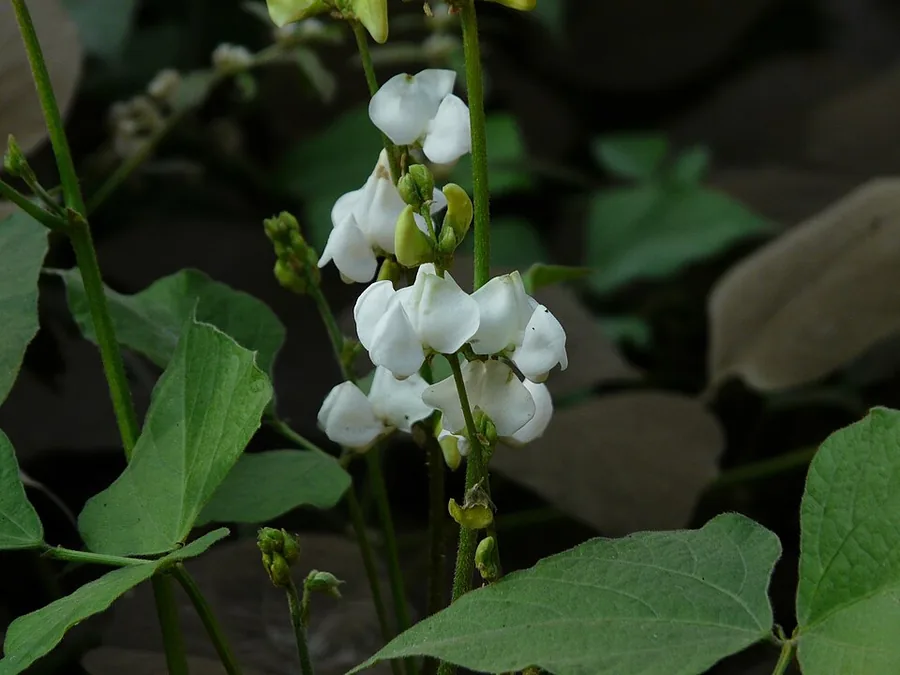
Hyacinth bean is a fast-growing ornamental climber grown for its spikes of purple or white flowers and the glossy reddish-purple pods that succeed them and keep their color until frost. A legume in the pea and bean family, it persists for years in warm climates but is handled as a summer annual from seed across most of its range. On a tall support it will ascend well past head height within a single growing season.
Its ornamental value carries the plant, with pods as decorative as the flowers, and its rate of growth lets it clothe an arbor or fence faster than nearly any other annual you can sow. Being heat-adapted, it stays productive through the hottest weeks of summer, when many other climbers slow.
One trait separates it sharply from an edible garden bean. Its raw mature seeds and pods contain cyanogenic compounds and are toxic eaten raw, becoming safe only after thorough cooking, so the plant is best appreciated for its display rather than harvested for the table.
Care
The short version: full sun and sustained warmth, a light well-drained soil kept evenly moist through establishment, a balanced feed applied sparingly on nitrogen, and a sturdy support engineered for fast, heavy growth.
Light
Site hyacinth bean in full sun, ideally 6 or more hours daily, since ample light drives both flowering and pod pigmentation. It withstands modest afternoon shade, but heavier shade shifts the balance toward leggy stems at the expense of bloom.
Water
Keep the soil evenly moist through establishment, then reduce watering, because an established plant tolerates some drought. Water deeply during hot, dry spells, and favor a light, well-drained medium over one that stays saturated.
Soil
Average, fertile, well-drained loam suits it, at a pH of 6.0 to 7.5. It is undemanding as to fertility, so drainage carries more weight than soil richness.
Temperature
This warm-season plant performs best between 50°F and 95°F (10°C to 35°C) and slows as temperatures fall. Frost is lethal, so it is set out only after the last frost of the season.
Humidity
Ambient outdoor humidity is entirely adequate, so no target applies. Good airflow is the more useful lever, since a crowded, damp canopy predisposes the plant to leaf spot.
Feeding
Apply a balanced fertilizer monthly through summer. As a nitrogen-fixing legume it supplies much of its own nitrogen, so restrict high-nitrogen feeds, which promote foliage at the expense of flowering.
Pruning
Pinch the growing tips early to stimulate branching, after which little cutting is required. Remove spent pods to sustain flowering, and cut the frost-killed vine back at the end of the season.
Repotting
not typically grown in containers; grown as an annual from seed each year
Size & spacing
Expect a vigorous climber of 10 to 20 feet (3 to 6 m) in height with a spread of 3 to 6 feet (91 to 183 cm). Provide a sturdy trellis or arbor and adequate room so the substantial mass of growth has secure support.
When to plant
Hyacinth bean is heat-driven and frost-sensitive, so timing follows temperature rather than the calendar. Sow outdoors only once the cold has passed and the soil has warmed, or start it indoors 6 to 8 weeks ahead to lengthen the effective season, and it flowers from summer through to the first fall frost.
Northern hemisphere
Southern hemisphere
Typical months for a temperate climate: start earlier in warm zones, later where spring frosts linger.
- Sow: 6 to 8 weeks before the last spring frost
- Plant: after danger of frost has passed and soil is warm
- Harvest: summer to frost (roughly June until first fall frost)
Hardiness
USDA hardiness zones: 10–11
Temperature: down to -1°C
Troubleshooting
Hyacinth bean is resilient and largely trouble-free, with insects accounting for more damage than pathogens. Inspect the leaves and new growth for the early indicators below, and intervene before a localized issue extends along the vine.
Stippled, yellowing leaves veiled in fine webbing
Fine pale stippling with faint webbing signals spider mites, which multiply under the hot, dry conditions that also stress the host plant. They pierce individual cells and drain the contents, which produces the flecked, fading appearance. Confirm by tapping a leaf over white paper to reveal the moving specks, then hose the canopy to dislodge them and raise humidity, escalating to insecticidal soap or horticultural oil if the population persists.
Fix:
- Hose down foliage to dislodge mites and raise humidity
- Apply insecticidal soap or horticultural oil if infestation persists
Stalled vines and thin bloom below its heat threshold
As a warm-season species, hyacinth bean stalls in cool weather, producing short vines and sparse bloom because low temperatures suppress its growth. The same check follows transplanting into soil that has not yet warmed or before frost danger has cleared. Hold planting until the soil warms and site the vine in a sheltered, full-sun position, and growth resumes once temperatures climb into its preferred range.
Fix:
- Wait to plant until soil is warm and frost danger has passed
- Provide a full-sun, sheltered, warm site
Interveinal tissue grazed to a lacy skeleton
A lace-like skeleton across the blade points to Japanese beetle feeding, which concentrates in summer as the adults aggregate on the foliage. The beetles consume the softer interveinal tissue and leave the tougher vein network intact, hence the see-through pattern. Hand-collect the metallic green-and-copper adults at first light, when they are sluggish, and tolerate minor loss, since a vigorous vine refoliates faster than the beetles can strip it.
Fix:
- Hand-pick beetles in early morning and drop them into soapy water
- Tolerate light damage, since vines push out fresh foliage and survive well
Puckered new growth glazed with honeydew
Distorted, sticky shoot tips and buds are the signature of aphids, which feed on the tender, sap-rich new growth and excrete the sugary honeydew that glazes the surface. Inspect the undersides of young leaves for colonies of the small green or black insects. Dislodge them with a strong jet of water first, reserving insecticidal soap for colonies that outpace that mechanical control.
Fix:
- Spray colonies off with a strong jet of water
- Apply insecticidal soap to heavy infestations
Circular brown lesions that coalesce in humid spells
Roughly circular brown lesions that expand during wet, humid weather indicate fungal leaf spot, since prolonged leaf wetness lets the spores germinate and colonize the blade. As infection advances the discrete spots run together across affected leaves. Remove the worst leaves, water at the base to keep the canopy dry, and space the vines so air movement shortens the periods of leaf wetness the fungus needs.
Fix:
- Remove and discard badly affected leaves
- Improve air circulation and avoid overhead watering
Toxicity
Regard the colorful pods as strictly ornamental. The raw mature seeds and pods contain cyanogenic glycosides that are toxic to people and animals alike, and only thorough cooking renders the young pods safe. Keep the glossy pods and seeds away from children, pets, and grazing animals.
Toxic to
Cats · Dogs · Horses · Rabbits · Livestock · Birds
Safe for
People
Cats Caution
In cats, chewing the raw seeds or pods releases the cyanogenic compounds and can produce drooling, vomiting, and abdominal discomfort. Site the glossy pods beyond a cat's reach.
Dogs Caution
Dogs are the most likely to chew the conspicuous pods, and the raw beans can bring on gastrointestinal upset, retching, and lethargy. Clear fallen pods from any area a curious dog frequents.
Horses Caution
The cyanide-releasing compounds present in the raw beans and foliage can render a horse weak, dyspneic, and inappetent. Exclude the vine from areas where horses graze.
Rabbits Caution
Raw seeds and pods are unsuitable browse for rabbits and can provoke digestive upset and lethargy. Withhold all vine trimmings from them.
Livestock Caution
Cattle, goats, and sheep that ingest large quantities of the raw beans risk cyanide poisoning, with staggering, labored breathing, and, in severe cases, collapse. Exclude them from plantings that have set pods.
Birds Caution
Pet and backyard birds should not consume the raw mature seeds, which contain the same cyanogenic glycosides. Confine them to feed of known safety.
People Young cooked pods safe
Young pods are eaten in many countries once cooked through. The raw mature beans differ and must be boiled in several changes of water before consumption, because raw they release cyanide capable of causing nausea, dizziness, and worse. Do not eat the raw beans or pods under any circumstances.
Keep the colorful pods and seeds away from children and curious pets; never eat raw mature beans or pods. Only thoroughly cooked beans are safe.
Helpline numbers

United States
ASPCA Animal Poison Control: (888) 426-4435 (fee applies)
Poison Control: (800) 222-1222



Canada
Poison Centres: 1-844-764-7669
Varieties
A small number of named selections appear in cultivation, separated chiefly by flower and pod color. The two below are the ones worth recognizing.
Ruby Moon
This is the ornamental selection most widely cultivated, identified by its deep purple stems and glossy reddish-purple flat pods that retain their color across the season.
Alba (white-flowered form)
This is a white-flowered, white-seeded selection bearing plain green pods, lacking the purple pigmentation of the typical form.
How to propagate
Hyacinth bean is raised from seed, and because it germinates quickly and grows rapidly, a single packet will furnish a considerable length of trellis in one warm season.
SeedEasy
Sow outdoors after frost when soil is warm, or start indoors 6 to 8 weeks before the last frost. · Germinates in roughly 1 to 3 weeks; grows rapidly to cover a trellis in a single season
Propagate hyacinth bean from seed each year, sowing outdoors after frost once the soil has warmed or starting indoors 6 to 8 weeks before the last frost. Because the seed coat is hard, soaking or nicking it improves imbibition and speeds the 1 to 3 week germination, after which the vine grows rapidly enough to cover a trellis in a single season. Install a sturdy trellis or arbor before that surge of growth, and collect seed in autumn for replanting the following spring.
Myths
Being a bean, its pods and seeds can be eaten raw straight from the vine.
The raw mature seeds and pods contain cyanogenic glycosides and are toxic when eaten raw. Mature beans become safe only after thorough cooking, boiled in several changes of water, and within the US the species is cultivated chiefly as an ornamental rather than a food crop.