
Introduction
You might think these tropical fruits only grow on tall trees in faraway places. The truth is they come from the world's largest herbaceous plant and can thrive right in your own yard. This guide on how to grow bananas: expert tips for bountiful harvests covers what works. Every tip here comes from real world tests and solid university research that you can trust and put to use right away.
When I first planted a Dwarf Cavendish sucker 8 years ago, my neighbors thought I was out of my mind. That single sucker turned into a mat that now gives me 25 to 40 pounds of fruit per stem each season. Good banana plant care can push your yields up to 100 pounds from the same root system. Those figures come from the UF Extension research program. My own garden confirms them every single year without fail, and you can expect similar results with the right setup in your own space.
Your mat works like a self renewing factory once it gets going. One stem finishes fruiting and the next one is on its way up from the same roots. Over 1,000 cultivars exist across USDA Zones 5 through 11. That means growing bananas is possible in more spots than you'd ever expect. You can find cold hardy options for your backyard bananas patch even in cooler parts of the country where frost hits each winter.
This guide walks you through the whole process from start to finish. You'll learn how to pick the right variety for your climate and your yard. You'll also get advice on soil prep, watering schedules, feeding plans, and pruning methods. In my experience, the right knowledge turns your first sucker into a fruit source that keeps producing for years to come.
8 Best Banana Varieties to Grow
Picking the right variety is the single most important choice you'll make before you plant. The Gros Michel used to be the world's top banana until Panama disease wiped it out in the 1950s. The Cavendish banana took its place, but now Tropical Race 4 threatens that variety too. Disease resistant banana varieties give you the best shot at long term success in your garden.
I grouped these 8 banana varieties by what they do best for you. You'll find sweet dessert types like the dwarf banana and Lady Finger banana for fresh snacking. There are cooking types for the kitchen and a cold hardy banana for northern growers. FHIA cultivars bred to fight diseases that no spray can stop round out the list. Each pick below tells you the size, climate zone, and best use so you can match the right plant to your yard.
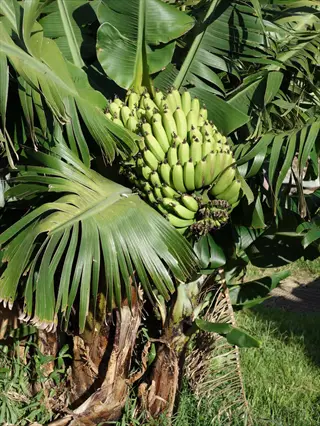
Dwarf Cavendish
- Height: Grows 5 to 7 feet (1.5 to 2.1 meters) tall, making it ideal for smaller gardens and easier harvesting without a ladder or pole.
- Fruit: Produces classic sweet yellow bananas identical in flavor to supermarket fruit, with each pseudostem yielding 25 to 40 pounds of fruit.
- Climate: Thrives in USDA Zones 9 through 11 and tolerates brief cold snaps better than tall Cavendish types due to its compact, sturdy build.
- Best For: Beginner growers who want reliable fruit production with minimal fuss in warm climates, especially in Florida and coastal areas.
- Wind Resistance: Short varieties like Dwarf Cavendish withstand winds up to 45 miles per hour, compared to just 25 for tall varieties.
- Growing Tip: Space plants 8 to 10 feet (2.4 to 3 meters) apart for fruit production and maintain 3 to 4 pseudostems per mat for continuous harvests.
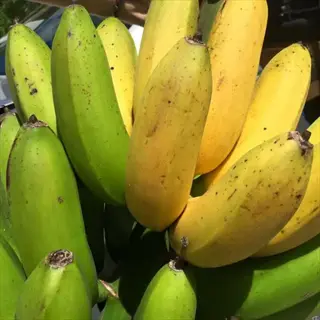
FHIA-01 Goldfinger
- Disease Resistance: Bred by the Honduran Foundation for Agricultural Research to resist Panama disease and Sigatoka, the two most destructive banana diseases worldwide.
- Fruit: Produces apple-flavored dessert bananas with a slightly firmer texture than Cavendish, popular with growers who want unique flavor and disease protection.
- Height: Grows 10 to 14 feet (3 to 4.3 meters) tall with a strong, wind-resistant pseudostem compared to standard tall Cavendish varieties.
- Best For: Gardeners in areas where Panama disease is a known concern or anyone wanting long-term disease protection without chemical treatments.
- Yield: Produces large bunches comparable to standard Cavendish with the added security of disease resistance that no spray or soil treatment can match.
- Growing Tip: Available through specialty tropical nurseries and university extension plant sales; worth the search for long-term planting success.
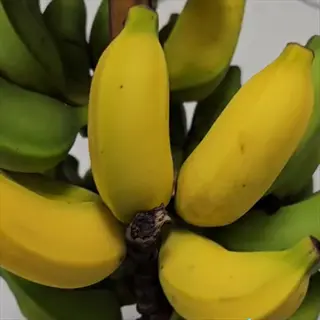
Lady Finger
- Fruit: Produces small, sweet bananas about 4 to 5 inches (10 to 13 centimeters) long with a creamy texture and honey-like flavor preferred by many home growers.
- Height: Grows 15 to 25 feet (4.6 to 7.6 meters) tall, so it needs a sheltered planting site with wind protection from structures or other banana plants.
- Climate: Performs best in USDA Zones 10 and 11 where frost is rare; the tall stature makes it vulnerable to wind damage at speeds above 25 miles per hour.
- Best For: Experienced tropical gardeners with space and wind protection who want premium flavor that outshines any variety found in grocery stores.
- Yield: Produces generous bunches of 100 to 200 small fruits per stalk, and the compact size makes them perfect for snacking and lunchboxes.
- Growing Tip: Plant in groups of 3 or more to create a mutual windbreak, and keep the planting area mulched heavily with organic material.
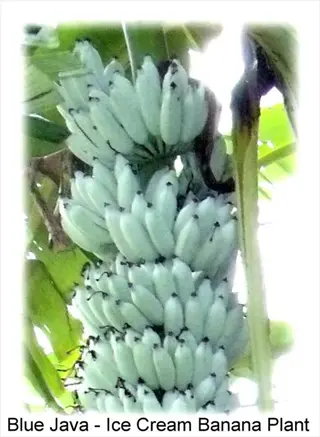
Ice Cream (Blue Java)
- Fruit: Produces silvery-blue skinned bananas that ripen to a creamy vanilla-flavored flesh, earning the nickname 'ice cream banana' among tropical fruit growers.
- Cold Tolerance: More cold-tolerant than most fruiting bananas, surviving brief dips to 20 degrees Fahrenheit (minus 7 degrees Celsius) with rhizome protection.
- Height: Grows 12 to 18 feet (3.7 to 5.5 meters) tall with a strong pseudostem that handles moderate wind better than many other tall varieties.
- Best For: Gardeners in USDA Zones 8 through 11 who want an unusual, conversation-starting variety with top tier dessert flavor.
- Appearance: The blue-green peel before ripening makes this one of the most visually striking banana varieties for both edible and ornamental use.
- Growing Tip: Provide extra mulch and frost protection in Zone 8 to 9 gardens; the rhizome survives cold but the pseudostem needs 9 to 15 months to fruit.
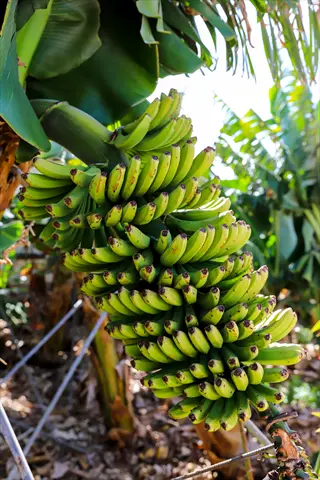
FHIA-02 Mona Lisa
- Disease Resistance: Resistant to both Panama disease and Black Sigatoka, providing dual protection against the banana industry's two most feared pathogens.
- Fruit: Produces cooking-type bananas similar to plantains, excellent for frying, baking, and boiling with a starchy flesh that holds its shape well when heated.
- Height: Grows 10 to 16 feet (3 to 4.9 meters) tall and produces large, heavy bunches requiring pseudostem support as the fruit matures.
- Best For: Home cooks who use plantains often and want a reliable, disease-resistant source of cooking bananas from their own backyard garden.
- Climate: Thrives in USDA Zones 9b through 11 and does great in the humid conditions of Florida and the Gulf Coast region.
- Growing Tip: Support the pseudostem with a T-shaped wooden brace once the bunch emerges, as the combined weight of stalk and fruit can cause toppling.
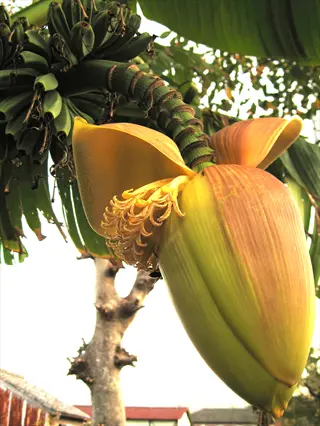
Musa Basjoo (Japanese Fiber)
- Cold Hardiness: The hardiest banana species, surviving temperatures down to minus 10 degrees Fahrenheit (minus 23 degrees Celsius) with heavy mulch protection on the rhizome.
- Ornamental Value: Grows 6 to 14 feet (1.8 to 4.3 meters) tall with large tropical leaves that create a dramatic landscape statement even in northern gardens.
- Fruit: Produces small, seedy, non-edible fruit, making this variety purely ornamental for gardeners outside fruiting zones who want tropical foliage.
- Best For: Gardeners in USDA Zones 5 through 8 who want tropical aesthetics without the warm climate, paired with edible varieties in warmer microclimates.
- Growth Rate: One of the fastest-growing banana species, regenerating 6 to 8 feet of pseudostem each growing season even after winter dieback to ground level.
- Growing Tip: Mulch the root zone with 12 inches (30 centimeters) of straw or leaves before first frost to protect the rhizome for reliable spring regrowth.
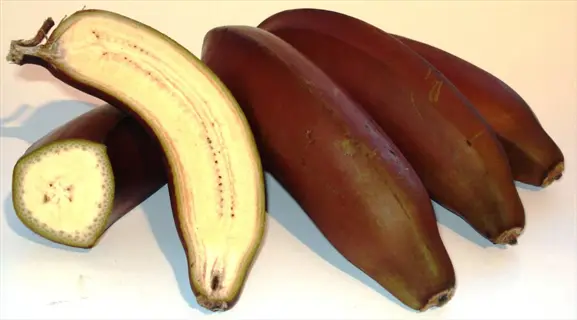
Red Dacca
- Fruit: Produces dark red to maroon skinned bananas with a sweet, slightly raspberry-tinged flesh that tastes distinctly different from standard yellow varieties.
- Height: Grows 10 to 15 feet (3 to 4.6 meters) tall with a reddish-purple pseudostem that adds ornamental value to the garden even before fruiting begins.
- Climate: Requires warm, frost-free conditions in USDA Zones 10 and 11, and produces best with consistent humidity above 50% year round.
- Best For: Adventurous home growers in tropical climates who want a visually stunning and unique tasting banana not available in most grocery stores.
- Timeline: Takes slightly longer to fruit than Cavendish at 15 to 18 months from planting to harvest, so patience is rewarded with exceptional fruit quality.
- Growing Tip: Red Dacca is more sensitive to wind than yellow varieties, so plant near a wall or fence on the south or southeast side of your property.
Orinoco (Burro)
- Versatility: One of the few dual-purpose varieties that works well both fresh as a dessert banana and cooked like a plantain when harvested at different ripeness stages.
- Cold Tolerance: Hardier than most fruiting bananas, surviving brief freezes in USDA Zone 8 with mulch and reliably fruiting through Zone 9 and warmer.
- Height: Grows 10 to 16 feet (3 to 4.9 meters) tall with an extra thick, sturdy pseudostem that resists wind damage better than most tall varieties.
- Best For: Gardeners in borderline zones (8b to 9) who want actual edible fruit rather than just ornamental foliage from their banana plants.
- Fruit: Produces angular, blocky bananas with a tangy-sweet flavor when ripe and a starchy, potato-like texture when cooked green -- excellent for both uses.
- Growing Tip: Plant on the south side of a building or wall to create a warm microclimate that protects against cold and extends the growing season.
Your best bet is to start with one or two varieties that match your zone and your goals. I grew Dwarf Cavendish for 3 years before adding Goldfinger to my garden for disease protection. That mix gives me sweet fresh fruit plus the peace of mind that comes from knowing my plants can fight off Panama disease on their own.
Planting and Soil Preparation
Good soil makes or breaks your banana crop before the first leaf even unfurls. The banana soil requirements are simple but strict: you need well drained soil with a pH between 5.5 and 7.0. The UF Extension calls drainage the single most important soil factor for these plants. If water pools around the base for more than a few hours, your roots will rot fast.
When I started planting bananas, my yard had thick clay that held water like a bowl. I fixed it by mixing in 4 to 6 inches of compost and building raised mounds about 12 inches high. Sandy soil has the opposite problem since it drains too fast and won't hold nutrients. For sand, work in aged compost and mulch the surface with wood chips to keep moisture in the root zone.
Pick a spot on the south or southeast side of your house for the best warmth and wind shelter. Banana plant spacing matters a lot for fruit production. Set each plant 8 to 10 feet apart so the roots have room to spread and each mat gets full sun. Crowded plants fight for nutrients and produce smaller bunches as a result.
Your best source material for banana propagation is a sword sucker from an existing plant. These are the tall, thin suckers with narrow leaves that grow from the mother plant's rhizome. Dig around the base and cut the sucker free with a sharp spade, keeping as many roots attached as you can. Plant it at the same depth it was growing before and water it deep right away.
Skip water suckers if you can because they have weak root systems and broad leaves that signal poor vigor. Well-drained soil bananas need gets them off to a strong start from day one. After planting, spread 3 to 4 inches of organic mulch around the base but keep it a few inches from the stem to stop rot. Your new sucker should push out fresh leaves within 2 to 3 weeks if conditions are right.
Watering and Feeding Schedule
Your banana fertilizer schedule and watering routine control how much fruit you'll pull off each stem. Most guides tell you to use a generic 10-10-10 mix, but that's wrong for these plants. The UF Extension recommends a 3-1-6 banana NPK ratio instead. These plants need far more potassium than anything else to set good fruit. I switched to this ratio 4 years ago and saw my bunch sizes jump within the first season.
Watering banana plants takes a steady hand. These plants need 4 to 6 inches of water per month to produce full sized fruit. That works out to about 1 to 1.5 inches of water each week during dry stretches. Without enough water, your plants will give you small fruit or low harvests. I water deep twice a week in summer and cut back when the rains pick up on their own.
Feeding banana plants is one area where more isn't always better. I burned the roots on a young plant once by doubling the dose too soon. Stick to the schedule in the table above and increase amounts as your plant grows through each stage. One foliar spray with manganese and zinc each year also keeps the leaves from showing deficiency spots that slow down growth.
Climate Zones and Wind Protection Strategies
Your banana growing zones shape what you can grow and how much fruit you'll get. These plants have clear banana temperature requirements you can track. Shoots grow best between 78°F and 82°F. Fruit needs it even warmer at 84°F to 86°F to ripen well. Below 60°F, growth slows down. At 50°F, it stops. Frost kills the leaves, and the high 20s can take out the whole stem.
I garden in Zone 9b, right on the edge of reliable fruit production. Building a banana microclimate around my plants made all the difference. It added 5 to 10 degrees of warmth on cold nights. The USDA zones for bananas chart below shows you what to expect in your area. Smart placement and frost protection bananas can count on will push your limits further than you'd think. Cold hardy bananas like Musa basjoo open the door for growers all the way down to Zone 5.
Optimal Temperature Range
- Shoot Growth: Banana pseudostems grow fastest between 78 and 82 degrees Fahrenheit (26 to 28 degrees Celsius), which represents the sweet spot for leaf production and plant height.
- Fruit Development: Fruit matures best at slightly warmer temperatures of 84 to 86 degrees Fahrenheit (29 to 30 degrees Celsius), so the warmest months produce the sweetest harvests.
- Growth Slowdown: Below 60 degrees Fahrenheit (16 degrees Celsius) growth slows noticeably, and at 50 degrees Fahrenheit (10 degrees Celsius) all growth stops completely.
- Frost Damage: Frost kills the foliage, and temperatures in the high 20s Fahrenheit (around minus 3 degrees Celsius) can kill the entire pseudostem down to ground level.
Wind Protection Tactics
- Tall Variety Risk: Standard banana plants over 12 feet tall topple at wind speeds exceeding 25 miles per hour, especially when carrying heavy fruit bunches on saturated soil.
- Dwarf Advantage: Short and dwarf varieties withstand wind speeds up to 45 miles per hour, making them the better choice for exposed or coastal planting sites.
- Block Planting: Planting bananas in groups of 3 or more creates a mutual windbreak where the outer plants protect the inner ones during storms and high winds.
- Structural Shelter: Position banana plants on the south or southeast side of a building, wall, or fence to gain both wind protection and radiant heat during cold snaps.
Microclimate Creation
- South-Facing Walls: A south or southeast-facing wall reflects solar heat and blocks cold north winds, raising the immediate microclimate by 5 to 10 degrees Fahrenheit compared to open garden areas.
- Thermal Mass Effect: Concrete, brick, or stone structures near banana plants absorb daytime heat and slowly release it overnight, buffering freezing air during cold nights.
- Heavy Mulch Blankets: Apply 12 inches (30 centimeters) of straw or leaf mulch over the root zone before winter to insulate the rhizome against killing freezes in borderline zones.
- Windbreak Hedges: Evergreen hedges planted 10 to 15 feet from the banana mat reduce wind speed by up to 50% on the sheltered side, extending the viable growing zone.
USDA Zone Recommendations
- Zones 10a to 11b: Optimal banana territory with year-round warmth. All fruiting varieties thrive here with standard care and minimal frost risk throughout the growing season.
- Zones 9a to 9b: Viable for banana fruit production with protection strategies. Dwarf Cavendish, Ice Cream, and Orinoco varieties perform well with winter mulching and sheltered sites.
- Zones 7 to 8: Ornamental varieties like Musa basjoo survive here, and fruiting is possible in Zone 8b with aggressive microclimate management and quick-maturing dwarf varieties.
- Zones 5 to 6: Cold hardy bananas like Musa basjoo can survive here, regrowing from the rhizome each spring as an ornamental. The pseudostem dies back each year but regenerates fast.
My biggest lesson from cold weather tests is that site selection matters more than variety in borderline zones. I planted a Dwarf Cavendish against my south wall and it fruits every year. The same variety in an open spot 20 feet away rarely flowers before the first freeze.
Sucker Management and Pruning Techniques
Good banana sucker management is the secret to a mat that never stops producing fruit for you. Think of your banana mat management like running a small family. You want 3 to 4 banana pseudostem stalks of different ages growing at the same time. The mother is the tallest one that's fruiting right now. The teenager is about half her size and growing fast. The baby is just poking up from the ground.
This three plant family setup gives you nonstop harvests because the stages overlap. By the time you cut the mother down after picking her fruit, the teenager is already close to flowering. The baby moves up to take the teenager's role. New banana pups will keep sprouting from the underground rhizome to fill the baby spot on their own without any help from you.
Pruning banana plants means removing the extra banana suckers that pop up around the mat. Most mats push out 5 to 10 suckers per year and you need to cut most of them back. If you leave them all, they steal water and nutrients from the fruiting stem. Use a sharp spade to chop unwanted suckers at the base when they're still small and easy to manage.
When you pick which suckers to keep, look for sword suckers with thin, pointed leaves. These have strong root systems and grow into great fruit producers. Skip water suckers with broad, rounded leaves since they tend to produce weak stems and poor fruit. I learned this the hard way when a water sucker I let grow took 18 months to fruit and gave me a tiny bunch that wasn't worth the wait.
After you harvest from the mother stem, cut the whole banana pseudostem down to about 12 inches above ground level. Let it dry for a week and then chop the stump flat. The dead stem breaks down fast and feeds the soil around the mat. Spread it around the base as mulch for a free source of organic matter that your remaining plants will love.
Harvest and Ripening Guide
Knowing when to harvest bananas is the part most new growers get wrong. The banana harvest timeline runs 80 to 180 days from the moment you see the flower emerge to the day you cut the bunch. That's a big range, and it depends on your variety, temperature, and how much you fed the plant. Don't wait for the fruit to turn yellow on the stalk because that means you waited too long.
Your banana yield per plant should land between 25 and 40 pounds per pseudostem with standard care. I've hit 50 pounds on my best stems by following the 3-1-6 feeding schedule from the UF Extension. Texas A&M reports that small fruit varieties like Lady Finger give you 35 to 40 pounds per stem. With top tier care, some growers pull up to 100 pounds from a single stem. The USDA banana ripening color index below shows you what each stage looks like after you cut the bunch.
For harvesting bananas at the right time, look for fruit that's plump with ridges that have smoothed out. Cut the whole bunch with a sharp knife about 6 inches above the top hand. Bring it inside and hang it in a cool room for banana ripening at your own pace. For banana storage, keep ripe fruit at room temperature and eat within 3 to 5 days. You can also freeze ripe fruit for smoothies that taste amazing months later.
5 Common Myths
Banana plants are tropical trees that only grow in hot, equatorial climates near the ocean.
Bananas are herbaceous plants, not trees, and cold-hardy varieties like Musa basjoo survive temperatures well below freezing in USDA Zones as low as 5.
You should use a balanced 10-10-10 fertilizer for banana plants just like most other garden plants.
Research from the University of Florida recommends a 3-1-6 NPK ratio with high potassium content, as balanced fertilizers provide too little potassium for proper fruit development.
Banana plants need to be watered every single day or their leaves will wilt and the plant will die.
Banana plants need 4 to 6 inches of water per month total, and overwatering with stagnant water actually kills plants faster than brief dry spells.
You can grow a banana plant by planting seeds from a supermarket banana in soil.
Commercial bananas are seedless clones that cannot be propagated from fruit. New plants come from dividing sword suckers off an existing mother plant's rhizome.
Once a banana plant finishes fruiting, the entire root system dies and you need to buy a new plant.
Only the fruiting pseudostem dies after harvest. The underground rhizome keeps producing new suckers that grow into replacement fruiting stalks indefinitely.
Conclusion
You now have the full picture on how to grow bananas from your first sucker all the way to banana harvest day. Three things matter more than anything else for your success. Pick a variety that fits your zone and your goals. Follow the 3-1-6 fertilizer schedule that the UF Extension proved works best. Manage your mat with the three plant family system so you always have the next stem ready to go.
When I first started, I thought growing bananas would be hard and confusing. It turns out that good banana plant care comes down to steady water, the right food at the right time, and smart pruning. I've watched friends go from zero experience to pulling 25 to 40 pound bunches off their own plants within 2 years. In my experience, the results speak louder than any guide ever could.
Over 1,000 cultivars exist and cold hardy options reach down to Zone 5. Your backyard bananas are closer than you think. If you're reading this in spring or early summer, grab a sword sucker and get it in the ground now. Fall and winter readers should build that south wall microclimate setup first. It will give your plant the best shot once planting season rolls around again.
Your first banana harvest is 9 to 20 months away from the day you plant your sucker. That wait goes by faster than you'd guess, and the taste of a fresh picked fruit from your own garden makes every bit of the work worth it. Start with one plant, follow the steps in this guide, and watch your mat grow into something great.
External Sources
Frequently Asked Questions
Could bananas grow in non-tropical regions?
Yes, cold-hardy varieties like Musa basjoo survive sub-zero temperatures, and gardeners in USDA Zones 8 and 9 can fruit bananas using microclimate strategies like south-facing walls and heavy mulch.
Which watering routine for banana plants is ideal?
Banana plants need 4 to 6 inches (102 to 152 millimeters) of water per month, delivered through 1 to 1.5 inches of weekly irrigation during dry periods.
What is the best way to fertilize banana plants effectively?
Use a 3-1-6 NPK ratio fertilizer applied 4 to 6 times per year, starting with 0.5 pounds for young plants and increasing to 5 pounds at fruiting stage.
Is it okay to propagate bananas from supermarket fruit?
Commercial supermarket bananas are seedless Cavendish clones that cannot be grown from fruit. Instead, propagate bananas through sword suckers divided from an existing mother plant.
Which natural pest control works for bananas?
Neem oil spray controls aphids and spider mites, while crop rotation and resistant FHIA varieties prevent Panama disease, which has no chemical treatment.
How can you tell when bananas are ready to harvest?
Bananas are ready to harvest 80 to 180 days after flowering, when the fruit is plump, the ridges smooth out, and the peel shows light green to yellow coloring.
Can banana plants regrow after harvest?
The fruiting pseudostem dies after harvest, but new suckers growing from the underground rhizome replace it, creating a continuous production cycle.
Is it okay to grow bananas indoors?
Dwarf varieties like Dwarf Cavendish and Super Dwarf grow well indoors in large containers with several hours of bright light and consistent humidity above 50 percent.
Which plants pair well with bananas?
Sweet potatoes, comfrey, taro, lemongrass, and nitrogen-fixing legumes make excellent banana companions by providing ground cover, nutrients, and pest deterrence.
What keeps my banana plant from fruiting?
Common causes include insufficient sunlight, low potassium levels, cold temperatures below 60 degrees Fahrenheit, overcrowded suckers, or young plants that need 10 to 15 months before flowering.