
Introduction
The burning bush plant lights up fall with neon red to crimson leaves that stop traffic. This deciduous shrub earned its name for good reason. Those fall colors look like flames dancing on your lawn.
I planted my first Euonymus alatus about 15 years ago after seeing one blaze with color at a nursery. The winged euonymus grew fast and looked stunning every October. But I also watched it spread into woods where it crowds out native plants.
Here's the tricky part about this shrub. The USDA says burning bush has invaded 21 states since it came from Asia around 1860. Scientists spotted the problem in the 1970s. That's over a century after people started planting it. Think of burning bush like a houseguest who stays too long and takes over your home.
This guide shows you how to grow and care for burning bush. You'll also learn about the ecological concerns that matter. We cover pruning tips, varieties, and state rules. Plus you'll find native plants that give you similar fall foliage without the spread.
Burning Bush Plant Overview
You'll find Euonymus alatus listed in the Celastraceae family at plant shops. Many call it winged spindle tree as well. This deciduous shrub hails from China, Japan, and Korea where bugs and diseases keep it in check.
I can spot these plants from across a parking lot just by looking at the stems. The corky wings make them easy to find any time of year. Run your finger down a branch and you'll feel ridges that look like cork board strips glued to the bark.
Your plant can reach 15 to 20 feet tall and wide when it matures. It starts small but fills out fast into a rounded shape. In my yard, spring brings tiny green leaves that turn dark green by summer. Then fall rolls in with that famous scarlet foliage you planted it for.
Size and Growth Habit
- Mature Height: Standard varieties reach 15-20 feet (4.5-6 meters) tall while dwarf Compactus cultivar stays 4-10 feet (1.2-3 meters) tall.
- Spread: Plants typically grow as wide as they are tall creating a rounded to vase-shaped form in the landscape.
- Growth Rate: Moderate growth of 12-24 inches (30-61 centimeters) annually under optimal growing conditions with full sun exposure.
Distinctive Bark Features
- Corky Wings: Two to four prominent corky ridges run along the stems giving the plant its common name winged euonymus.
- Bark Color: Young stems appear green while mature bark develops grayish-brown coloration between the distinctive wings.
- Winter Interest: The corky wings remain visible and decorative throughout winter even after leaves drop providing year-round appeal.
Foliage and Fall Color
- Leaf Shape: Simple elliptic to obovate leaves measure 1-3 inches (2.5-7.6 centimeters) long with finely serrated margins.
- Summer Color: Medium to dark green foliage throughout the growing season creates a dense backdrop for other garden plants.
- Fall Transformation: Leaves turn brilliant scarlet to crimson red in autumn creating the fiery display that inspired the common name.
Flowers and Fruit
- Bloom Time: Small yellowish-green flowers appear in late spring but are inconspicuous and often overlooked by gardeners.
- Fruit Development: Red to purple capsules split open in fall to reveal orange-red seeds that attract birds for dispersal.
- Seed Production: Plants produce prodigious quantities of seeds with high germination rates contributing to invasive spread.
Growing and Care Requirements
Burning bush care starts with picking the right spot in your yard. I always tell folks to test drainage before they dig. Fill a hole with water and watch if the level drops about 1 inch per hour. That's the sweet spot for this shrub.
You'll get the best results in USDA zones 4a through 8b where winter lows stay above minus 29 degrees F. The plant handles cold just fine but struggles in hot southern climates. Most yards offer enough growing conditions to make this shrub happy.
Full sun gives you the brightest fall color but partial shade works too. I've seen plants in deep shade survive for years though they never turn that famous red. Your well-drained soil should have a pH between 6.0 and 7.5. Once roots set in, burning bush grows drought tolerant and needs little fuss.
Watch for leaf scorch if your plant sits in hot afternoon sun without enough water. Brown edges mean stress. Poor fall color often comes from too much shade or nitrogen in the soil. Skip the heavy feeding and let nature do its work.
Pruning and Maintenance
Pruning burning bush works best in late winter before new growth starts. I grab my loppers when the worst cold passes but buds stay dormant. You can see the branch structure without leaves blocking your view.
Thinning cuts give you the cleanest results for maintenance work. Cut branches back to where they meet the main stem rather than chopping them short. Make your cuts at a 45 degree angle just above a bud that faces out from the center. This sends new growth in the right direction.
When to prune depends on what you want to fix. Trimming dead wood can happen any time you spot it. Shape and size cuts should wait for that late winter window. Skip pruning in fall when cuts heal slow and disease spreads fast.
Thinning Cuts for Natural Shape
- Purpose: Thinning removes entire branches at their point of origin to reduce density while maintaining the natural vase or rounded form.
- Technique: Cut selected branches back to the main stem or ground level rather than shortening them partway along their length.
- Timing: Perform thinning cuts in late winter before spring growth begins when you can see the branch structure clearly.
Shearing for Formal Hedges
- Purpose: Shearing creates uniform geometric shapes for formal hedge plantings but sacrifices the natural form and fall color display.
- Technique: Use hedge shears or powered trimmers to cut back the outer layer of growth maintaining the desired shape and size.
- Frequency: Sheared hedges require multiple trimmings per season typically in late spring and mid-summer to stay neat.
Rejuvenation for Overgrown Plants
- Purpose: Rejuvenation pruning restores vigor to neglected or overgrown specimens by stimulating entirely new growth from the base.
- Technique: Cut all stems back to 6-12 inches (15-30 centimeters) above ground level in late winter before spring growth starts.
- Recovery: Expect plants to regrow vigorously reaching attractive size within two to three growing seasons after hard pruning.
Ongoing Maintenance Tasks
- Deadwood Removal: Remove dead, damaged, or crossing branches any time of year to improve air circulation and plant health.
- Sucker Control: Remove root suckers that emerge around the base to prevent unwanted spread and maintain single-trunk forms.
- Size Control: Annual light pruning keeps plants within bounds without the drastic measures needed for neglected specimens.
Rejuvenation pruning saves plants that got away from you. Cut all stems to 6 to 12 inches from the ground in late winter. The shrub bounces back fast and fills out within a few years. Just know that cut stumps can sprout again. The Wisconsin DNR notes you may need herbicide if you want to remove it for good.
Varieties and Cultivars
Burning bush varieties range from giants to compact shrubs that fit in small yards. The dwarf burning bush called Compactus reaches about half the height of standard plants. Rudy Haag stays even smaller at just 3 to 5 feet tall and wide.
I get asked all the time which burning bush cultivars spread the least. Until now, the honest answer was that they all make seeds. Even the dwarf types produce berries that birds carry into woods. That changed in 2024 when NC State released Fire Ball Seedless.
This new sterile cultivar gives you that brilliant fall color without the invasive seed problem. Wholesale growers got access to Fire Ball Seedless in spring 2024. Retail stock should grow in coming years. If you live where burning bush raises eyebrows, this variety may earn a spot in your yard.
Compactus (Dwarf Burning Bush)
- Mature Size: Reaches 4-10 feet (1.2-3 meters) tall and wide making it roughly half the size of the standard species.
- Growth Rate: Grows slightly slower than the species at 8-12 inches (20-30 centimeters) per year under optimal conditions.
- Best Uses: Popular for foundation plantings, low hedges, and smaller residential landscapes where full-size plants overwhelm.
- Fall Color: Produces the same brilliant scarlet to crimson fall display as the standard species in full sun locations.
- Important Note: Despite smaller size, Compactus still produces viable seeds and is classified as invasive in many states.
- Availability: Widely available at nurseries and garden centers though banned for sale in several northeastern states.
Rudy Haag (Extra Dwarf)
- Mature Size: Stays compact at 3-5 feet (0.9-1.5 meters) tall and wide making it among the smallest cultivars available.
- Growth Rate: Slow growing at approximately 6-8 inches (15-20 centimeters) annually requiring patience to reach mature size.
- Best Uses: Ideal for small gardens, container growing, rock gardens, and tight spaces where larger cultivars cannot fit.
- Fall Color: Displays reliable red to orange-red fall color though intensity may be slightly less than larger cultivars.
- Seed Production: Still produces seeds capable of germination despite marketing claims about reduced fertility.
- Availability: Available through specialty nurseries and online retailers in states where burning bush remains legal.
Fire Ball Seedless (NCEA1)
- Breakthrough Feature: First truly sterile burning bush cultivar developed by NC State University available to wholesale growers since spring 2024.
- Mature Size: Expected to reach 5-7 feet (1.5-2.1 meters) tall and wide with dense rounded form similar to Compactus.
- Fall Color: Bred to maintain the brilliant red fall color that made burning bush famous while eliminating seed production.
- Environmental Benefit: Sterile nature means this cultivar cannot spread into natural areas through bird-dispersed seeds.
- Current Availability: Available to wholesale growers with retail availability expected to increase through 2025 and beyond.
- Legal Status: May be permitted in states that ban other cultivars though regulations vary and continue evolving.
Standard Species Form
- Mature Size: Full-size species reaches 15-20 feet (4.5-6 meters) in both height and width creating substantial landscape presence.
- Growth Rate: Moderate growth of 12-24 inches (30-61 centimeters) annually reaches impressive size within a decade.
- Best Uses: Appropriate only for large properties with space for mature dimensions, screening, and windbreak applications.
- Fall Color: Displays the most intense scarlet to crimson fall coloration of any cultivar when grown in full sun.
- Invasive Potential: Highest seed production and invasive potential making this form most problematic in natural areas.
- Legal Restrictions: Banned or restricted in the most states with Compactus and other cultivars sometimes exempt.
Invasive Status by State
The burning bush invasive label now applies in 21 states across the country. Your legal status depends on where you garden. Some banned states make it a crime to sell or plant this shrub. Others just warn you at the register.
I checked the rules before buying plants for a friend in Pennsylvania last year. Penn State Extension says the state banned purchase and planting after scientists tracked invasive species spread back to the 1970s. You can't even grow new plants from cuttings there now.
Regional restrictions vary in what they mean for you. Banned means you cannot buy, sell, or plant the shrub at all. Restricted might mean special rules for sales or use. In Maryland, stores must post warning signs. Landscapers have to give clients a Tier 2 noxious weed list before selling any plants on it.
Check your state rules before you buy. Laws change as more areas see damage from escaping plants. A quick call to your local extension office tells you what's legal where you live.
Native Alternatives
Native alternatives give you stunning fall color without the spread into wild areas. I switched out 3 burning bushes for native shrubs last year and the results surprised me. Local birds and bugs showed up that I hadn't seen before.
Maine DACF found that spider numbers and variety run higher in areas with native shrubs than around burning bush. Those spiders eat pests and feed birds. Your yard becomes part of a healthy food web when you plant burning bush alternatives that evolved here.
Eastern wahoo gives you the closest match to burning bush since they're in the same family. Virginia sweetspire works great where you want a smaller plant with white flowers as a bonus. Red chokeberry and fragrant sumac both handle tough conditions while turning brilliant red or orange each fall.
Eastern Wahoo
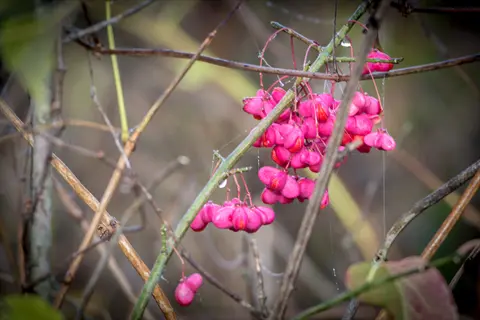
- Scientific Name: Euonymus atropurpureus is the native North American relative of burning bush offering similar ornamental qualities without invasive tendencies.
- Size and Form: Reaches 12-24 feet (3.6-7.3 meters) tall with an open spreading habit that works well as specimen or screen planting.
- Fall Color: Produces stunning red to reddish-purple fall foliage comparable to burning bush with pink to red fruit capsules.
- Growing Conditions: Thrives in partial shade to full sun with moist well-drained soil in USDA zones 3-7 making it cold hardy.
- Wildlife Value: Native species supports local insects, birds, and wildlife that evolved with this plant unlike exotic burning bush.
- Availability: Available through native plant nurseries and ecological restoration suppliers throughout eastern North America.
Virginia Sweetspire
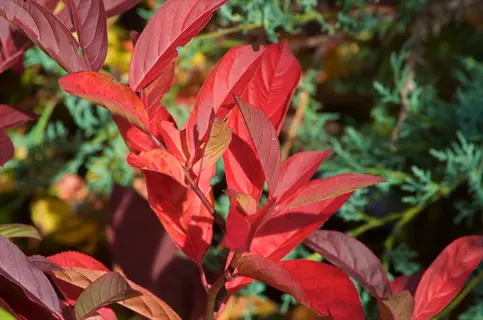
- Scientific Name: Itea virginica offers fragrant white flower spikes in early summer followed by exceptional red to purple fall color display.
- Size and Form: Compact growth of 3-6 feet (0.9-1.8 meters) tall and wide makes it ideal replacement for dwarf burning bush varieties.
- Fall Color: Leaves turn brilliant shades of red, orange, and purple often persisting into early winter for extended seasonal interest.
- Growing Conditions: Tolerates wet to average soil and full sun to partial shade in USDA zones 5-9 with excellent adaptability.
- Wildlife Value: Fragrant flowers attract numerous pollinators including butterflies and native bees during summer bloom period.
- Availability: Widely available at garden centers and nurseries with several cultivars including compact Henry's Garnet.
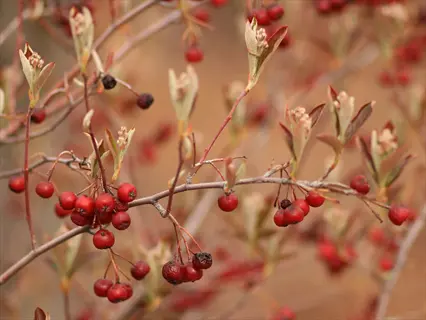
Red Chokeberry
- Scientific Name: Aronia arbutifolia provides brilliant red fall foliage plus persistent red berries that feed overwintering birds.
- Size and Form: Grows 6-10 feet (1.8-3 meters) tall with upright spreading habit and tendency to sucker forming attractive colonies.
- Fall Color: Reliable scarlet to crimson fall color rivals burning bush intensity with glossy red fruit adding additional visual interest.
- Growing Conditions: Extremely adaptable to wet or dry soil, sun or shade in USDA zones 4-9 tolerating conditions burning bush handles.
- Wildlife Value: Berries provide critical winter food source for songbirds while flowers support spring pollinators.
- Availability: Common at native plant nurseries with Brilliantissima cultivar selected for especially intense fall coloration.
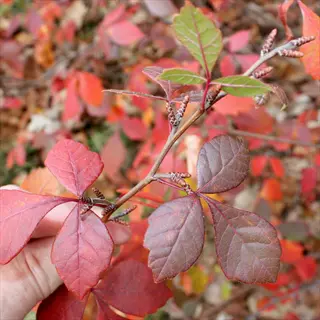
Fragrant Sumac
- Scientific Name: Rhus aromatica offers aromatic foliage and brilliant orange to red fall color on a tough adaptable native shrub.
- Size and Form: Low spreading growth of 2-6 feet (0.6-1.8 meters) tall and up to 10 feet (3 meters) wide works for groundcover or massing.
- Fall Color: Compound leaves turn vivid shades of orange, red, and purple in autumn rivaling burning bush for visual impact.
- Growing Conditions: Thrives in poor dry soil and full sun in USDA zones 3-9 tolerating conditions where burning bush struggles.
- Wildlife Value: Small yellow flowers attract early pollinators while red fuzzy berries feed numerous bird species.
- Availability: Available from native plant nurseries with Gro-Low cultivar popular for its compact spreading form.
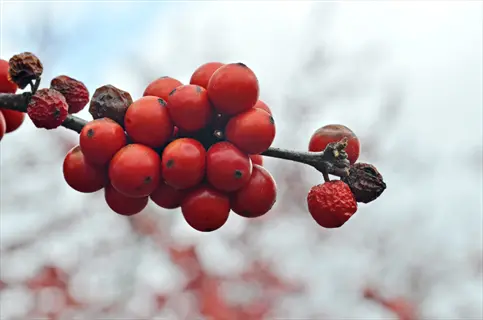
Winterberry Holly
- Scientific Name: Ilex verticillata provides spectacular winter interest with bright red berries persisting after leaves drop.
- Size and Form: Grows 6-12 feet (1.8-3.6 meters) tall with rounded form and suckering habit similar to burning bush growth pattern.
- Fall Color: Yellow fall foliage is less showy than burning bush but the brilliant red winter berries more than compensate.
- Growing Conditions: Prefers acidic moist soil and full sun to partial shade in USDA zones 3-9 requiring male pollinator nearby.
- Wildlife Value: Berries are critical winter food source for cedar waxwings, robins, and other fruit-eating birds.
- Availability: Widely available at nurseries with numerous cultivars; plant both male and female for berry production.
The USDA Forest Service says keeping native plant areas healthy works better than trying to fight invasions later. Your choice of shrubs shapes your local ecosystem for years. Why not pick plants that help rather than harm the woods and fields near your home?
5 Common Myths
Compact or dwarf burning bush varieties are not invasive because they produce fewer seeds than the standard species.
All burning bush cultivars including Compactus produce viable seeds that birds spread into natural areas. Only the new Fire Ball Seedless cultivar is truly sterile.
Burning bush is safe for landscaping if you remove the berries before birds can eat them.
Manually removing berries is impractical because plants produce thousands of seeds and birds consume them quickly. A single plant can generate hundreds of seedlings underneath it.
Burning bush only spreads in certain soil types or growing conditions so it is safe in your yard.
Burning bush demonstrates remarkable adaptability from full sun to nearly complete shade and tolerates various soil conditions including high salt levels.
Touching burning bush plants can poison you through skin contact like poison ivy does.
Burning bush is only toxic when ingested in large quantities. The plant is not a contact irritant and handling it does not cause skin reactions.
Native alternatives to burning bush cannot match its brilliant red fall color or low maintenance requirements.
Eastern wahoo, Virginia sweetspire, red chokeberry, and fragrant sumac all provide stunning fall color with similar or lower maintenance needs while supporting local ecosystems.
Conclusion
The burning bush plant sits at a crossroads between beauty and ecology. You now know why this shrub draws both praise for its fall color and concern as an invasive species. The choice you make affects more than just your yard.
Check your state laws before you shop. Many areas ban this shrub while others still sell it. The new sterile cultivar Fire Ball Seedless offers hope for gardeners who want that red blaze without the spread. Watch for it at nurseries in coming years.
Native alternatives give you stunning fall looks and responsible gardening at the same time. Plants like Eastern wahoo and Virginia sweetspire feed local wildlife. They also stay where you put them. The USDA says keeping native areas healthy beats fixing problems later.
Your garden choices ripple out into the world around you. Plant with both your eyes and your conscience open. That's how we keep our yards beautiful and our wild spaces healthy for years to come.
External Sources
Frequently Asked Questions
Is burning bush poisonous to humans?
Burning bush contains cardiac glycosides and is mildly toxic if large quantities are ingested, causing nausea, vomiting, and diarrhea.
Do burning bushes have deep roots?
Burning bush has a moderately deep fibrous root system that can spread through root suckering to produce new plants.
Does a burning bush spread?
Yes, burning bush spreads both through prolific seed production dispersed by birds and through vegetative root suckering.
What kills burning bushes?
Effective removal methods include:
- Cut stump treatment with triclopyr herbicide applied year-round
- Foliar spray with glyphosate plus triclopyr from mid-May through fall
- Basal bark application of oil-based triclopyr
- Manual removal of small plants including entire root system
Why is my burning bush not turning red?
Common causes for poor fall color include:
- Too much shade reduces red pigment production
- Excessive nitrogen fertilizer promotes green growth over color
- Early frost damage before color develops
- Stress from drought or overwatering
Can you grow burning bush in containers?
Yes, dwarf varieties like Compactus grow well in large containers with proper drainage and regular watering.
How fast does burning bush grow?
Burning bush grows at a moderate rate of 12 to 24 inches (30 to 61 centimeters) per year under optimal conditions.
When does burning bush turn red?
Burning bush develops its brilliant scarlet to crimson fall color in mid to late autumn, typically October through November depending on your climate zone.
Is burning bush deer resistant?
Yes, white-tailed deer strongly avoid burning bush due to its unpalatable foliage, which unfortunately gives it competitive advantage over native plants.
How do you propagate burning bush?
Propagation methods include:
- Seeds require three or more months of cold stratification at 40 degrees Fahrenheit (4 degrees Celsius)
- Semi-hardwood cuttings taken in summer root in 4-8 weeks
- Softwood cuttings in early summer with rooting hormone