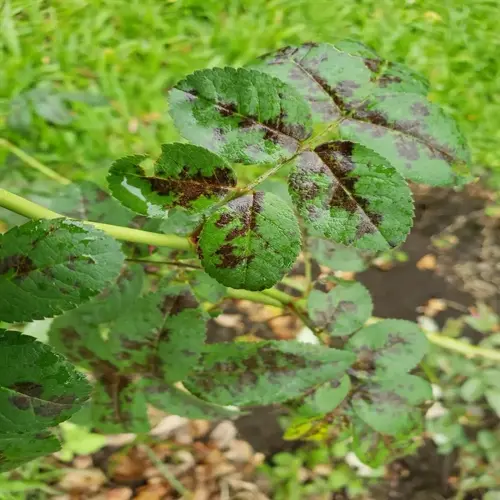

The first signs of blight depend on which type hits your garden. Early blight shows up as small brown spots on your lowest leaves first. Late blight can appear anywhere on the plant as dark, water-soaked patches. Knowing these blight warning signs helps you act fast before the disease spreads.
I still recall the exact moment I first spotted blight on my tomatoes. I was checking the bottom leaves like I do every morning. A small brown spot with faint rings caught my eye on a leaf near the soil. That target-like pattern told me it was early blight. The location confirmed it since spores splash up from your garden soil.
To detect tomato blight early, you need to know where to look. Early blight always starts on the oldest leaves closest to the soil. That's because the spores live in the dirt and rain splashes them up onto low foliage. Late blight can start anywhere because its spores blow in on the wind from far away.
UMN Extension says early blight lesions develop in just 5 days after infection. They start as tiny spots about 1/8 inch across. Within a week, those spots grow to half an inch with those classic rings inside them. If you're checking twice weekly, you'll catch them before they spread much.
Early Blight Symptoms
- Location: Starts on the oldest, lowest leaves near the soil line where spores splash up during rain.
- Appearance: Brown spots with target-like rings that grow from tiny dots to half-inch lesions in days.
- Progression: Moves slowly up the plant over weeks, giving you time to treat if you catch it early.
Late Blight Symptoms
- Location: Can appear anywhere on leaves, stems, or fruit since wind-borne spores land at random.
- Appearance: Dark, water-soaked patches that look greasy, often with white fuzzy growth on the underside.
- Progression: Spreads extremely fast within 3-5 days of first symptoms appearing on your plant.
Septoria Leaf Spot
- Location: Also starts on lower leaves like early blight but spreads faster once it gets going.
- Appearance: Many small spots with tan centers and dark borders scattered across the leaf surface.
- Progression: Can defoliate lower parts of plant within two weeks if not treated in time.
In my experience, the key to catching blight early is a set routine. I check my tomatoes every other day during summer. I start at the bottom and work my way up each plant. I flip leaves over to see both sides. This takes five minutes but has saved my crops more than once.
NC State notes that late blight lesions appear within 3-5 days of infection. That's why daily checks matter during wet weather. If you see dark, greasy-looking spots that spread fast, act within 24 hours. Remove affected leaves right away and start fungicide treatment that same day.
Your daily walk through the garden can save your whole crop. Get to know what healthy leaves look like so you spot problems faster. Pay extra attention during wet weather when blight spreads quickest. Those first few spots you find are your early warning system. Don't ignore them or you'll regret it when your whole plant goes down.
Read the full article: Blight on Tomatoes: Complete Prevention Guide