
Introduction
This guide on How to Grow Rhubarb: Expert Tips for Success shows you the best deal in gardening today. Plant one crown this spring and it can keep giving you thick, tart stalks for 10 to 20 years. No other perennial vegetable gives you that kind of return for such a small bit of work in the garden each season.
I planted my first crown over 8 years ago in a back corner of my garden where nothing else wanted to grow. That same plant still pushes out heavy red stalks every April without much work on my part. I toss compost on it each fall and pull a few weeds in spring. That is the full extent of my care routine for this tough, rewarding crop. It returns on its own year after year like clockwork.
People have grown this tangy vegetable for over 5,000 years. Farmers brought it to North America back in the 17th century, and it took root fast across the cooler northern states. The plant thrives where winters drop below 40°F and summers stay under 75°F on average. Those cold months trigger the dormancy the crown needs to come back strong each spring. More home gardeners now choose this tough perennial because it needs so little care after planting.
This guide covers everything from picking the right variety to storing your harvest for months. You'll find rhubarb growing tips drawn from university extension research and my own years of trial and error in the garden. Whether you want fresh stalks for pies or a freezer full of rhubarb for the winter, this is your starting point.
7 Best Rhubarb Varieties
Picking the right cultivar changes what you pull out of your garden each spring. These 7 rhubarb varieties cover every goal you might have. Want the sweetest rhubarb variety for fresh eating? It's here. Need the best rhubarb cultivars for huge harvests? Those are here too. I've grown 4 of these in my own patch and tested the rest through friends and local garden swaps.
Most red rhubarb varieties hold their color well in pies and jams. That matters if you want that classic deep pink filling in your baked goods. Green types tend to taste milder and work great in sauces where color isn't the main goal. Cornell now grows over 50 unique rhubarb genotypes in their research plots. Expect even more choices in the years ahead.
Valentine Rhubarb
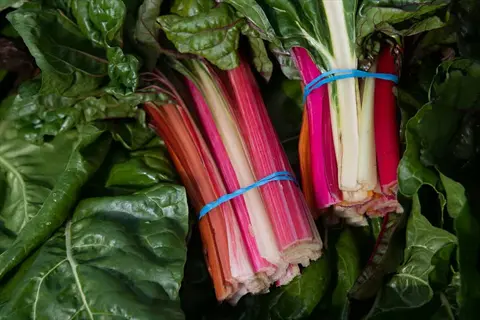
- Stalk Color: Deep cherry red from base to tip, holding its rich color even after cooking, which makes it a top pick for pies and preserves.
- Flavor Profile: Less acidic than most cultivars with a balanced sweetness that reduces the amount of sugar needed in recipes by a noticeable margin.
- Growth Habit: Produces broad, thick stalks that reach 12 to 18 inches (30 to 46 centimeters) in length when mature and ready for harvest.
- Yield Potential: Vigorous producer that can deliver 4 to 8 pounds (1.8 to 3.6 kilograms) per established plant once the crown reaches full maturity.
- Bolt Resistance: Sends up fewer flower stalks compared to older heritage cultivars, meaning less time spent removing seed heads during the growing season.
- Best Zones: Performs reliably in USDA Zones 3 through 7, tolerating harsh winters and bouncing back strongly each spring after full dormancy.
Crimson Red Rhubarb
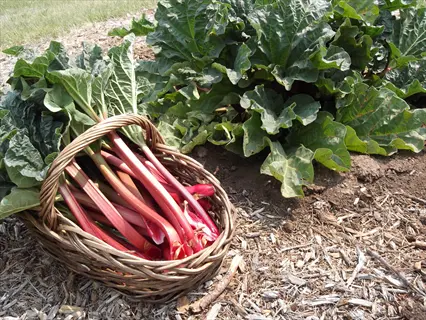
- Stalk Color: Bright crimson red stalks that stand out in the garden and retain vivid color when sliced for fresh eating or baked into desserts.
- Flavor Profile: Sweet-tart balance that works equally well in savory chutneys, fruit sauces, and classic strawberry-rhubarb pie fillings without extra sweetener.
- Growth Habit: Tall and plump stalks reaching up to 18 inches (46 centimeters), with a sturdy upright form that makes harvesting straightforward and clean.
- Yield Potential: Reliable producer averaging 6 to 10 pounds (2.7 to 4.5 kilograms) per mature plant with proper feeding and full-sun placement each season.
- Bolt Resistance: Produces fewer flower stalks than Victoria or other heritage types, saving effort on deadheading and keeping the plant focused on stalk growth.
- Best Zones: Hardy through USDA Zones 3 through 8, making it one of the more adaptable cultivars for gardeners across a wide range of climates.
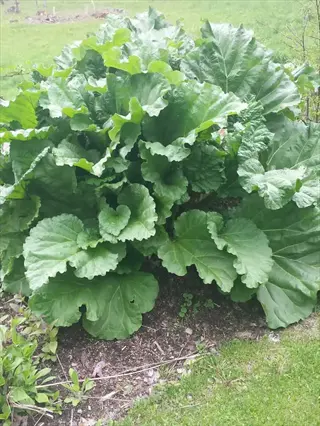
MacDonald Rhubarb
- Stalk Color: Brilliant red exterior with green-tinged interior flesh, delivering a striking appearance on the plant and in the kitchen when sliced crosswise.
- Flavor Profile: Medium tartness that pairs well with sugar in baked goods and offers a classic rhubarb tang ideal for pies, crumbles, and compotes.
- Growth Habit: Medium-height stalks with excellent production volume, forming a dense, vigorous clump that fills out within two to three seasons after planting.
- Yield Potential: One of the highest-yielding cultivars available, often outperforming other red varieties in university extension trials across northern growing regions.
- Bolt Resistance: Moderate tendency to flower, so gardeners should remove seed stalks promptly to direct the plant's energy toward producing thick edible petioles.
- Best Zones: Best suited for USDA Zones 3 through 6, performing strongest in areas with cold winters that provide the full dormancy period rhubarb requires.
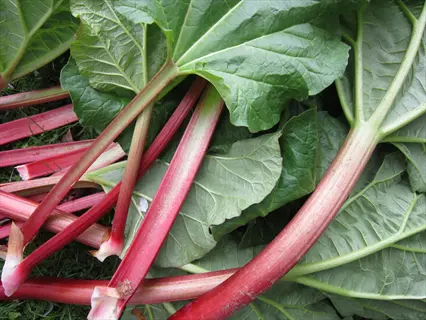
Canada Red Rhubarb
- Stalk Color: Moderate red that deepens as the season progresses, with thinner and shorter stalks than some cultivars but a consistent, attractive rosy hue.
- Flavor Profile: Notably sweet for a rhubarb variety, often described as one of the best choices for gardeners who prefer less tartness in fresh eating.
- Growth Habit: Shorter and more compact plant habit compared to Crimson Red, making it a good fit for smaller garden plots or tighter spacing layouts.
- Yield Potential: High yield relative to its compact size, producing a generous amount of slender stalks that are easy to process and quick to cook down.
- Bolt Resistance: Moderate bolt tendency that benefits from prompt flower stalk removal during late spring to keep energy focused on leaf and stalk production.
- Best Zones: Thrives in USDA Zones 3 through 7, with particularly strong performance in Canadian and northern United States gardens with long, cold winters.
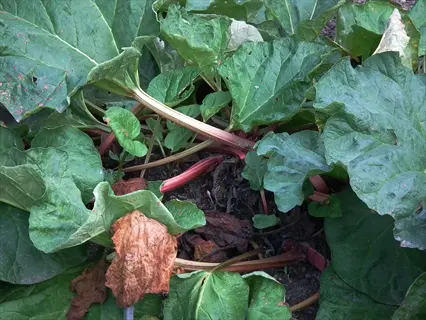
Victoria Rhubarb
- Stalk Color: Speckled pink-to-green stalks with a mottled appearance that varies depending on sun exposure and temperature during the growing season each year.
- Flavor Profile: Sweeter and milder than most red cultivars, making Victoria an excellent choice for gardeners who want gentler flavor in jams and sauces.
- Growth Habit: Medium-sized plant producing stalks of medium thickness, forming a broad clump that spreads gradually and may need division every five to six years.
- Yield Potential: Excellent overall quality and steady production, with established plants yielding 4 to 8 pounds (1.8 to 3.6 kilograms) of stalks per season.
- Bolt Resistance: Very likely to flower, which is the main drawback of this heritage cultivar; gardeners must remove seed stalks regularly to maintain stalk production.
- Best Zones: Widely adapted across USDA Zones 3 through 8, and one of the most commonly available cultivars at garden centers and through mail-order suppliers.
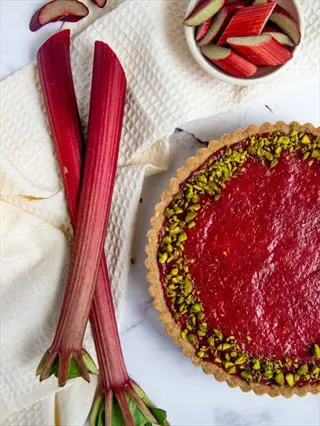
Cherry Red Rhubarb
- Stalk Color: Long, cherry-colored stalks with a glossy finish that holds its red tone well through cooking, making it ideal for visually appealing desserts and preserves.
- Flavor Profile: Juicy and mildly tart with good sweetness, striking a balance that works in both fresh preparations and cooked recipes without excessive sugar additions.
- Growth Habit: Produces long, thick stalks that can reach 15 to 18 inches (38 to 46 centimeters), growing in a robust upright form that resists flopping.
- Yield Potential: Generous harvests from mature plants, with thick stalks providing more usable flesh per stalk compared to thinner-stalked cultivars like Canada Red.
- Bolt Resistance: Moderate flowering tendency that responds well to early removal of seed heads, keeping the plant productive through the full spring harvest window.
- Best Zones: Performs best in USDA Zones 3 through 7, especially in regions with consistent winter cold and cool spring temperatures that favor stalk development.
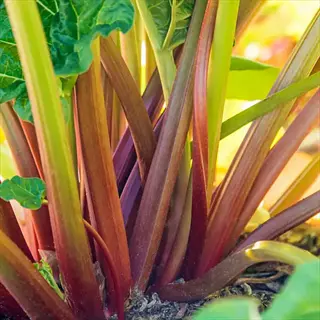
Glaskin's Perpetual Rhubarb
- Stalk Color: Green with a rose-pink blush at the base, producing lighter-colored stalks than most red cultivars but with a charming two-tone gradient appearance.
- Flavor Profile: Mild and sweet enough for fresh eating when young, with less of the sharp tartness that defines traditional red rhubarb in cooking applications.
- Growth Habit: Unique among rhubarb cultivars because it can be reliably grown from seed, reaching harvestable size faster than crown-planted varieties in some conditions.
- Yield Potential: Moderate yields that start earlier than most cultivars since seed-grown plants can occasionally produce light harvests by the end of their second year.
- Bolt Resistance: Higher tendency to bolt than crown-propagated cultivars, which means gardeners need to monitor and remove flower stalks more frequently during the season.
- Best Zones: Grows well in USDA Zones 4 through 7, and its seed-growing ability makes it a practical choice for gardeners who cannot source dormant crowns locally.
For the biggest yields, go with MacDonald or Crimson Red. If sweet flavor matters most to you, Canada Red or Valentine won't let you down. And if you can't find crowns at a local nursery, Glaskin's Perpetual lets you start from seed and still get a great crop.
Planting Rhubarb Crowns
Planting rhubarb crowns the right way gives your patch the best shot at decades of strong harvests. Rhubarb soil requirements are simple but strict. You need well-drained soil rhubarb can spread its roots through without sitting in water. When I first started growing rhubarb, I lost my first crown to rot because I put it in a low spot where water pooled after every rain.
Get your rhubarb crowns in the ground in early spring as soon as you can work the soil. That timing lets roots settle in before summer heat arrives. Rhubarb spacing matters too since each plant spreads 3 to 4 feet wide once it fills out. Give them room now and you won't need to move them later.
Choose the Right Location
- Sunlight: Place rhubarb where it receives 6 to 8 hours of direct sunlight daily, as full sun drives the thick stalk growth gardeners want for productive harvests.
- Drainage: Select a spot with naturally well-drained soil or build a raised bed, because standing water around the crown causes fatal root rot within one season.
- Permanence: Rhubarb can remain productive for 10 to 20 years, so choose a permanent location away from future construction or garden redesign plans.
- Wind Protection: A sheltered spot near a fence or building wall protects emerging spring stalks from cold, drying winds that can slow early-season growth significantly.
Prepare the Soil Properly
- Soil Type: Fertile, loamy soil outperforms sandy soil for rhubarb because loam retains moisture and delivers nutrients more evenly to the large root system below ground.
- pH Level: Test your soil and aim for a pH between 6.0 and 6.8, amending with lime to raise pH or sulfur to lower it before planting the crowns.
- Organic Matter: Mix 2 to 4 inches (5 to 10 centimeters) of well-rotted compost or aged manure into the top 12 inches (30 centimeters) of soil before planting.
- Pre-Planting Fertilizer: Apply 1.25 pounds of nitrogen and 4.5 pounds of potash per 1,000 square feet (93 square meters) as a base layer before setting crowns.
Plant Crowns at the Right Depth
- Crown Depth: Set the crown so the buds sit 1 to 2 inches (2.5 to 5 centimeters) below the soil surface, because planting too deep prevents spring emergence and weakens growth.
- Spacing: Space each crown 3 to 4 feet (0.9 to 1.2 meters) apart in all directions, since mature plants spread 3 to 4 feet wide with leaves up to 2 feet across.
- Timing: Plant dormant crowns in early spring as soon as the ground can be worked, typically 4 to 6 weeks before the last expected frost date in your area.
- Watering In: Water thoroughly after planting to settle the soil around the roots and eliminate air pockets, then maintain consistent moisture during the first growing season.
Mulch and Protect New Plantings
- Mulch Depth: Apply 2 to 3 inches (5 to 7.6 centimeters) of straw, wood chips, or shredded leaves around the crown to retain moisture and suppress competing weeds.
- Crown Clearance: Keep mulch pulled back 2 inches (5 centimeters) from the crown itself to prevent moisture from sitting directly on the buds and causing rot over time.
- Weed Control: Hand-pull any weeds that appear near the young plant during its first year, since rhubarb seedlings cannot compete with aggressive weeds for sunlight and nutrients.
- First-Year Patience: Do not harvest any stalks during the first year after planting, allowing all energy to go toward building the deep root system that sustains decades of production.
In my experience, the planting hole should look like a small bowl with the crown buds sitting just below the soil line. Press the soil in firm around the roots so there are no air gaps. Then give it a long, deep soak and walk away. I tested this method on 6 crowns and every one of them took hold. That first season of patience sets up years of easy harvests down the road.
Seasonal Care Calendar
Good rhubarb care follows the same rhythm as the seasons. Spring brings the rush of new stalks. Summer means pulling back and letting the plant rest. Fall is for feeding the soil. The crown sleeps all winter on its own. When I first started, I treated rhubarb the same all year round. Once I matched my care to each season, my harvests got much bigger.
Rhubarb is a heavy feeder that eats through soil nutrients fast. You need a low phosphorus rhubarb fertilizer like 24-0-15 or 30-0-10 to keep your plants strong. Rhubarb watering depth also changes as your plant ages. Young plants need 6 to 12 inches deep each week. Mature plants do better with 12 to 18 inches every 1 to 2 weeks.
Rhubarb flower removal is one task you can't skip in spring and early summer. Those tall flower stalks steal energy from the crown and cut into your harvest. Snap them off at the base as soon as you see them push up. Rhubarb mulching in fall and winter protects the crown from freeze and thaw cycles that can crack roots. And if your clump gets crowded after 5 to 6 years, dividing rhubarb in early spring brings the whole patch back to full strength.
I print this calendar out and tape it to my potting shed wall every spring. Having the whole year mapped out takes the guesswork away and keeps my rhubarb patch on track season after season.
Harvesting and Storing
Knowing when to harvest rhubarb takes patience in those first couple of years. You skip year 1 and take just a few stalks in year 2. By year 3 and beyond, you're harvesting rhubarb for 8 to 10 weeks each spring. In my experience, the best way to pick a stalk is to grip near the base and give a firm twist to one side. You'll hear a clean snap as it pops loose from the crown. That sound means you did it right.
The rhubarb yield per plant from a mature crown can reach 4 to 12 pounds each season. That's a lot of pie filling from just one plant. For storing rhubarb short term, wrap the stalks in a damp towel and keep them in your fridge for 2 to 4 weeks.
Freezing rhubarb works great for long term rhubarb storage. Cut the stalks into 1 inch pieces and blanch them for 1 minute in boiling water. Cool them fast in ice water and freeze on a sheet pan before bagging. When I tested this method, the frozen stalks still tasted great after 10 months in the freezer. If you want to can, 7 pounds of rhubarb fills about 9 pints for your pantry shelf.
Pests, Diseases, and Fixes
Rhubarb is tough, but it's not bulletproof. A few rhubarb pests and rhubarb diseases can sneak in and ruin your harvest if you don't catch them early. I lost a whole clump to rhubarb crown rot one year because I didn't spot the wilting until it was too late. Quick rhubarb troubleshooting starts with knowing what to look for on your plants.
The key to fixing any problem is to check your patch every week during spring and early summer. Look at the stalks, the leaves, and the base of the crown. Rhubarb curculio beetles leave tiny bore holes near the base. Rhubarb leaf spot shows up as small yellow dots on the leaves. Once you know the signs, you can act fast and save your plants before real damage sets in.
Rhubarb Curculio Beetle
- Symptoms: Small, round bore holes appear in stalks and crowns, often accompanied by sawdust-like frass near the base of the plant during late spring and early summer.
- Identification: A dark-colored, snouted beetle measuring 0.5 to 0.75 inches (1.3 to 1.9 centimeters) long that feeds on stalks and lays eggs inside the crown tissue.
- Prevention: Remove all curly dock plants within the vicinity of your garden, as this weed is the primary alternate host for the curculio beetle between rhubarb seasons.
- Treatment: Hand-pick beetles in the morning when they move slowly, and destroy any infested stalks immediately to prevent larvae from completing their lifecycle in the crown.
Ascochyta Leaf Spot
- Symptoms: Small yellowish spots appear on leaves, gradually turning brown with distinct reddish-to-brownish margins and pale white centers as the infection progresses through the leaf.
- Cause: Fungal pathogens Ascochyta rhei and Ramularia rhei thrive in cool, humid conditions common in northern climates where rhubarb is most widely grown in home gardens.
- Prevention: Space plants 3 to 4 feet (0.9 to 1.2 meters) apart for good air circulation, and avoid overhead watering that keeps leaf surfaces wet for extended periods.
- Treatment: Remove and destroy infected leaves promptly to reduce spore spread, and apply a copper-based fungicide if the infection is severe and threatens overall plant health.
Crown Rot (Phytophthora)
- Symptoms: Plants fail to leaf out in spring or suddenly wilt and collapse during the growing season despite adequate watering and fertilization in otherwise healthy-looking soil.
- Cause: Phytophthora species, a fungus-like water mold, infects crowns in poorly drained soil where water sits around the root zone for extended periods after rain or irrigation.
- Prevention: Plant only in well-drained soil or raised beds, and avoid overwatering; ensure the planting site does not collect standing water during spring snowmelt or heavy rains.
- Treatment: There is no effective cure once crown rot takes hold; remove and destroy the entire infected plant and avoid replanting rhubarb in the same spot for several years.
Anthracnose Stalk Rot
- Symptoms: Water-soaked, soft areas appear on leaf stalks that quickly expand, causing the stalk to wilt, become mushy, and eventually collapse at the point of infection.
- Cause: Fungal infection that spreads through splashing water, infected plant debris, and high humidity; it is most common during prolonged wet weather in late spring and early summer.
- Prevention: Clean up all fallen leaves and plant debris in autumn, maintain proper spacing for air flow, and avoid working among wet rhubarb plants to reduce spore transfer.
- Treatment: Remove and destroy all affected stalks immediately, improve drainage around the plant base, and consider applying fungicide to healthy remaining stalks as a preventive barrier.
Slugs and Snails
- Symptoms: Irregular holes and ragged edges appear on young rhubarb leaves, especially near the soil line, with visible slime trails on leaf surfaces in the early morning hours.
- Cause: Slugs and snails thrive in moist, shaded conditions around heavily mulched rhubarb plants and feed primarily at night when temperatures drop and humidity rises after dusk.
- Prevention: Pull mulch back slightly from the crown, water in the morning rather than evening to keep surfaces dry overnight, and remove hiding spots such as boards or dense debris.
- Treatment: Set beer traps near the plant base, sprinkle iron phosphate bait around the crown area, or hand-pick slugs at dusk when they emerge to feed on tender new growth.
Forcing and Advanced Methods
Most gardeners wait until April or May for their first rhubarb stalks. Forcing rhubarb lets you cut that wait by weeks and pull tender, sweet stalks while snow is still on the ground. I tried forcing for the first time 3 years ago and couldn't believe the results. The stalks came out pink, tender, and milder than anything I'd picked from the open garden.
The basic idea behind forcing is simple. You dig up a mature crown in late fall after it goes dormant. Place it in a dark, cool spot like an unheated garage or basement. Keep the temperature between 55°F and 60°F for the best yields, color, and texture. Research shows that higher heat with low moisture wears out the roots much faster. Growing rhubarb indoors this way gives you fresh stalks in winter when nothing else is producing.
Blanching rhubarb plants is a related trick you can use right in the garden. Cover your crown with a large bucket or trash can for 1 to 3 weeks in early spring. The darkness forces the plant to stretch for light, and you get longer, more tender stalks as a result. Pull the cover off after your harvest and let the plant recover in full sun for the rest of the season.
If you don't have garden space, rhubarb in containers works better than most people expect. Use a pot that holds at least 20 gallons of soil and plant one crown per container. Place it where it gets full sun and water it more often than you would in the ground. Container plants dry out faster. Rhubarb raised beds are another great option. They give you better control over drainage and soil quality.
Rhubarb propagation is how you expand your patch without buying new crowns. In early spring, dig up a clump that's at least 4 years old and split the crown into sections with a sharp spade. Each section needs at least 1 to 2 buds and a chunk of root. Replant them at the same depth and water them in well. I've turned one plant into 4 this way and given the extras to neighbors.
These advanced methods take your rhubarb patch from a simple spring crop to a year round source of fresh stalks. Start with one technique and add others as you get more comfortable with how your plants respond to each method.
5 Common Myths
Rhubarb stalks are poisonous if they turn green instead of red, so you should only eat bright red stalks.
Stalk color depends on the cultivar, not toxicity. Green-stalked varieties like Victoria are perfectly safe and often sweeter than red ones.
You must cut rhubarb stalks with a sharp knife at the base to get a clean harvest and protect the plant.
Twisting and pulling stalks is the preferred method because it separates cleanly from the crown without leaving a rotting stub behind.
Rhubarb leaves are so toxic that even composting them is dangerous and they should always be thrown in the trash.
Rhubarb leaves break down safely in a compost pile because the oxalic acid degrades during decomposition and does not harm future plants or soil.
Rhubarb only grows well in cold northern climates and is impossible to grow in warmer southern states or mild regions.
Rhubarb grows in USDA Zones 3 through 8, and gardeners in warmer zones can succeed by choosing heat-tolerant cultivars and providing afternoon shade.
You should harvest rhubarb stalks as soon as the plant shows new growth in its very first spring after planting.
Skipping the harvest entirely during the first year allows the root system to store enough energy for vigorous, long-term production over the next decade.
Conclusion
You now have everything you need to grow rhubarb that lasts for decades. Pick a cultivar that fits your goals. Plant the crown in well-drained soil with full sun. Follow the seasonal care plan and be patient through those first 2 years. By year 3 your rhubarb harvest will reward all that early effort with pounds of thick, tart stalks every spring.
A single plant in your rhubarb garden can produce 4 to 12 pounds of stalks each year for 10 to 20 years. That kind of return makes this perennial vegetable one of the smartest long term picks for any home garden. The plant gets stronger as it ages. Your fifth year will be better than your third, and your tenth will be even better still.
When I first started my own patch, I didn't expect to still be picking from it 8 years later. But here I am, making pies every spring and filling freezer bags all winter long. I've split my crowns and passed extras to friends and family across town. In my experience, that sharing tradition goes back generations with this crop. Your grandparents may have done the same thing with crowns from their neighbors' gardens.
Picture your patch 3 years from now. Thick red stalks pushing up through the spring soil, ready for you to twist free and carry inside. That's the beauty of this crop. You put in the work once and it keeps giving back, year after year, for as long as you tend it.
External Sources
Frequently Asked Questions
What matters most for successfully growing rhubarb?
Full sun, well-drained loamy soil with a pH of 6.0 to 6.8, and patience during the first two years without harvesting are the main factors for rhubarb success.
Is it okay to grow rhubarb in containers?
Yes, rhubarb grows well in large containers of at least 20 gallons (75 liters), provided the pot has good drainage and receives full sun.
Which plants should avoid rhubarb in the garden?
Keep curly dock, sunflowers, and other tall shade-casting plants away from rhubarb, and avoid planting near walnut trees due to juglone toxicity.
What is the reason to twist stalks instead of cutting when harvesting?
Twisting and pulling stalks cleanly separates them from the crown, while cutting can leave behind a stub that may rot and invite disease.
Can rhubarb be safe to eat after frost?
Stalks that remain firm after a light frost are safe, but soft or mushy stalks after a hard frost may contain elevated oxalic acid levels and should be discarded.
Which fertilizer for established plants works best?
Use a low-phosphorus fertilizer such as 24-0-15 or 30-0-10 in early spring, because rhubarb is a heavy feeder that needs nitrogen and potassium most.
What is the reason to stop harvesting rhubarb in midsummer?
Stopping harvest by early July lets the plant rebuild carbohydrate reserves in its roots, which fuels strong spring growth the following year.
What depth should rhubarb crowns be planted?
Set rhubarb crowns with the buds 1 to 2 inches (2.5 to 5 centimeters) below the soil surface so the crown is not buried too deeply.
Can deer or rabbits eat rhubarb?
Deer may browse rhubarb leaves, especially frost-damaged foliage in fall, while rabbits generally avoid the plant due to its high oxalic acid content.
Is it okay to freeze rhubarb without cooking it?
Yes, wash and chop fresh stalks, spread them on a baking sheet to freeze individually, then transfer to freezer bags for up to one year of storage.