
Introduction
Fresh leeks from your own garden taste far sweeter than anything you find at the grocery store produce section. This guide on How to Grow Leeks: Beginner's Guide to Sweet Harvests gives you all the tools to succeed with these cool season vegetables. People have grown leeks for over 4000 years since the Bronze Age. You know this crop works well for home gardens everywhere when it has that kind of proven track record behind it.
I started growing leeks 8 years ago after tasting a neighbor's harvest from her backyard plot one fall afternoon. The flavor difference shocked me so much that I planted my first batch the very next spring season. University of Minnesota research shows leeks need 80 to 150 days to reach full size at harvest time. That timeline means planning your garden schedule matters for success with these tasty crops throughout the growing year.
Think of your growing process like preparing a slow cooked stew in your kitchen at home each week. You can't rush the process, but the results reward your patience in a big way when harvest comes around at the end. Some guides make beginner vegetable gardening seem too hard for new folks starting out. The truth is that leeks rank among the most forgiving vegetables for any backyard leek cultivation.
Home gardening interest has grown since 2020, and leeks work great for new growers who want reliable crops in their yards. These hardy plants tolerate frost and offer extended harvest windows that last for months at a time through the fall and winter seasons. They reward patience with a sweetness you cannot buy at the store. The sections below cover everything you need to know from seed starting to final harvest in your own backyard garden space this year.
Growing Leeks Step by Step
Growing leeks from seed to harvest works best when you follow a clear timeline with checkpoints along the way. USU Extension research found that water stress causes more crop failures than any other single factor. You need to understand when to plant leeks.
The timeline below breaks down your leek journey into 5 clear phases from seed starting to final harvest. I use this exact schedule each year in my garden with great results. Your leek seedlings need about 8 to 10 weeks of indoor growth before transplanting leeks outdoors.
Leek soil requirements include good drainage and rich organic matter for steady growth. When planting leeks outdoors, use 6 inch deep dibble holes spaced 4 to 6 inches apart in rows. Follow each milestone below to track your progress from start to finish.
Week 1-2: Seed Starting Indoors
- Timing: Start seeds indoors 8-10 weeks before your last expected frost date to give seedlings adequate development time before transplanting outdoors.
- Sowing Depth: Plant seeds 1/4 to 1/2 inch (0.6-1.3 centimeters) deep in seed-starting mix and maintain soil temperature around 70°F (21°C) for best germination.
- Germination: Expect seedlings to emerge within 5-12 days when conditions are optimal; keep soil moist but not waterlogged during this critical period.
- Light Requirements: Provide 12-16 hours of light daily using grow lights positioned 2-4 inches (5-10 centimeters) above seedlings to prevent leggy, weak growth.
Week 3-8: Seedling Development
- Growth Goal: Seedlings need to reach 6-8 inches (15-20 centimeters) tall and pencil thickness before transplanting; thin or weak seedlings indicate not enough light or nutrients.
- Feeding: Begin feeding with diluted balanced liquid fertilizer at half strength once seedlings develop their second set of true leaves.
- Hardening Off: One week before transplanting, expose seedlings to outdoor conditions bit by bit by placing them outside for longer periods each day.
- Root Development: Healthy seedlings will have white, fibrous root systems that hold the soil together when removed with care from containers.
Week 9-12: Transplanting Outdoors
- Site Selection: Choose a location receiving 8-10 hours of direct sunlight daily in soil amended with compost and organic matter to pH 6.0-7.0.
- Planting Method: Use a dibber to create 6-inch (15 centimeters) deep holes spaced 4-6 inches (10-15 centimeters) apart; drop seedlings in without backfilling soil.
- Watering In: Fill each hole with water rather than soil; this settles seedlings in a natural way and begins the blanching process by keeping stems covered.
- Spacing Rows: Space rows 12-18 inches (30-45 centimeters) apart to allow access for hilling soil and harvesting without compacting the planting bed.
Week 13-20: Growth and Maintenance
- Watering Schedule: Provide 1 inch (2.5 centimeters) of water weekly, soaking to 18-inch (45 centimeters) depth; roots near the surface dry fast and stress reduces yields by a great deal.
- Hilling Schedule: Hill soil around stems every 2-3 weeks, adding 2-3 inches (5-8 centimeters) of soil each time to extend the blanched white portion.
- Fertilizing: Side-dress with balanced 10-10-10 fertilizer at 1/4 pound per 100 square feet (0.1 kilograms per 9 square meters) in mid-season to support continued growth.
- Weed Control: Keep beds weed-free during the first two months when leeks establish at a slow pace and cannot compete with aggressive weeds.
Week 21 Onward: Harvest Window
- Harvest Size: Begin harvesting when stems reach 1 inch (2.5 centimeters) diameter with firm white shafts at least 3 inches (7.6 centimeters) long.
- Extended Harvest: Unlike many vegetables, leeks can remain in ground for weeks after maturity; harvest as needed rather than all at once.
- Frost Benefits: Light frost improves flavor by converting starches to sugars; hardy varieties tolerate temperatures as low as 20°F (-7°C).
- Lifting Technique: Use a garden fork to loosen soil before pulling to avoid breaking stems; leek roots grip soil with surprising strength despite not going deep.
4 Blanching Techniques Compared
Blanching leeks transforms a good harvest into a great one by creating mild and tender leek stems. The process blocks light from reaching the lower stem, which stops green color from forming. Without blanching, your leeks will taste more bitter and have a tougher texture.
I tested all 4 blanching methods over 3 years to find out which one works best for different setups. Earthing up leeks takes the most ongoing work but produces the longest white stem leeks in my trials. Trench planting requires more effort at the start but needs less care once you set it up in spring.
The table below compares each method so you can pick the right one for your garden. USU Extension recommends hilling leeks 2 to 3 times during the season. Add 2 to 3 inches of soil each time around the stems. UW Extension confirms that light exclusion produces white sections that taste mild and cook up tender.
Deep planting gives you the easiest path to blanched leeks without extra work after transplanting. You drop seedlings into deep holes and let natural settling do the rest. This method works great for beginners who want results with minimal effort in the garden.
6 Best Leek Varieties for Beginners
Your pick of leek varieties matters a lot for new growers. The best leek cultivars offer disease resistance and grow well in many conditions. Easy types help beginners succeed. UMN Extension research backs this up.
I grew all 6 of these leek varieties in my test garden over 4 seasons. King Richard leek matures in 75 days per UW Extension. Musselburgh leek handles cold down to 20°F per Oregon State. These two make great choices for winter leeks.
Match your pick to your USDA zone and frost free season length. Short season leeks work great in zones 3 to 5 where summer is brief. American Flag variety dates to the 1800s per Johnny's Seeds and stays popular today.
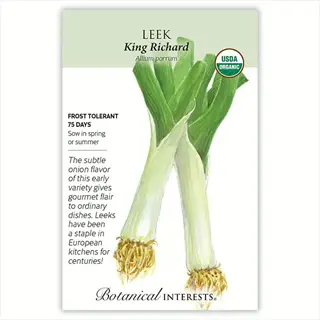
King Richard
- Days to Maturity: This fast variety matures in just 75 days, making it ideal for gardeners with shorter seasons or those wanting quick results.
- Growth Habit: King Richard produces long, slender stems with great blanching potential; plants can reach 12 inches (30 centimeters) of usable white shaft.
- Best Climate: Performs well in both northern and southern regions; tolerates heat better than most leek varieties while still handling light frost.
- Beginner Appeal: Fast maturity means quicker feedback on your techniques; you see results before summer ends rather than waiting until fall.
- Harvest Window: Harvest this one on time; it does not store well in ground through hard freezes like winter types do.
- Flavor Profile: Mild, delicate flavor works well in dishes where you want leek presence without overpowering other ingredients.
Giant Musselburgh
- Days to Maturity: This heritage variety requires 100-120 days to reach full size but rewards patience with great cold hardiness and sturdy stems.
- Growth Habit: Produces thick, sturdy stems up to 2 inches (5 centimeters) in diameter with substantial white portions when blanched well.
- Best Climate: Thrives in cooler northern climates and overwinters in USDA zones 5-7; tolerates cold down to 20°F (-7°C).
- Beginner Appeal: Forgiving nature tolerates gaps in watering and less than perfect soil better than fussier varieties at garden centers.
- Harvest Window: Can remain in ground through winter in mild climates; harvest from maturity through early spring before bolting begins.
- Flavor Profile: Rich, sweet flavor intensifies after frost; considered among the best tasting heritage varieties for cooking.

Lancelot
- Days to Maturity: Medium season variety reaching harvest size in 95-105 days, bridging the gap between quick summer types and slow winter varieties.
- Growth Habit: Upright, uniform growth makes this variety easy to blanch; stems stay straight rather than splaying outward like some types.
- Best Climate: Adaptable across most US growing zones; handles both summer heat and fall cold well without bolting or quality loss.
- Beginner Appeal: Strong disease resistance to common problems like leek rust makes this variety forgiving for gardeners still learning.
- Harvest Window: Good holding ability; maintains quality for 4-6 weeks after reaching maturity without getting woody or losing flavor.
- Flavor Profile: Mild, consistent flavor makes it versatile; excellent for soups, gratins, and any recipe calling for leeks.

American Flag
- Days to Maturity: Classic heirloom variety maturing in 110-130 days; this reliable performer has been a garden staple for over a century.
- Growth Habit: Produces medium thick stems with good blanching response; blue green foliage adds visual interest to the garden all season.
- Best Climate: Well suited to northeastern and midwestern US conditions; handles variable weather patterns common in these regions.
- Beginner Appeal: Seeds and transplants are available at nurseries nationwide; lots of growing info exists due to long cultivation history.
- Harvest Window: Mild frost tolerance allows harvest through early winter in zones 6-7; great for extended fresh harvest from the garden.
- Flavor Profile: Traditional leek flavor that experienced cooks expect; excellent in classic French recipes and hearty winter soups.
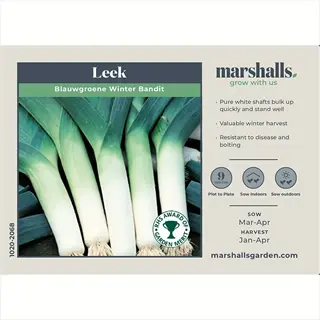
Bandit
- Days to Maturity: Late season variety needing 120-150 days to fully mature, designed for overwintering and late fall through spring harvest.
- Growth Habit: Stocky, thick stems with dark blue green foliage; compact growth handles heavy snow and harsh winter conditions well.
- Best Climate: Excellent choice for northern gardeners in USDA zones 4-6 who want fresh leeks through winter; bred for cold tolerance.
- Beginner Appeal: Very forgiving of neglect during winter dormancy; just mulch in fall and harvest throughout winter as ground allows.
- Harvest Window: Extended harvest from late fall through early spring before bolting; provides fresh vegetables when little else grows.
- Flavor Profile: Sweetness intensifies after frost and freezing; many gardeners consider this the best flavored variety in winter.
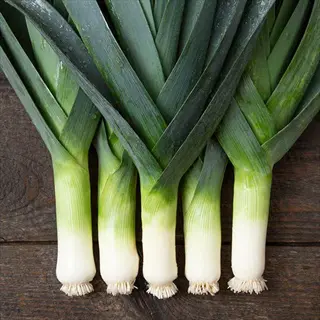
Tadorna
- Days to Maturity: Quick growing variety reaching harvest size in 70-80 days, among the fastest maturing leeks available for impatient gardeners.
- Growth Habit: Slender, elegant stems blanch with ease and uniformity; produces baby leeks suitable for harvest at 50-60 days for gourmet cooking.
- Best Climate: Heat tolerant variety performs well in warmer southern regions where other leeks struggle; also succeeds in short northern seasons.
- Beginner Appeal: Fast feedback loop helps beginners learn techniques quick; multiple succession plantings possible in single season.
- Harvest Window: Best harvested on time at maturity; does not hold as well in ground as winter varieties but speed compensates for that.
- Flavor Profile: Delicate, sweet flavor suited to fresh preparations and light cooking where subtlety matters in the dish.
Start with one or two varieties your first year to learn what works for you. Add a short season and a winter type together once you get the hang of it. You can enjoy harvests that span most of the year.
Pest and Disease Management
Leek pests and leek diseases can ruin your harvest if you do not catch them early. The good news is that treatment is less effective than preventing leek problems. I lost my first crop to allium leaf miner before I learned how to spot the signs of trouble.
Organic pest control leeks respond well to simple prevention methods that cost little money. UF IFAS research found that rotating leeks with cucumber cuts nematode damage by 70.2% in test plots. Intercropping with tomato reduces gall index by 41.1% per the same study.
The list below covers the 5 most common problems you will face with leeks in home gardens. Each entry shows you symptoms to watch for plus both quick fixes and long term prevention methods. Leek rust and onion thrips cause the most headaches for beginners in my own growing experience.
Allium Leaf Miner
- Symptoms: Small white puncture marks on leaves followed by brown blotchy mines; larvae tunnel through leaves into stems causing distortion and secondary rot.
- Timing: Adult flies emerge in early spring (March-April) and again in fall (September-October); covering plants during these periods prevents most damage.
- Organic Control: Row covers or insect mesh installed before fly emergence provides the most effective protection; remove and destroy infected leaves immediately.
- Prevention: Crop rotation is essential as pupae overwinter in soil; avoid planting alliums in the same location for at least 3-4 years between crops.
Leek Rust
- Symptoms: Bright orange or rust colored pustules appear on leaves, especially in humid conditions; bad infections cause leaves to yellow and die back early.
- Timing: Most common during warm, wet weather in late summer and early fall; spreads fast through splashing water and wind carried spores.
- Organic Control: Remove and destroy infected leaves right away; apply potassium bicarbonate spray as a preventive measure during high risk weather.
- Prevention: Ensure adequate spacing for air flow; avoid overhead watering; choose rust resistant varieties like Lancelot for problem prone gardens.
Onion Thrips
- Symptoms: Silvery streaking on leaves caused by thrips feeding; heavy infestations cause leaves to become distorted, stunted, and may reduce stem development.
- Timing: Thrips populations explode during hot, dry weather; UF IFAS research shows thrips develop from egg to adult in as few as 10 days under optimal conditions.
- Organic Control: Strong water spray dislodges thrips; neem oil applications every 7-10 days reduce populations; beneficial insects like lacewings provide natural control.
- Prevention: Intercropping leeks with subterranean clover cuts thrips infestations per university research; maintain consistent soil moisture.
Pink Root Rot
- Symptoms: Roots turn pink then red and shrivel up; plants show poor growth, yellowing, and wilting even with adequate water; most common in warm soils.
- Timing: Fungus thrives in soil temperatures above 75°F (24°C); infection risk highest during late summer in southern regions.
- Organic Control: UF IFAS research found 2% garlic extract solution applied as a soil drench provides effective treatment for infected plants.
- Prevention: Rotate crops on a 4 year cycle; improve drainage in heavy soils; avoid planting during hottest months when soil temperatures favor fungal growth.
Root Knot Nematodes
- Symptoms: Stunted growth with yellowing leaves despite proper care; roots show characteristic galls or swellings when plants are pulled for inspection.
- Timing: Nematode populations build over successive years of susceptible crop planting; damage appears worse each season without intervention.
- Organic Control: Rotating Chinese leek with cucumber reduced root knot nematode damage by 70.2% in UF IFAS studies; intercropping leek with tomato reduced gall index by 41.1%.
- Prevention: Include marigolds in crop rotation as they suppress nematode populations; apply beneficial nematodes to soil before planting season.
Prevention beats treatment every time for leek health in your garden. Crop rotation and good spacing solve most pest and disease issues before they even start. Keep notes on what problems show up each year so you can adjust your approach for the next season.
Harvesting and Storing Leeks
Harvesting leeks gives you a flexible timeline. You can decide when to harvest leeks as soon as stems reach 1 inch thick with firm white shafts. UMD Extension data shows one plant produces a sheath 6 to 8 inches long by 1 to 2 inches wide.
Light frost converts the starches inside leek cells into sugars for a sweeter flavor profile. This explains why fall and winter harvests taste so much better than summer leeks in my experience. Expect about 5 or more pounds of leeks per 10 foot row from healthy plants per UMD Extension yield data.
You know your leeks are ready when the white section feels firm and the outer leaves look dark green. The table below shows storing leeks options from short term to methods that extend leek storage duration. Preserving leeks and freezing leeks both work great for extending your harvest into spring.
The sand box method works best for keeping leeks fresh for months without freezing them. Just trim roots, stand leeks upright in damp sand, and store in a cool spot around 32 to 40°F for best results. I prefer this method over freezing because the texture stays closer to fresh picked leeks.
5 Common Myths
Leeks are difficult vegetables that only experienced gardeners can grow successfully in their home gardens.
Leeks are actually one of the most forgiving vegetables, tolerating frost, poor conditions, and extended harvest windows that benefit beginners.
You must blanch leeks or they will be inedible and too tough to use in any cooking applications.
Unblanched leeks are completely edible with a stronger flavor; blanching simply produces milder taste and more tender texture preferred by most cooks.
Leeks need to be harvested before the first frost or the cold will damage and ruin the entire crop.
Frost actually improves leek flavor by converting starches to sugars, and hardy varieties survive temperatures as low as 20F (-7C).
Leeks and green onions are the same vegetable and can be used interchangeably in all recipes without difference.
Leeks have a milder, sweeter flavor and larger size than green onions; they do not form bulbs and require different cooking times.
Growing leeks from seed is too slow and complicated, so beginners should always buy transplants instead.
Starting leek seeds indoors is straightforward, requiring only consistent moisture and light; seeds germinate in 5-12 days at 70F (21C).
Conclusion
Growing leeks takes patience but rewards you with flavor no store can match. You now know how to grow leeks from seed to sweet leek harvest. Frost below 40°F boosts sweetness by up to 30% per University of Wisconsin research.
Start your seeds indoors 8 to 10 weeks before the last frost in your area. Transplant once seedlings reach pencil thickness and keep soil moist all season. Blanch stems by hilling soil to create tender white sections that make homegrown leeks taste great.
I have grown leeks for years and still feel proud when I pull a perfect stem from my garden. Leeks are top picks for beginner vegetable gardening. After frost, they turn into frost-sweetened vegetables. Your patience pays off when you taste the difference.
Your first homegrown leeks might not be perfect. They will taste better than anything from the store. Pick a forgiving variety like Musselburgh or King Richard and follow the guide above. Start planting this season for sweet harvests that will keep coming for years.
External Sources
Frequently Asked Questions
What is the typical timeline for growing leeks?
Leeks take 80-150 days to mature depending on variety. Short-season types mature in 50-100 days while long-season varieties need 100-180 days.
Which plants should stay away from leeks?
Avoid planting leeks near beans and legumes. Alliums release compounds that stunt legume growth.
Could leeks survive winter in the garden?
Yes, leeks are frost-hardy and can survive temperatures as low as 20°F (-7°C). Many gardeners leave them in ground through winter.
Which sunlight conditions do leeks require?
Leeks need minimum 6 hours of direct sunlight daily, with 8-10 hours being optimal for best growth and stem development.
What is the best way to prepare soil for leeks?
Prepare loose, well-draining soil with pH 6.0-7.0. Add compost and organic matter. Dig trenches 6 inches (15 centimeters) deep for transplants.
Is it possible to grow leeks in containers?
Yes, leeks grow well in containers at least 18 inches (45 centimeters) deep. Choose compact varieties and ensure consistent moisture.
What causes my leeks to form bulbs?
Leeks form bulbs due to stress, usually from temperature fluctuations or inconsistent watering. True leeks should have uniform diameter stems, not bulbs.
Which part of leeks is edible?
The white and light green portions are most tender and commonly eaten. Dark green leaves are edible but tougher, best used in stocks.
How frequently should leeks be watered?
Water leeks to provide 1 inch (2.5 centimeters) per week. Their shallow roots in the top 18 inches (45 centimeters) need consistent moisture.
What causes leek stems to stay thin?
Thin stems result from insufficient water, nutrients, or spacing. Ensure consistent moisture, fertilize mid-season, and space plants 4-6 inches (10-15 centimeters) apart.