
Introduction
You want to learn how to grow chestnuts: a complete guide for home gardeners will show you the way forward with clear steps. Chestnut farms in the U.S. jumped 57% between 2012 and 2017 as more people caught on to this tasty crop. Backyard nut trees are now a major part of this growing food trend across the country. You can join in without owning acres of land or buying costly commercial gear to get started on your own property today.
America grows less than 1% of the world's chestnuts based on USDA Climate Hubs data from recent years. China produces about 80% of the global supply each year while we import most of what we eat in this country. This gap means you can fill a real need for fresh, local nuts right in your own yard. J. Russell Smith called chestnuts "the corn that grows on trees" because they pack so much starch and can feed whole families for generations.
I started my chestnut cultivation journey with just two trees in my home orchard about 8 years ago and never looked back. Those trees now drop 50 to 70 pounds of nuts each fall without much work from me beyond basic seasonal care. You don't need a large operation to enjoy fresh roasted chestnuts from your own property during the cold months each year. Even a modest backyard can support a small grove that feeds your family for years to come with proper planning and patience.
This guide walks you through every step from picking the right varieties to harvesting your first crop each season in the fall. You will learn which species resist disease and how to space your trees for good growth in your yard with ease. The sections ahead give you practical steps that work in real home settings where space is often limited. Your patience will pay off with a harvest that can last for decades once your trees reach full size and peak production levels.
Best Chestnut Varieties for Home Gardens
Picking the right chestnut varieties for your yard matters more than almost any other choice you will make. Chinese chestnuts work for home gardeners like dwarf fruit trees work for small orchards. They offer manageable size with reliable production year after year in most parts of the country.
Chinese chestnuts handle cold down to minus 20 degrees Fahrenheit with ease. University of Missouri research backs this up. These trees work best in Midwest and eastern regions. European chestnuts need milder winters. Japanese chestnut trees handle heat and humidity better in the south.
Blight-resistant chestnuts changed everything for home growers who want trees that last for years. The American Chestnut Foundation now breeds hybrid chestnut trees that fight off disease. These newer options give you more choices than growers had 20 years ago.
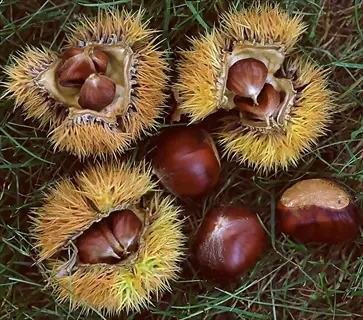
Chinese Chestnut (Castanea mollissima)
- Size: Reaches 40 feet (12.2 meters) tall at maturity, making it manageable for home landscapes and easier to harvest than taller species.
- Disease Resistance: Offers excellent resistance to chestnut blight, the fungal disease that wiped out American chestnuts, making it the safest choice for most regions.
- Cold Hardiness: Tolerates temperatures down to minus 20 degrees Fahrenheit (minus 29 degrees Celsius), suitable for USDA zones 4 through 8.
- Nut Quality: Produces medium nuts with sweet flavor, a bit smaller than European varieties but with reliable annual production.
- Production Timeline: Grafted trees begin bearing in 2 to 4 years with mature trees producing 50 to 100 pounds (23 to 45 kilograms) each year.
- Best For: Recommended as the primary choice for most home gardeners due to combined disease resistance, manageable size, and proven track record.
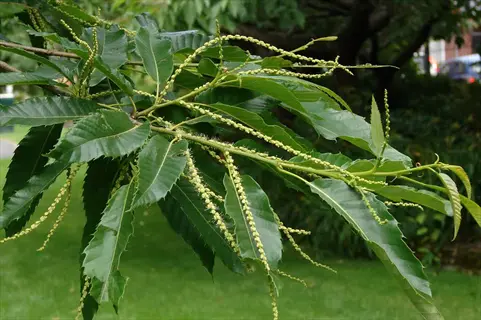
European Chestnut (Castanea sativa)
- Size: Grows to about 65 feet (19.8 meters) tall, requiring more space than Chinese varieties but still works for larger properties.
- Nut Size: Produces the largest nuts among common chestnut species, prized for culinary uses including roasting and chestnut flour production.
- Climate Preference: Thrives in climates with mild winters, performing best in USDA zones 5 through 7 with moderate humidity levels.
- Disease Susceptibility: Shows moderate susceptibility to chestnut blight, requiring careful site selection and monitoring in affected regions.
- Culinary Value: Preferred by chefs for traditional European recipes and holiday roasting due to superior nut size and sweet, starchy flavor.
- Best For: Home gardeners in milder climates who prioritize large nut size for culinary purposes and have space for larger trees.
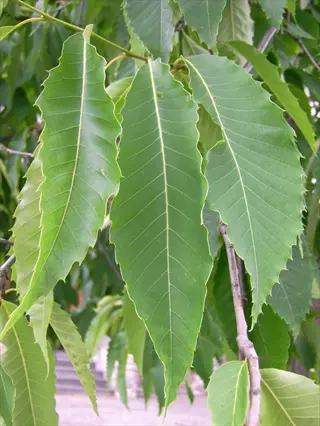
American Chestnut (Castanea dentata)
- Historical Significance: Once dominated eastern forests with an estimated 4 billion trees before chestnut blight wiped out most of the population in the early 1900s.
- Size: Grows to 80 feet (24.4 meters) or taller, making it too large for most home gardens but suitable for larger rural properties with ample space.
- Nut Quality: Produces smaller but very sweet nuts that were prized in the past and described as superior in flavor to other species.
- Disease Vulnerability: Remains very susceptible to chestnut blight, with pure American chestnuts not recommended unless you join restoration programs.
- Conservation Efforts: The American Chestnut Foundation breeds blight resistant hybrids that home gardeners can support through membership and planting programs.
- Best For: Gardeners on large properties who want to participate in American chestnut restoration efforts with foundation sourced trees.
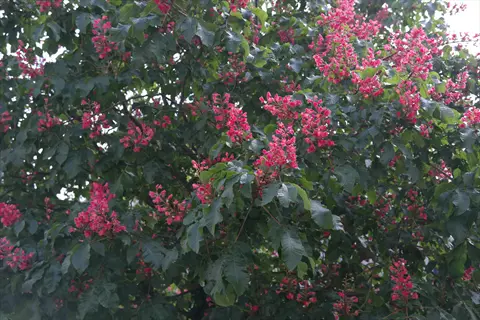
Chinese-American Hybrid Chestnut
- Breeding Purpose: Combines the disease resistance of Chinese chestnuts with the flavor and growth traits of American chestnuts through careful breeding programs.
- Size: Reaches 50 to 60 feet (15.2 to 18.3 meters) tall, a middle ground between parent species and suitable for medium to large home landscapes.
- Disease Resistance: Inherits strong blight resistance from Chinese parent while keeping much of the American chestnut's desirable nut traits.
- Adaptability: Performs well across a wide range of conditions in USDA zones 4 through 8, making hybrids versatile choices for many growing regions.
- Availability: Dunstan chestnuts represent the most common hybrid variety, sold through specialty nurseries throughout the United States.
- Best For: Home gardeners seeking a balance between disease resistance and nut quality who have space for medium to large trees.
Japanese Chestnut (Castanea crenata)
- Size: Reaches 30 to 40 feet (9.1 to 12.2 meters) tall, the smallest of the major chestnut species and most suitable for compact home orchards.
- Nut Characteristics: Produces large nuts similar to European varieties, though some cultivars have a bitter edge requiring careful variety selection.
- Disease Resistance: Shows good resistance to chestnut blight and also resists ink disease, providing double protection in problem areas.
- Climate Adaptation: Tolerates heat and humidity better than other species, performing well in southeastern states where other chestnuts struggle.
- Production: Bears nuts at a young age, often within 3 to 4 years, providing faster returns than some other species for impatient gardeners.
- Best For: Home gardeners in hot, humid southeastern regions or those with limited space who want the smallest mature tree size.
My advice after testing several types is to start with Chinese or hybrid chestnuts for your first trees. They give you the best odds of success while you learn what works in your yard.
Planting Your Chestnut Trees
Site selection matters more than anything else when planting chestnut trees in your yard. Position your tree where it will get sunlight like a performer on center stage. You need at least 8 hours of direct sun each day for your trees to produce well.
Chestnut tree spacing depends on whether you want full sized trees or a tighter orchard setup. Home landscapes do best with 35 to 40 feet between trees so each one has room to spread out. Commercial growers can plant closer at 20 by 20 feet but home growers should give trees more space.
Knowing when to plant chestnuts helps your trees get a strong start in their new home. Spring planting after the last frost works best in most regions of the country. Fall planting can work in areas with mild winters and wet springs but spring is safer for new growers.
Bare-root planting gives you the best value when buying chestnut trees from nurseries online. Soak the roots in water for 2 to 4 hours before you dig your hole in the ground. Dig the hole twice as wide as the root spread but only as deep as the roots need to sit level with the soil.
I learned the hard way that some spots just don't work for transplanting chestnuts no matter what you try. Never plant in bottomland soils or areas where water pools after rain storms hit your yard. Chestnuts die in waterlogged soil within just a few seasons according to research.
After planting, water your new tree well and add 3 to 4 inches of mulch around the base to keep moisture in the soil. Keep the mulch a few inches away from the trunk to prevent rot issues later on. Your first year is all about helping roots settle in before expecting any real growth above ground.
Soil and Care Requirements
Chestnut soil requirements differ from what most backyard crops need to grow well. Chestnuts prefer acidic soil like blueberries do. The ideal soil pH for chestnuts falls between 5.0 and 6.5 for best results in your yard.
Well-drained soil matters just as much as pH levels when setting up your trees for success. Sandy loam works great while heavy clay often causes root rot and tree death. If your soil drains slow, consider raised beds or mounding to improve conditions.
Watering chestnuts through dry spells keeps your trees healthy and improves nut quality each season. Michigan State research shows that 1 to 2 inches of water per week during summer drought makes a real difference. Fertilizing chestnut trees follows a simple rule of 1 pound of 10-10-10 per year of tree age up to 15 pounds max.
Good chestnut tree care follows a seasonal pattern that I have outlined below for easy reference. This calendar keeps you on track with the right tasks at the right times throughout the year.
Pollination and Production Timeline
Chestnut pollination works like a dance that needs two partners to complete the steps right. Your tree needs a genetically different companion to produce nuts each fall season. Cross-pollination between two different cultivars gives you the best nut set possible in your yard.
Pollinator spacing matters a lot for good harvests each year. Your trees should stand within 200 feet of each other for wind to carry pollen between them. How many trees needed depends on your goals but two is the minimum for any nut production at all.
The chestnut production timeline tests your patience in the early years of growing but rewards you later. Grafted trees start to produce when chestnuts produce their first small crops around year 3 or 4 in most cases. The breakdown below shows what to expect as your trees grow and mature over time.
Years 1 to 2: Establishment Phase
- Focus: Primary goal during early years is developing strong root systems rather than expecting any nut production from newly planted trees.
- Care Intensity: Requires regular watering during dry periods, typically 1 to 2 inches (2.5 to 5 centimeters) weekly to support root establishment.
- Expected Yield: Zero nut production during establishment years as trees direct energy toward structural growth and root development.
Years 3 to 5: Early Bearing Phase
- Grafted Trees: Begin producing small quantities of nuts, typically 5 to 15 pounds (2.3 to 6.8 kilograms) per tree during initial bearing years.
- Seedling Trees: May not produce any nuts yet as seedling-grown trees typically require 5 to 7 years before first nut production begins.
- Management: Allow trees to bear lightly while continuing to prioritize structural growth through appropriate pruning and consistent care.
Years 6 to 10: Increasing Production
- Yield Range: Production increases significantly to 20 to 50 pounds (9.1 to 22.7 kilograms) per tree as canopy size expands.
- Pollination Importance: Cross-pollination becomes increasingly critical as trees produce more flowers requiring fertilization from companion trees.
- Quality Improvement: Nut size and quality typically improve as trees mature and develop more efficient nutrient uptake systems.
Years 11 to 15: Approaching Maturity
- Production Levels: Trees produce 50 to 75 pounds (22.7 to 34 kilograms) annually as they approach full bearing capacity.
- Consistency: Annual production becomes more reliable and predictable compared to variable yields during early bearing years.
- Economic Value: At retail prices of $2 to $5 per pound, each tree can produce $100 to $375 worth of nuts annually at this stage.
Years 15 and Beyond: Full Production
- Maximum Yield: Mature trees aged 15 to 20 years produce up to 100 pounds (45.4 kilograms) of nuts per tree annually under optimal conditions.
- Longevity: Chestnut trees can remain productive for 50 to 100 years or more with proper care and disease management.
- Maintenance Focus: Shift care emphasis toward maintaining tree health, managing pests, and ensuring continued pollination success.
My oldest trees now produce close to 80 pounds each after about 12 years in the ground. The wait feels long at first but the payoff grows every single year once production starts rolling in.
Harvesting and Storing Chestnuts
Chestnut harvest season brings one of the most satisfying rituals of fall for home growers like me. Ripe chestnuts announce themselves by falling from the tree when burrs split open on their own. You don't need to climb trees or use poles since gravity does the work for you during harvest time.
Knowing when to harvest chestnuts comes down to watching the ground under your trees each day. Harvesting chestnuts works best when you collect nuts every 2 to 3 days during peak drop periods. This tight schedule prevents nuts from sitting too long where moisture and pests can cause damage fast.
I lost a good portion of my first big harvest by waiting too long between collection days. Nuts left on the ground for more than 4 days started to mold and attract weevils looking for homes. Now I walk my trees every other day during September through November when nuts are falling.
Storing chestnuts differs from other nuts because of their high moisture content inside the shell. Most nuts keep fine at room temperature but chestnuts need cold chestnut storage to prevent mold. UF IFAS data shows optimal storage at 32 degrees Fahrenheit with 85% humidity for up to 6 months of shelf life.
Preserving chestnuts at home works best with perforated plastic bags in your fridge right after harvest. The holes let moisture escape while cold temps keep mold away from your nuts. Check stored nuts every few weeks and remove any that show signs of decay to protect the batch.
Fresh chestnuts taste best within the first 2 to 3 months after picking from your trees in the fall. Roasted chestnuts straight from a recent harvest have a sweetness that stored nuts lose over time. Plan to use your biggest and best looking nuts first while they still have that peak flavor.
5 Common Myths
Chestnut trees are too large for home gardens and only suitable for commercial orchards with extensive acreage.
Chinese chestnuts reach only 40 feet (12.2 meters) tall at maturity and can be maintained smaller through pruning, making them suitable for backyard orchards with proper spacing of 35 to 40 feet (10.7 to 12.2 meters) between trees.
You can plant a single chestnut tree and still get a good harvest of nuts each year without any other trees nearby.
Chestnuts require cross-pollination from a genetically different tree, so you need at least two different cultivars planted within 200 feet (61 meters) of each other for successful nut production.
All chestnut species are equally susceptible to chestnut blight, so there is no point in choosing one variety over another.
Chinese chestnuts and Chinese-American hybrids have developed strong resistance to chestnut blight, while American chestnuts remain highly susceptible, making variety selection critical for success.
Chestnuts grow best in rich, moist garden soil similar to what vegetables prefer in raised beds.
Chestnuts actually require well-drained acidic soil with pH 5.0 to 6.5 and cannot tolerate saturated root zones, making typical vegetable garden conditions unsuitable for chestnut cultivation.
Horse chestnuts and edible sweet chestnuts are the same plant, just with different common names used in various regions.
Horse chestnuts (Aesculus species) are completely unrelated to edible chestnuts (Castanea species) and are actually toxic to humans and animals, requiring careful identification before consumption.
Conclusion
I have shared everything you need to grow chestnuts in your own backyard orchard this year. Pick the right variety for your climate and give trees room to spread out. Plant at least two different cultivars for good cross pollination and you will be all set to go.
The U.S. still produces less than 1% of the world's chestnuts while demand keeps growing every year. This gap means home chestnut growing offers a real chance to provide fresh local nuts for your family. Over 600 U.S. orchards now produce at bearing age with farms up 57% since 2012.
I recommend you start small with just two compatible trees rather than trying a large grove right away. When I first started with chestnuts I planted too many and could not keep up with them all. You can always add more trees once you know your soil and climate work well for nut tree planting.
Growing chestnuts creates a legacy harvest for your family to enjoy for years to come. These trees can last for generations when you care for them well. My own chestnut tree cultivation keeps making more nuts each year. Start your backyard orchard this spring and thank yourself later.
External Sources
Frequently Asked Questions
Is it okay to grow a chestnut tree from a nut?
Yes, you can grow a chestnut tree from a nut through cold stratification for 60 to 90 days, though seedling trees take 5 to 7 years to produce nuts compared to 2 to 4 years for grafted trees.
How long until a chestnut tree produces nuts?
Grafted chestnut trees produce nuts in 2 to 4 years, while seedling trees take 5 to 7 years to begin bearing, with full production reached around year 15.
Do chestnut trees require another tree for pollination?
Yes, chestnuts require cross-pollination from a different cultivar planted within 100 to 200 feet (30 to 61 meters) for successful nut production.
Could chestnuts be grown in containers?
Young chestnut trees can be grown in large containers temporarily, but they require transplanting to ground soil for long-term health and nut production.
Which climate is best for growing chestnuts?
Chestnuts grow best in USDA hardiness zones 4 through 9, with Chinese chestnuts tolerating cold to minus 20 degrees Fahrenheit (minus 29 degrees Celsius).
How similar are chestnuts and hazelnuts?
No, chestnuts and hazelnuts are completely different nuts from different tree families with distinct flavors, growing requirements, and nutritional profiles.
What is the best way to protect chestnut trees from pests?
Protect chestnuts from common pests like weevils and Asian gall wasps through sanitation practices, proper spacing, and selecting blight-resistant varieties.
Can chestnuts be safe for pets?
True edible chestnuts are generally safe for dogs and cats in moderation, but horse chestnuts (buckeyes) are toxic and must never be confused with edible varieties.
What makes some chestnuts hard to find?
American chestnuts are rare due to the devastating chestnut blight that destroyed billions of trees in the early 1900s, making most commercially available chestnuts imported.
Which soil conditions do chestnuts need?
Chestnuts require well-drained acidic soil with pH 5.0 to 6.5 and cannot tolerate waterlogged conditions, making bottomland and clay soils unsuitable.