
Introduction
You want to learn how to grow cherry trees from seed or sapling in your own backyard. The thought of picking fresh cherries from a tree you planted keeps drawing you back to this idea. Home fruit tree growing surged 40% since 2020, and cherries rank among the top 5 trees that backyard gardeners request.
I started my first cherry tree from a pit I saved after eating a bowl of fresh Bing cherries one summer. That seed took 7 years before it gave me any fruit at all. My neighbor bought a grafted sapling the same year and picked cherries within 3 seasons. Both approaches work, but they demand different levels of patience. The rewards differ too, and learning this helped me decide which method fits each spot in my yard.
Starting a cherry tree from seed feels like raising a child from birth. You watch every stage of growth and bond with the tree over years of care. Buying a cherry tree sapling is more like adopting a teenager. You skip the early years but still build a lasting relationship. This guide covers both methods in one place so you can pick the path that fits your timeline and goals for home orchard establishment.
Most guides focus on just one method and leave you guessing about the other option. This resource walks you through both paths with clear steps and honest timelines. You will know what to expect at each stage of the growing process. Whether you want fast results or the full experience of watching a pit become a tree, the right approach exists for you.
Below you will find everything needed to succeed with either approach. Seeds need cold treatment to sprout. Saplings need careful planting. Each step moves you closer to that first harvest of cherries from your own property.
Seed vs Sapling Growing Methods
The cherry seed vs sapling debate comes down to what you value most in your growing journey. Seeds cost nothing when you save pits from fresh cherries you already bought at the store. A grafted cherry tree from a nursery runs $20 to $50 but arrives ready to establish roots in your yard right away.
Cherry pit germination rates reach 61 to 79% when you follow proper cold treatment methods. Without that cold period, almost no seeds will sprout at all. Seed-grown trees take 7 to 10 years before they produce any fruit. Each seed has unique genetics from cross-pollination. The fruit quality stays a mystery until harvest day.
A grafted cherry tree brings a proven variety right to your property. The top growth is a clone of the parent tree, so the fruit matches what the nursery tag promises. Grafted saplings begin producing fruit within 3 to 7 years based on variety and rootstock. Growing from seed takes longer but costs nothing. The table below breaks down each factor for your situation.
I grow both types in my orchard now. The seed trees surprise me every year with unique flavor profiles. The grafted trees give me reliable crops of my favorite varieties. Your choice depends on whether you want predictable results or an adventure in fruit genetics.
Cold Stratification for Cherry Seeds
Cold stratification breaks the seed dormancy that keeps cherry pits from sprouting right after you pull them from the fruit. Without this cold treatment, seeds sit in soil for years and never wake up. The process mimics winter cold on a forest floor. Most home growers use a fridge for the job. This is known as refrigerator stratification and it is the best way to start.
Research shows the best stratification temperature falls between 36 to 48°F or 2 to 9°C for cherry seeds. Freezing air does nothing to break dormancy. Seeds need that cool range for 90 to 140 days to trigger cherry seed germination. I learned this the hard way when my first batch failed in a freezer set too cold.
You have three main methods for cold treatment. Your fridge gives you the best temp control. Winter sowing uses natural cold but results vary. The moist sand method works in cold climates. UK forestry research warns that some seed lots fail. Plant 3 to 4 times more seeds than trees you want.
Refrigerator Method
- Temperature Control: Maintain consistent 36-41°F (2-5°C) in your refrigerator crisper drawer, checking with a thermometer weekly since door openings cause fluctuations.
- Medium Preparation: Wrap clean seeds in damp paper towels or mix with moist peat moss at 40-50% moisture content, then seal in a plastic bag with small air holes.
- Duration Tracking: Mark your calendar for 90-140 days, checking moisture levels every 2 weeks and misting if the medium begins to dry out.
- Mold Prevention: If white fuzzy mold appears, rinse seeds in diluted hydrogen peroxide solution (1 part to 10 parts water) and replace the stratification medium.
Winter Sowing Outdoors
- Container Setup: Plant seeds 1 inch (2.5 centimeters) deep in milk jugs or nursery containers filled with seed-starting mix, then place outdoors in a protected spot after Thanksgiving.
- Natural Temperature: Let winter weather provide natural temperature fluctuations between 32-50°F (0-10°C), which mimics what seeds experience on the forest floor.
- Protection Layer: Cover containers with hardware cloth or chicken wire to prevent squirrels and rodents from digging up seeds during the winter months.
- Spring Monitoring: Watch for germination beginning in late March or early April when soil temperatures rise consistently above 50°F (10°C).
Moist Sand Method
- Sand Preparation: Mix clean construction sand with water until it holds together when squeezed but does not drip, maintaining approximately 10-12% moisture content.
- Layering Technique: Alternate thin layers of moist sand and cherry seeds in a plastic container, ensuring seeds do not touch each other to prevent disease spread.
- Storage Location: Place the container in a refrigerator, unheated garage, or cold basement where temperatures stay consistently between 33-50°F (1-10°C).
- Germination Check: After 90 days, check weekly for tiny white root tips emerging from seeds, which indicates they are ready for planting.
Troubleshooting Germination
- No Germination After 140 Days: Some seed lots require a second stratification cycle; allow seeds to warm for 2 weeks, then restart cold treatment for another 60-90 days.
- Seeds Germinating Too Early: If roots emerge while still in the refrigerator, plant immediately in small pots and keep under grow lights since dormancy has broken.
- Mold Outbreak: Excessive moisture causes fungal growth; reduce moisture content and improve air circulation by loosening the bag seal slightly.
- Low Success Rate: Even with perfect technique, expect only 60-80% of seeds to germinate; plant 3-4 times more seeds than the number of trees you want.
Planting Your Cherry Tree
Planting cherry trees in the right spot makes the biggest impact on long term success. Oregon State research shows that yields drop off fast when site conditions fall short of ideal. You need a spot with full sun for 6 to 8 hours daily and well-draining soil that does not hold water after rain.
Early spring planting works best for most areas after the ground thaws but before hot weather arrives. Sour cherries handle colder zones from 4 through 8 while sweet cherries need zones 5 through 9 to thrive. I planted my first tree too early in a cold spring and lost it to a late frost. Wait until you see other trees leafing out in your area.
Dig your hole twice as wide as the root ball but no deeper. Transplanting seedlings from pots requires gentle handling to avoid root damage. For bare-root planting, soak roots in water for 2 to 4 hours before you put them in the ground. Spread roots out in the hole rather than bunching them together.
The bud union on grafted trees must stay 1 to 2 inches or 2.5 to 5 centimeters above the soil line. This bump where the rootstock meets the top variety needs air around it to prevent rot. Planting too deep is the most common mistake I see new growers make with nursery trees.
Fill the hole with native soil mixed with compost at a 3 to 1 ratio. Press firmly to remove air pockets. Water deeply right after planting until the soil around the roots is soaked through. Add a 3 inch layer of mulch around the tree but keep it 4 inches away from the trunk.
Stake your tree only if it cannot stand on its own in wind. Use soft ties that allow some movement since this builds trunk strength. Remove stakes after one year once roots have spread enough to anchor the tree. Check ties monthly and loosen them as the trunk grows.
Best Cherry Tree Varieties
Your climate and space will narrow down the best cherry tree for your yard. Sweet cherry varieties like Bing and Rainier need 700 to 800 chill hours and grow in zones 5 through 9. Sour cherry varieties like Montmorency handle colder zones from 4 through 8 and need 1,200 or more chill hours to set fruit.
Most sweet cherries need a second tree nearby for pollination. Stella stands out as a self-pollinating cherry that produces fruit on its own. North Star offers the same benefit in the sour category. I started with Stella because I only had room for one tree in my small backyard.
Illinois Extension warns that sweet cherries grow large with no way to keep them small through pruning alone. You need dwarf rootstock if space is tight. The list below covers 8 proven varieties that work well for home growers based on climate needs and yard size.
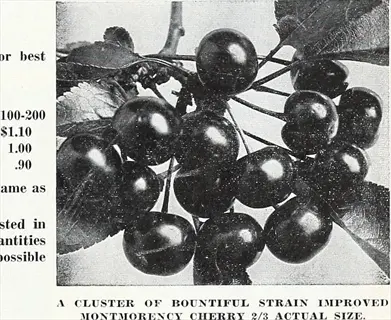
Montmorency Sour Cherry
- Climate Hardiness: Thrives in USDA Zones 4-7 with excellent cold tolerance down to -30°F (-34°C), making it the standard choice for northern gardeners and the most planted sour cherry in North America.
- Pollination Status: Self-fertile and produces abundant crops without a pollinator partner, which simplifies orchard planning for gardeners with limited space for multiple trees.
- Fruit Characteristics: Medium bright red cherries with clear juice are ideal for pies, preserves, and juice, ripening in mid-June to early July based on your location.
- Tree Size and Form: Reaches 12-18 feet (3.6-5.5 meters) tall with a spreading form that fits most suburban backyards without aggressive pruning.
- Yield Expectations: Mature trees produce 50-100 pounds (23-45 kilograms) of fruit each year, providing plenty for fresh eating, preserving, and sharing with neighbors.
- Disease Considerations: Shows moderate resistance to cherry leaf spot but benefits from proper airflow through annual pruning to prevent fungal issues in humid climates.
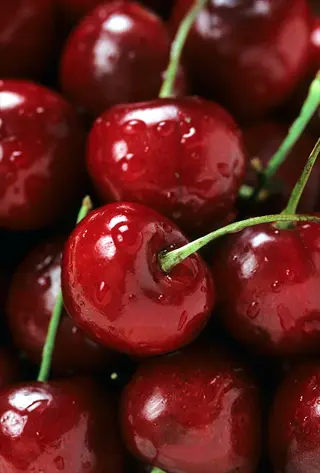
Bing Sweet Cherry
- Climate Hardiness: Performs best in USDA Zones 5-8 where winters provide 700-800 chill hours without late spring frosts that damage blossoms.
- Pollination Status: Requires a compatible pollinator variety planted within 50 feet (15 meters); good partners include Rainier, Van, and Black Tartarian cherries.
- Fruit Characteristics: Large dark red to nearly black cherries with firm flesh and rich sweet flavor are the gold standard for fresh eating and represent the classic grocery store cherry.
- Tree Size and Form: Standard trees reach 25-35 feet (7.6-10.7 meters) tall, which requires significant space or dwarf rootstock selection for smaller properties.
- Yield Expectations: Mature standard trees produce up to 300 pounds (136 kilograms) each year, while dwarf varieties yield 15-20 quarts of fruit per season.
- Disease Considerations: Prone to rain cracking if fruit gets wet near harvest; cherry leaf spot and brown rot require preventive management in humid regions.
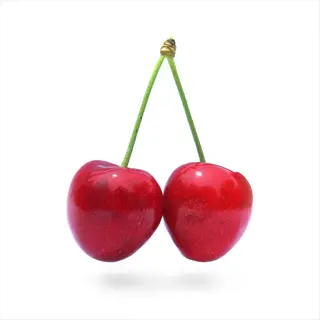
Stella Sweet Cherry
- Climate Hardiness: Grows well in USDA Zones 5-9 with moderate chill requirements around 700-800 hours, adapting to a wider range of climates than many sweet varieties.
- Pollination Status: Self-fertile as one of the first self-pollinating sweet cherries available, making it ideal for single-tree plantings in small yards.
- Fruit Characteristics: Large heart-shaped dark red fruit with firm texture and excellent sweet flavor ripens in late June, about one week after Bing in most locations.
- Tree Size and Form: Reaches 20-25 feet (6-7.6 meters) on standard rootstock with a compact upright form; dwarf versions stay under 12 feet (3.6 meters) tall.
- Yield Expectations: Produces heavy crops without the pollination failures common with other sweet cherries, yielding 50-100 pounds (23-45 kilograms) on standard trees.
- Disease Considerations: Shows good resistance to bacterial canker compared to other sweet varieties but remains prone to cherry leaf spot in humid conditions.
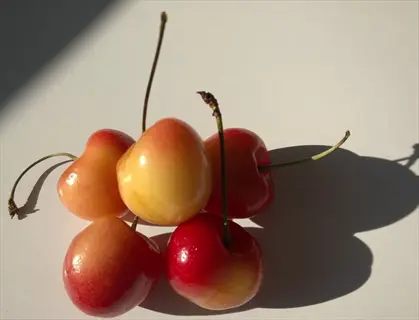
Rainier Sweet Cherry
- Climate Hardiness: Requires USDA Zones 5-8 with consistent 700-800 chill hours and protection from late spring frosts that damage the tender yellow blossoms.
- Pollination Status: Needs a compatible pollinator such as Bing, Van, or Lapins planted nearby; Stella also works as a universal pollinator partner.
- Fruit Characteristics: Yellow cherries blushed with pink-red have sweet flavor with lower acidity than red varieties, commanding premium prices at farmers markets.
- Tree Size and Form: Standard trees grow 25-30 feet (7.6-9 meters) tall with a spreading canopy; semi-dwarf rootstock reduces height to 15-18 feet (4.5-5.5 meters).
- Yield Expectations: Produces 100-200 pounds (45-91 kilograms) on mature standard trees, though birds target the light-colored fruit and require protective netting.
- Disease Considerations: Yellow skin shows brown rot infection more than red varieties; the delicate skin also cracks after rain events near harvest time.
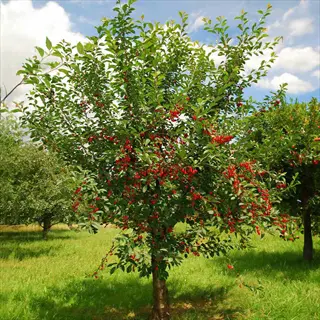
North Star Sour Cherry
- Climate Hardiness: Cold-hardy for USDA Zones 4-8 with reliable performance in northern states where winter temperatures drop to -40°F (-40°C).
- Pollination Status: Self-fertile and productive without a pollinator partner, setting heavy crops even in years when late frosts reduce bee activity.
- Fruit Characteristics: Medium mahogany-red cherries with red flesh deliver intense tart flavor perfect for pies and preserves, ripening in mid-July.
- Tree Size and Form: Natural genetic dwarf reaching only 8-10 feet (2.4-3 meters) tall without requiring dwarfing rootstock, ideal for small yards and container growing.
- Yield Expectations: Produces 15-25 pounds (7-11 kilograms) of fruit despite its small size, with dense clusters that make harvesting efficient.
- Disease Considerations: Demonstrates excellent resistance to cherry leaf spot and handles wet conditions better than many other sour cherry varieties.
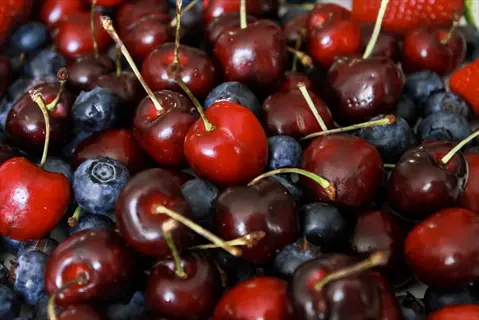
Lapins Sweet Cherry
- Climate Hardiness: Adapted to USDA Zones 5-9 with moderate chill requirements and good tolerance for Pacific Northwest and similar maritime climates.
- Pollination Status: Self-fertile like Stella, making it an excellent standalone tree and popular pollinator partner for other sweet cherry varieties.
- Fruit Characteristics: Very large dark red to nearly black cherries with firm flesh resist cracking better than Bing, extending harvest window in rainy climates.
- Tree Size and Form: Vigorous grower reaching 25-35 feet (7.6-10.7 meters) on standard rootstock with strong scaffold branches that support heavy fruit loads.
- Yield Expectations: Heavy and reliable producer yielding 100-200 pounds (45-91 kilograms) on mature trees, with fruit ripening about two weeks after Bing.
- Disease Considerations: Good rain-crack resistance makes it valuable in western growing regions, though standard fungal disease management remains needed.
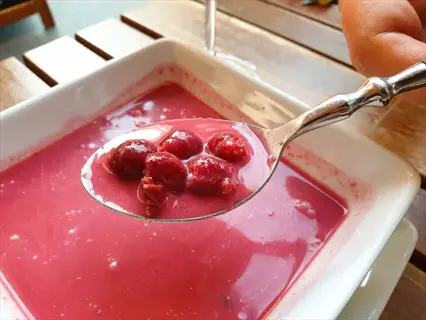
Meteor Sour Cherry
- Climate Hardiness: Thrives in USDA Zones 4-8 with outstanding cold hardiness developed at the University of Minnesota for northern growing conditions.
- Pollination Status: Self-fertile and produces reliable crops without a pollinator partner, blooming later than Montmorency to escape some late spring frosts.
- Fruit Characteristics: Large bright red cherries with yellow flesh and clear juice are less tart than Montmorency, making them suitable for both cooking and limited fresh eating.
- Tree Size and Form: Semi-dwarf genetic tendency keeps trees at 10-14 feet (3-4.3 meters) tall with a spreading form that simplifies harvesting without ladders.
- Yield Expectations: Produces 40-60 pounds (18-27 kilograms) of fruit on mature trees, ripening about one week later than Montmorency in most locations.
- Disease Considerations: Shows improved disease resistance compared to many sour cherries but benefits from standard orchard sanitation practices.
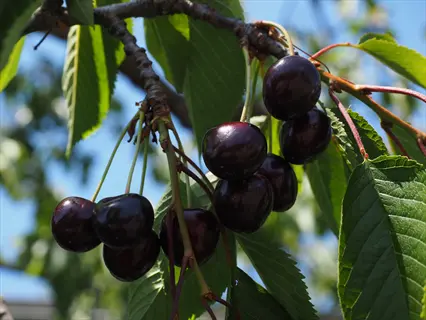
Black Tartarian Sweet Cherry
- Climate Hardiness: Grows in USDA Zones 5-7 with good cold hardiness among sweet cherries and moderate chill requirements around 700 hours.
- Pollination Status: Requires a pollinator partner but serves as an excellent pollinator for many other sweet varieties including Bing and Rainier.
- Fruit Characteristics: Medium-to-large purplish-black cherries with soft juicy flesh and rich flavor ripen early in the season, often two weeks before Bing.
- Tree Size and Form: Vigorous upright grower reaching 25-35 feet (7.6-10.7 meters) tall with strong central leader form that requires regular pruning to manage size.
- Yield Expectations: Produces 75-150 pounds (34-68 kilograms) on mature trees, though soft flesh makes fruit best for immediate eating rather than storage.
- Disease Considerations: Older heritage variety with moderate disease issues; requires attentive fungal management in humid growing regions.
First-Year Care Essentials
First year establishment sets the stage for decades of fruit production from your cherry tree. Penn State research shows that fruit spurs remain productive for 10 to 12 years once the tree starts bearing. The extra attention you give your tree now pays off in harvests for years to come. I lost my first cherry tree because I skipped watering for two weeks during a hot spell.
Young tree care starts with proper cherry tree watering during that first critical month. Give your new tree water 2 to 3 times each week for the first 4 weeks after planting. UMaine Extension notes that cherry trees leaf out early but their roots grow slowly. The leaves pull water that the limited root system cannot yet replace.
During months 2 and 3, taper your watering to once per week with a deep soaking of 1 to 2 inches. Push a screwdriver into the soil near the tree. If it slides in easily to 6 inches, the soil has enough moisture. If the soil resists, water more.
Mulching cherry trees helps hold moisture and keeps roots cool through summer heat. Spread 3 to 4 inches of wood chips or bark in a circle reaching to the drip line. Keep mulch 4 inches away from the trunk to prevent rot and rodent damage. I refresh my mulch each spring before the heat arrives.
Skip the fertilizer schedule during year one. New trees need to focus on root growth rather than leafy top growth. The roots cannot absorb excess nutrients and fertilizer can burn tender root tips. Wait until the second spring to add any fertilizer around your tree.
Fall tree protection prepares your cherry for its first winter. Stop watering by early October to let the tree harden off before frost. Wrap the trunk with white tree wrap or guards to prevent sunscald and rodent damage. Remove the wrap in spring once frost danger passes. Your tree will wake up ready to grow strong in year two.
Pollination and Fruit Timeline
Cherry tree pollination determines whether your tree produces any fruit at all. Sour cherries are self-pollinating cherry varieties that set fruit without a partner tree. Most sweet cherries need cross-pollination from a different variety planted within 50 feet of each other. I learned this the hard way when my lone Bing tree bloomed for 3 years without a single cherry.
Two trees nearby is not enough since you need good pollinator compatibility for fruit to set. Bing, Lambert, and Royal Ann share genetics and cannot pollinate each other. Good partners for Bing include Rainier, Van, and Black Tartarian. Stella and Lapins pollinate most sweet cherries as UMaine Extension notes.
Your trees must also bloom at the same time for cross-pollination to work. Early bloomers cannot pollinate late bloomers even when their genetics match. Check bloom timing for your zone when you select your pair. Most nurseries list bloom periods on their variety tags.
Chill hours play a huge role in whether your tree even flowers. PMC research shows cherry trees need around 1,375 chill hours at temperatures between 36 to 48°F or 2 to 9°C. After chilling ends, trees need about 3,473 growing degree hours of warmth before fruit develops. Track chill hours in your area through local extension services.
The years to fruit timeline varies based on how you start your tree. Grafted saplings from nurseries produce their first cherries in 3 to 7 years after planting. Seed-grown trees take much longer at 7 to 10 years before any fruit appears. I tell new growers to expect year 4 or 5 as a realistic first harvest target for purchased trees.
During the wait for fruit, your tree goes through clear growth stages. Years 1 and 2 focus on root and branch development. Year 3 brings strong scaffold branch growth. Years 4 through 6 see flower bud formation begin. The wait feels long but each stage builds the structure needed for heavy fruit loads later.
5 Common Myths
Cherry seeds planted directly from store-bought fruit will grow into productive trees that produce identical cherries to the parent fruit.
Seed-grown cherry trees produce genetically unique fruit that rarely matches the parent variety due to cross-pollination, and they take 7-10 years to fruit compared to 3-7 years for grafted saplings.
Freezing cherry seeds in the freezer provides the cold stratification treatment needed to break dormancy and trigger germination.
Freezing temperatures below 32F (0C) are NOT effective for cold stratification according to peer-reviewed research; seeds require consistent temperatures between 36-48F (2-9C) for proper dormancy breaking.
All cherry trees need a second tree nearby for pollination, so you must always plant at least two cherry trees to get any fruit.
Sour and tart cherry varieties are self-pollinating and produce fruit with just one tree, while most sweet cherry varieties do require a compatible pollinator partner.
Cherry trees grow best when heavily fertilized from the day of planting to encourage rapid growth and early fruit production.
Over-fertilizing young cherry trees promotes excessive leafy growth at the expense of fruit production and can damage tender roots; new trees need minimal fertilizer during establishment.
You can plant cherry trees any time of year as long as you water them well after planting to help them establish quickly.
Cherry trees should be planted in early spring after frost risk passes or in fall before ground freezes, as planting during summer heat or winter cold severely stresses trees and reduces survival rates.
Conclusion
The seed vs sapling choice comes down to your patience and goals for your home orchard. Patient gardeners who want unique trees will enjoy the 7 to 10 year journey of starting from a pit. Growers who want known varieties and faster fruit will prefer nursery saplings that produce in 3 to 7 years after planting.
Both paths lead to healthy cherry trees when you match variety to climate and give proper cherry tree care during fruit tree establishment. Your climate determines which types will thrive. Your space determines whether you need dwarf rootstock. The methods covered in this guide work for either approach you choose.
The time investment pays off for decades once your tree starts producing. Cherry fruit spurs stay productive for 10 to 12 years and trees live 15 to 30 years in most home settings. A few years of patience now means many seasons of fresh cherries from your own property later. I still pick fruit from trees I planted 12 years ago.
Spring offers the best time to plant saplings once frost danger passes in your area. Fall is perfect for collecting pits from fresh cherries to grow cherry trees from seed next year. Whichever season you start in, the journey toward your first homegrown cherry harvest begins with a single tree in the ground.
External Sources
Frequently Asked Questions
What is the best way to grow cherry trees successfully?
Successful cherry tree growing requires proper site selection with full sun and well-draining soil, correct planting depth, consistent watering during establishment, and matching your variety to your climate zone.
Will cherry trees require a pollinator?
Pollination requirements depend on the type:
- Sour cherries are self-pollinating and produce fruit with a single tree
- Most sweet cherries need a compatible pollinator variety within 50 feet (15 meters)
- Some sweet cherry varieties like Stella and Lapins are self-fertile
Which soil is best for cherry trees?
Cherry trees thrive in well-draining, loamy soil with a pH between 6.0 and 7.0 and moderate fertility.
What is the best time to prune my cherry tree?
Prune cherry trees during late winter dormancy before spring bud break, typically February through early March in most climates.
How frequently should I water cherry trees?
Watering frequency varies by tree age:
- Newly planted trees need water 2-3 times weekly for the first month
- First-year trees require weekly deep watering of 1-2 inches (2.5-5 centimeters)
- Established trees need 1 inch (2.5 centimeters) weekly during growing season
Which pests attack cherry trees?
Common cherry tree pests include:
- Cherry fruit flies that lay eggs inside developing fruit
- Aphids that cluster on new growth and leaf undersides
- Japanese beetles that skeletonize leaves
- Spider mites during hot and dry conditions
- Birds that consume ripe fruit before harvest
Is it okay to grow cherry trees in containers?
Yes, dwarf cherry varieties grow successfully in containers of at least 20 gallons (76 liters) with proper drainage and regular feeding.
What keeps my cherry tree from producing fruit?
Common reasons for no fruit production include:
- Tree is too young and has not reached bearing age
- Missing pollinator variety for sweet cherries
- Insufficient chill hours during winter dormancy
- Late frost damage to flower buds
- Over-fertilization promoting leaves over fruit
How long does a cherry tree usually live?
Cherry tree lifespan varies by type and care, with sweet cherries living 15-25 years and sour cherries typically 20-30 years in home garden settings.
Which plants should I avoid near cherry trees?
Avoid planting near cherry trees:
- Black walnut trees that release growth-inhibiting juglone
- Nightshade family plants that harbor verticillium wilt
- Grass that competes for water and nutrients near the trunk
- Other stone fruits if disease pressure is a concern