
Introduction
You have that shady spot in your yard where grass refuses to grow no matter what you try. Bare dirt stares back at you while weeds take over every spring. Ajuga ground cover solves this problem with dense foliage that thrives in the exact conditions where turf grass fails.
I planted my first bugleweed patch about 8 years ago under a maple tree that killed every lawn seed I threw down. Within two seasons that ugly bare circle transformed into a carpet of bronze and purple leaves that still looks great today. The best part is I barely touch it all year.
This carpet bugle works as a true low maintenance perennial across USDA zones 3 through 10. It handles full sun to full shade with ease. NC State Extension calls this shade ground cover one of the most versatile plants you can grow. Spring blooms attract bumblebees, butterflies, and hummingbirds to your garden.
This guide helps you pick the right variety for your space. You will learn how to prevent crown rot that kills so many plantings. We also share planting tips for fast coverage and explain why pollinators flock to this living carpet each spring.
Best Ajuga Varieties for Your Garden
The ajuga varieties you pick will shape how your garden looks for years to come. Some spread fast and fill large areas while others stay neat in small spaces. Your choice also matters for disease resistance since certain types fight off crown rot much better than others.
I grow 4 different ajuga varieties in my own yard and each one serves a purpose. Burgundy Glow ajuga stays in my shadiest spots because it resists phytophthora and stem rot. My Catlins Giant fills a large slope since it resists fusarium wilt and spreads fast.
Chocolate Chip ajuga works great between stepping stones where you need tight growth that stays put. Black Scallop ajuga makes a bold statement with its dark purple leaves against lighter plants. Here are the top disease resistant ground cover varieties for your space.
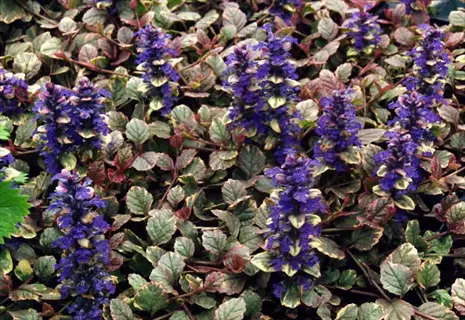
Burgundy Glow
- Foliage Color: Tricolor leaves featuring pink, white, and green variegation that intensifies in cooler temperatures and adds year-round visual interest to shaded garden areas.
- Growth Habit: Slower spreading variety that reaches 4-6 inches (10-15 centimeters) tall, making it easier to control than faster-growing selections.
- Disease Resistance: NC State Extension documents resistance to phytophthora, stem rot, and aerial blight, making it ideal for humid climates where crown rot is common.
- Light Preference: Performs best in partial shade where variegation shows most vibrantly, though tolerates morning sun in northern regions.
- Bloom Characteristics: Produces blue flower spikes in late spring that attract bees and butterflies while complementing the colorful foliage below.
- Best Uses: Excellent choice for containers, rock gardens, and small spaces where controlled spreading and disease resistance are priorities.
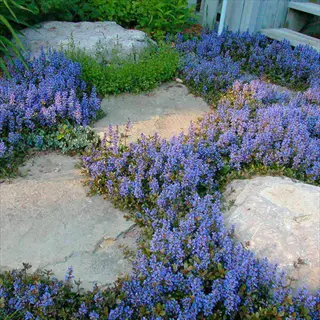
Chocolate Chip
- Foliage Color: Narrow, chocolate-brown leaves that are much smaller than standard ajuga varieties, creating a fine-textured ground cover appearance.
- Growth Habit: Compact dwarf variety reaching only 1-3 inches (2.5-7.5 centimeters) tall with a tighter, more controlled spreading pattern than larger cultivars.
- Spread Rate: Spreads more slowly than standard varieties, filling in over two to three years rather than one season.
- Light Preference: Tolerates more sun than other varieties without scorching, making it versatile for sunnier locations with afternoon shade.
- Bloom Characteristics: Produces smaller blue-purple flower spikes that appear in May and June, attracting small pollinators.
- Best Uses: Ideal for tucking between stepping stones, edging paths, or planting in rock gardens where a delicate texture is desired.
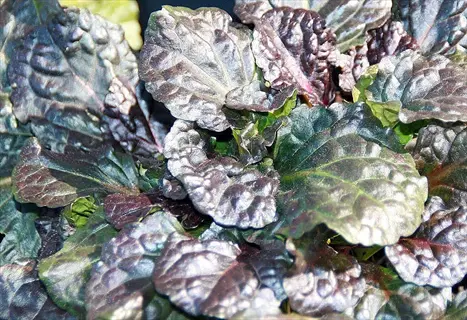
Black Scallop
- Foliage Color: Deep purple-black scalloped leaves that appear almost black in shade, creating dramatic contrast against lighter plants and pathways.
- Growth Habit: Moderate spreader reaching 3-6 inches (7.5-15 centimeters) tall with glossy, wavy-edged foliage that maintains color throughout the growing season.
- Visual Impact: The darkest foliage of any ajuga variety provides striking contrast when paired with bright green or silver-leaved companion plants.
- Light Preference: Develops deepest coloration in partial shade, though tolerates full sun in cool climates with adequate moisture.
- Bloom Characteristics: Blue flower spikes emerge in spring and create beautiful contrast against the near-black foliage below.
- Best Uses: Perfect for modern garden designs, container combinations, and anywhere bold foliage contrast creates visual drama.
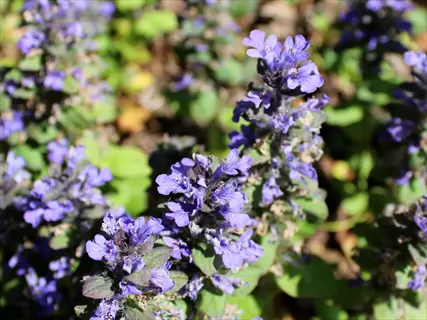
Catlins Giant
- Foliage Color: Large bronze-green leaves reaching 3-4 inches (7.5-10 centimeters) long, significantly bigger than standard ajuga varieties.
- Growth Habit: Vigorous grower reaching 6-12 inches (15-30 centimeters) tall, the largest cultivar available for maximum coverage.
- Disease Resistance: NC State Extension notes resistance to fusarium wilt, an important consideration for gardens with soil-borne disease pressure.
- Bloom Characteristics: Produces tall 8-10 inch (20-25 centimeter) blue flower spikes that tower above other varieties, creating impressive spring displays.
- Coverage Speed: Fast spreading via stolons, this variety fills large areas in one season but requires monitoring to prevent unwanted expansion.
- Best Uses: Excellent for filling large shady areas, slopes, and locations where rapid coverage outweighs concerns about aggressive spreading.
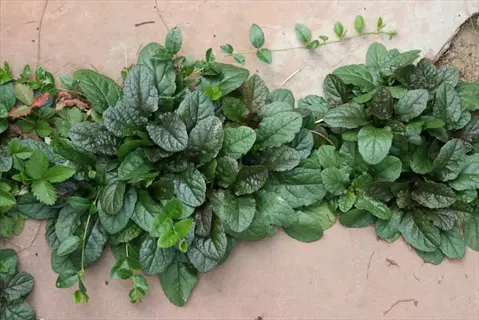
Bronze Beauty
- Foliage Color: Glossy bronze-purple leaves that maintain rich coloration throughout the growing season, deepening in cooler weather.
- Growth Habit: Moderate spreader reaching 4-6 inches (10-15 centimeters) tall with dense foliage that blocks weeds from growing.
- Reliability: One of the most common and tested varieties, proven to perform well across many different growing conditions.
- Light Preference: Adapts well to full sun through partial shade, developing best bronze coloration with morning sun and afternoon shade.
- Bloom Characteristics: Produces bright blue flower spikes in late spring that stand out bold against the bronze foliage.
- Best Uses: Reliable choice for beginning gardeners, large-scale plantings, and situations where proven performance matters most.

Metallica Crispa
- Foliage Color: Unique crinkled metallic-bronze leaves with distinctive ruffled texture that sets this variety apart from smooth-leaved types.
- Growth Habit: Compact, slow-spreading variety reaching 2-4 inches (5-10 centimeters) tall with an interesting textured appearance.
- Spread Rate: One of the slowest spreading ajuga varieties, making it easier to control and less likely to escape into unwanted areas.
- Texture Appeal: The crinkled, almost crispy-looking foliage adds textural interest that pairs well with smooth-leaved companions.
- Bloom Characteristics: Produces blue flower spikes in proportion to its smaller size, attracting pollinators without overwhelming the foliage.
- Best Uses: Perfect for collectors, small spaces, and gardens where unique texture and controlled growth are desired.
Planting Ajuga Ground Cover
Knowing where to plant ajuga matters as much as how you do it. I learned this the hard way when planting ajuga in heavy clay killed my first batch. Ajuga soil requirements call for moist, rich soil with good drainage. The Missouri Botanical Garden confirms this keeps roots healthy.
When to plant ajuga is your next big decision. Spring and early fall work best because mild temps help roots settle in. UF IFAS Extension suggests ajuga spacing of 6 to 12 inches between plants. This fills gaps within one or two growing seasons.
Shade planting gives you the best results in most climates since ajuga handles low light well. Your soil pH should fall between 4.5 and 6.5 for ideal growth. Adding compost to your bed improves both drainage and moisture which ajuga needs to thrive.
The most critical step is keeping the crown at soil level. Bury it too deep and you invite rot that kills plants fast. Too high and roots dry out before they grab hold. Get this right and your new plants will spread into a thick carpet within a year or two.
Ajuga Care and Maintenance
Ajuga care takes less time than most plants once it settles in. I spend maybe 10 minutes per month on my patches during the growing season. You just need to focus on watering ajuga during dry spells and fertilizing bugleweed once a year. Dividing ajuga every few years keeps patches from getting too thick and bare in the middle.
Ground cover maintenance for ajuga follows a simple pattern by season. Remove spent flowers after blooming and thin out dense spots for air flow. This keeps your plants healthy. Pruning ajuga means cutting back runners that escape their beds.
The best tip I can give you is to stay ahead of problems rather than fix them later. Regular checks catch crown rot early before it spreads. A quick pass with fertilizer in spring keeps foliage thick and colorful all summer long.
Spring Care Tasks
- Fertilizing: Apply 10-10-10 granular fertilizer in early spring as new growth emerges to support healthy foliage and flower production throughout the season.
- Cleanup: Remove any winter-damaged or dead foliage to improve appearance and allow new growth to emerge without competition.
- Inspection: Check for signs of crown rot or disease, especially in areas where snow sat on plants all winter or drainage is poor.
- Division: Divide overcrowded patches every 2-3 years in spring to maintain vigor and prevent the bare centers that develop in old plantings.
Summer Care Tasks
- Deadheading: Remove spent flower spikes after blooming finishes in June to redirect energy to foliage growth and prevent unwanted seeding.
- Watering: Water during extended dry periods, especially plants in sunnier locations that experience more moisture stress than shaded plantings.
- Mowing Option: Missouri Botanical Garden notes ajuga tolerates mowing at high settings after flowering to renovate tired-looking plantings.
- Monitoring: Watch for crown rot symptoms during humid weather, removing affected plants right away to prevent spread.
Fall Care Tasks
- Thinning: Remove excess runners and thin dense patches to improve air circulation before winter moisture settles in.
- Planting: Early fall is excellent for planting new ajuga, as cooler temperatures and fall rains help establishment before winter.
- Edging: Trim back any runners that escaped intended boundaries during the growing season to maintain garden design.
- Assessment: Evaluate which areas need additional plants next spring and mark spots for future division transplants.
Winter Care Tasks
- Mulching: Apply light mulch after ground freezes in cold climates to protect roots, but keep mulch away from crowns.
- Drainage Check: Ensure drainage paths remain clear so winter moisture drains away from plantings rather than pooling.
- Planning: Research new varieties to add range and disease resistance to your ajuga collection for spring planting.
- Minimal Intervention: Ajuga needs little winter care in zones 3 through 10, as the foliage persists through cold without help.
Preventing Crown Rot and Disease
Ajuga crown rot kills more plantings than any other problem you will face with this ground cover. I lost an entire bed to it my second year before I learned what causes it. Two main fungi create ajuga problems: Phoma sp. and Sclerotium rolfsii according to Oregon State PNW Handbooks. The worst part is that no chemical controls work once infection starts.
Preventing crown rot comes down to site prep and plant care from day one. Ajuga diseases also include root-knot nematode on sandy soils per Texas A&M research. This pest causes thinning and death over time. Ajuga troubleshooting means learning what to look for early.
White coating on stems and rapid yellowing signal crown rot in most cases. Wilting plants that still have wet soil often point to root problems. Catch these signs early and remove sick plants fast to save the rest of your patch.
The best way to beat ajuga diseases is to never let them start. Plant in well-drained soil and space plants for good air flow. Pick disease resistant varieties like Burgundy Glow or Catlins Giant if your area gets humid summers.
Wildlife Benefits and Pollinators
Ajuga pollinators include some of the most helpful insects and birds in any garden. NC State Extension confirms ajuga bees like bumblebees visit the flowers. Ajuga butterflies, moths, and hummingbirds stop by too. I watch these visitors every spring when my patches burst into bloom during May and June.
What makes ajuga special is the timing of its flowers. Few other plants bloom at ground level during early spring when pollinators need food most. Your pollinator garden gets a boost from ajuga when bees wake up hungry from winter rest and need nectar fast.
This deer resistant ground cover also keeps browsing animals away from your beds. Ajuga contains bitter compounds that deer and rabbits avoid. You can use it as rabbit resistant plants around more tender flowers that need protection from hungry wildlife.
Bumblebees and Native Bees
- Nectar Source: Ajuga's tubular flowers provide accessible nectar for bumblebees and other native bee species during the critical early spring period.
- Bloom Timing: May to June flowering fills a gap when few other ground-level nectar sources are available, supporting bee populations between spring bulbs and summer flowers.
- Flower Structure: The lipped flowers of this mint family member are shaped for bee pollination, with landing platforms that guide bees to nectar.
- Colony Support: Early nectar helps bumblebee queens establish new colonies after winter when they need energy sources.
Butterflies and Moths
- Nectar Feeding: Various butterfly species visit ajuga flowers for nectar, including skippers and small blues that favor low-growing nectar sources.
- Moth Attraction: Night-flying moths also visit ajuga, making the flowers valuable for supporting nocturnal pollinator populations often overlooked by gardeners.
- Caterpillar Host: While not a primary host plant, ajuga's dense foliage provides shelter for butterfly caterpillars seeking protected spots.
- Garden Integration: Planting ajuga near butterfly host plants creates complete habitat with both nectar sources and protected areas.
Hummingbirds
- Early Nectar: Hummingbirds visit ajuga flowers during spring migration when they need frequent nectar stops to fuel their journey.
- Tubular Flowers: The flower shape suits hummingbird feeding, though the small size means they visit multiple flower spikes during foraging.
- Ground Level Resource: Ajuga provides nectar at ground level, adding feeding heights in gardens that also include taller hummingbird plants.
- Color Attraction: Blue and purple flower spikes attract hummingbird attention, especially when massed plantings create visible color blocks.
Deer and Rabbit Resistance
- Bitter Compounds: Ajuga foliage contains bitter-tasting compounds that make it unpalatable to deer and rabbits browsing for food.
- Missouri Botanical Garden Confirmation: Extension sources document ajuga as resistant to deer, rabbit, and even black walnut toxicity.
- Reliable Protection: Unlike many plants marketed as deer resistant that still get eaten, ajuga stays safe in high-pressure browsing areas.
- Strategic Planting: Use ajuga to create borders around more vulnerable plants, creating a visual and taste barrier against browsing animals.
Controlling Ajuga Spread
Controlling ajuga takes planning if you want this plant to stay where you put it. Ajuga spreading happens through runners that creep across soil and root down. I spend about 5 minutes each month pulling ajuga runners that escape my beds. This small effort keeps everything tidy.
You should know that ajuga invasive concerns exist in some areas. Florida IFAS experts warn against planting it in certain regions. Maryland, Oregon, and West Virginia list it as a problem plant in guides. Check your local list before planting to garden smart.
Managing ground cover spread works best with physical barriers in place. Metal or plastic edging buried 4 inches deep stops most runners from escaping. Contain ajuga this way and you cut your maintenance time in half while keeping the plant where it belongs.
5 Common Myths
Ajuga only grows in shade and will die in sunny locations.
Ajuga tolerates full sun to full shade. It grows successfully in sunny spots when given adequate moisture, especially in northern climates where summer heat is less intense.
All ajuga varieties spread aggressively and become invasive in every garden.
Spreading rates vary significantly by variety. Chocolate Chip and Metallica Crispa are slower growers that stay more contained, while standard varieties spread more vigorously.
Crown rot cannot be prevented once ajuga is planted in your garden.
Crown rot is preventable through proper site selection, spacing for air circulation, and avoiding overwatering. Disease-resistant varieties like Burgundy Glow offer additional protection.
Ajuga flowers are purely ornamental and provide no benefit to wildlife.
Ajuga flowers attract bumblebees, butterflies, moths, and hummingbirds. The spring blooms provide important early-season nectar when few other flowers are available.
You cannot grow ajuga in areas where deer and rabbits are common problems.
Ajuga is naturally deer and rabbit resistant due to bitter compounds in its foliage. It makes an excellent ground cover choice for gardens with browsing pressure from wildlife.
Conclusion
Ajuga ground cover gives you a tough plant that fills shady spots where other options fail. This bugleweed works across zones 3 through 10 and needs very little care once it gets going. You get colorful foliage, spring blooms, and ground that stays covered year round.
The best approach is to start small with disease resistant varieties like Burgundy Glow or Catlins Giant. These give you the beauty of a low maintenance ground cover without the crown rot problems that frustrate many gardeners. Plant them right with good drainage and proper spacing for success.
Your shade gardening gets a boost from pollinator plants like ajuga that feed bees and butterflies in spring. Few other ground covers pull this double duty of looking great and supporting wildlife. The deer and rabbit resistance is a nice bonus for gardens with browsing problems.
Check your local invasive species list before planting and use edging to keep ajuga in bounds. With smart planning and the right variety choice, you can enjoy this versatile ground cover for years to come. Start with a small patch this spring and watch it transform your problem shade areas into something beautiful.
External Sources
Frequently Asked Questions
Where is the best place to plant Ajuga?
Plant ajuga in partial to full shade with moist, well-draining soil. It tolerates full sun in northern regions if kept consistently moist.
What does Ajuga look like in winter?
Ajuga remains semi-evergreen in most climates, keeping its colorful foliage through winter. Leaves may bronze or darken in cold weather.
Is Ajuga toxic to dogs?
Ajuga is not toxic to dogs. It is considered safe for pets according to gardening experts and veterinary resources.
How far apart do you plant Ajuga ground cover?
Space ajuga plants 6-12 inches (15-30 centimeters) apart for quick coverage. Closer spacing fills in faster but costs more.
Should you mulch around Ajuga?
Light mulching helps retain moisture, but avoid heavy mulch against crowns. Excess moisture around stems promotes crown rot.
How to overwinter Ajuga?
Ajuga needs minimal winter care in zones 3-10. Apply light mulch after ground freezes and remove dead foliage in spring.
Can Ajuga be grown in pots?
Ajuga grows well in containers and hanging baskets. Use well-draining potting mix and ensure drainage holes prevent waterlogging.
What is the fastest spreading ground cover for shade?
Ajuga is among the fastest spreading shade ground covers, along with vinca, pachysandra, and creeping jenny. Ajuga spreads via stolons.
Does Ajuga have any medicinal properties?
Research shows ajuga contains antioxidant and anti-inflammatory compounds. Traditional medicine used it for wound healing.
What are native alternatives to Ajuga?
Native alternatives include wild ginger, creeping phlox, and green-and-gold. Choose based on your region and growing conditions.