
Introduction
Your garden could be starving right now and you might not know it. This 7 Essential Micronutrients for Plants: Complete Guide covers the trace elements most growers miss. About one third of all people face hidden hunger tied to gaps in their food supply. That problem starts right in the soil where your food grows each season. What your plants absorb from the ground ends up on your plate.
I spent 12 years growing food and testing soil across dozens of garden plots. That hands on work showed me how much micronutrients for plants matter. My tomatoes would yellow and my beans would stunt for no clear reason. Each time the answer was a missing element I never checked. One absent nutrient wastes all your water and compost because plants only grow as far as their weakest link allows. You can pour money into fertilizer but it won't fix the real issue.
This guide goes far beyond what most articles on plant nutrition cover. You will learn the role of each essential micronutrient and how soil pH controls uptake. I also cover interactions between nutrients and organic sources you can use at home. These details separate average growers from great ones.
These trace elements close the gap between plants that survive and plants that thrive. Let's start with the 7 nutrients your soil must provide to keep your crops strong and healthy all season long.
7 Essential Micronutrients
Each of the 7 essential micronutrients plays a unique role that no other element can fill. Iron for plants drives energy in every green cell. Zinc for plants fuels new growth and enzyme action. Manganese for plants helps split water in the leaves. Boron for plants builds strong cell walls and helps flowers set fruit. Copper for plants powers electron transfer in your leaves. Molybdenum for plants helps fix nitrogen in legume roots. Chlorine for plants controls stomata and fights off disease.
I found that tissue levels range from 0.01% for iron and chlorine down to 0.00001% for molybdenum. Those tiny amounts still control whether your crops thrive or fail. Some researchers list nickel as an 8th micronutrient. The 7 covered here are the ones most growers need to manage.
Iron (Fe)
- Primary Role: Iron drives photosynthesis and energy transfer in every green cell, with chloroplasts holding roughly 80% of all cellular iron in leaf tissue.
- Concentration: Iron is the most abundant micronutrient in plants at approximately 100 micrograms per gram of dry weight, yet many soils lock it up at high pH levels.
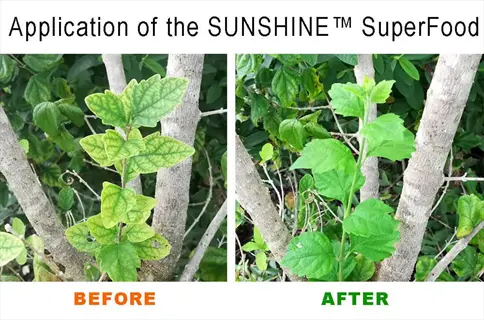
- Deficiency Signs: New leaves turn yellow between veins while veins stay green, a pattern called interveinal chlorosis that starts at the top of the plant and works downward.
- Enzyme Connection: About 30-40% of all plant proteins need a metal cofactor to function, and iron is the most common metal partner in enzymes that handle electron transport.
- Global Impact: In six European dryland countries, 60% of investigated soils tested below adequate iron levels, costing Mediterranean farmers roughly 80-100 million euros per year.
- Practical Tip: Apply chelated iron products in alkaline soils above pH 7.0, because standard iron sulfate quickly converts to unavailable forms in high-pH conditions.
Zinc (Zn)
- Primary Role: Zinc activates over 300 enzymes involved in protein synthesis, hormone production, and cell elongation, making it central to new growth throughout the plant.
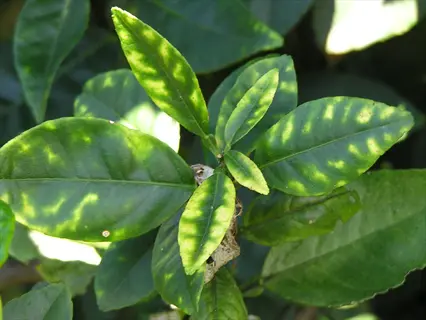
- Deficiency Signs: Leaves become small and narrow with mottled yellow patches, internodes shorten dramatically, and fruit production drops even when flowers look healthy.
- Soil Challenge: High phosphorus levels in soil trigger zinc deficiency because phosphorus interferes with zinc uptake at the root surface, a well-documented antagonism.
- Toxicity Range: Sensitivity varies hugely by crop: dry beans show toxicity at 40-50 parts per million in leaf tissue, while corn tolerates 100-300 parts per million without damage.
- Global Concern: Zinc is one of the most widely deficient micronutrients in agricultural soils worldwide, directly affecting both crop yields and human nutritional outcomes.
- Practical Tip: Broadcast zinc sulfate at 5-10 pounds (2.3-4.5 kilograms) of actual zinc per acre for long-lasting correction, since zinc persists in soil for five or more years.
Manganese (Mn)
- Primary Role: Manganese is essential for splitting water molecules during photosynthesis and plays a key role in chlorophyll formation and disease resistance in plant tissue.
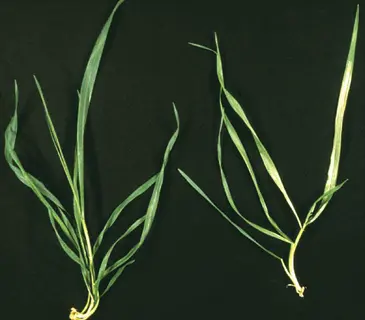
- Deficiency Signs: Older leaves develop pale green or yellow areas between veins with a checkerboard-like pattern, often confused with iron deficiency but appearing on older growth first.
- Soil Interaction: Manganese availability drops sharply in alkaline and high-organic-matter soils because it becomes oxidized into forms that roots cannot absorb efficiently.
- Regional Data: Manganese is the most common micronutrient deficiency found in Michigan agricultural soils, highlighting how soil type determines which nutrients run short first.
- Toxicity Warning: Excess manganese causes leaves to yellow and eventually die, so applying too much in acidic soils where it is already highly soluble creates a real risk.
- Practical Tip: Foliar manganese sprays at 1-2 pounds (0.5-0.9 kilograms) per acre work faster than soil applications when visual deficiency symptoms are already present.
Boron (B)
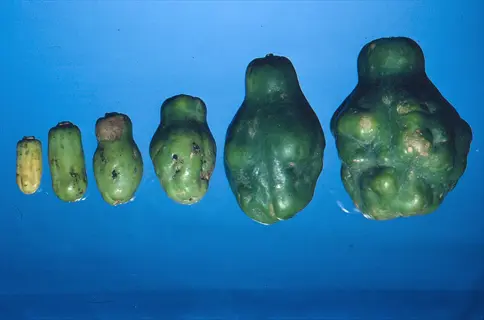
- Primary Role: Boron strengthens cell walls, aids pollen tube growth, and supports sugar transport, making it critical during flowering and fruit set in nearly all crops.
- Deficiency Signs: Growing points die back, stems become hollow or cracked, and fruit develops corky brown spots or internal breakdown that ruins both appearance and storage life.
- Narrow Safety Range: Boron has the tightest margin between deficiency and toxicity of all seven micronutrients, so precise application rates are absolutely essential for every crop.
- Calcium Synergy: Boron and calcium work together in cell wall formation, and correcting a boron deficiency often improves calcium distribution throughout the fruit as well.
- Crop Sensitivity: Root vegetables and brassicas need relatively high boron, while small grains and grasses are very sensitive and can be damaged by rates safe for other crops.
- Practical Tip: Apply boron at 0.5-2 pounds (0.2-0.9 kilograms) per acre based on a recent soil test, and never exceed the recommended rate because toxicity is difficult to reverse.
Copper (Cu)
- Primary Role: Copper powers electron transport in photosynthesis, with up to 50% of all plant copper concentrated in chloroplasts where it binds primarily to plastocyanin protein.
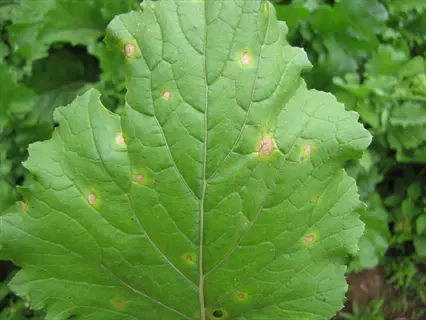
- Deficiency Signs: Young leaves wilt and curl even when soil is moist, tips turn white or light gray, and grain crops produce empty heads with poor seed fill at harvest time.
- pH Sensitivity: Copper solubility increases approximately 100-fold for every single unit decrease in soil pH, meaning acidic soils rarely show deficiency while alkaline soils often do.
- Long Residual Effect: A single broadcast application of copper sulfate at 3-5 pounds (1.4-2.3 kilograms) of actual copper per acre remains effective for up to eight years in most soils.
- Toxicity Danger: Once copper toxicity develops in soil, it may be very difficult or even impossible to fix, making careful soil testing before application an absolute requirement.
- Practical Tip: Use copper sulfate for acidic to neutral soils and chelated copper for alkaline conditions, always confirming deficiency with a soil test before applying anything.
Molybdenum (Mo)
- Primary Role: Molybdenum is essential for the nitrogenase enzyme in nitrogen-fixing bacteria, with each enzyme molecule requiring 38 iron atoms and a molybdenum cofactor to function.
- Concentration: Molybdenum is needed in the smallest quantity of all seven micronutrients, with plant tissue concentrations as low as 0.00001%, yet its absence causes severe nitrogen starvation.
- Unique pH Response: Unlike every other micronutrient, molybdenum becomes more available as soil pH rises, so liming acidic soil from pH 4.9 to 6.7 can triple its concentration in crops.
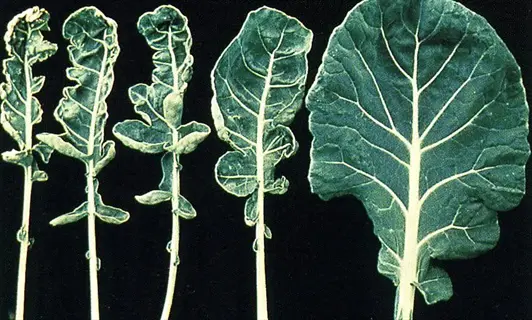
- Deficiency Signs: Leaves develop scorched or cupped margins and older leaves may show pale, irregular patches because without molybdenum, plants cannot process nitrate nitrogen properly.
- Legume Connection: Legumes like beans, peas, and clover depend heavily on molybdenum for biological nitrogen fixation, and deficiency mimics nitrogen starvation even in nitrogen-rich soils.
- Practical Tip: Seed treatment with sodium molybdate at 1-2 ounces (28-57 grams) per acre is often the most cost-effective method because such tiny amounts correct most deficiencies.
Chlorine (Cl)
- Primary Role: Chlorine regulates osmotic pressure and stomatal opening, helps split water during photosynthesis, and supports root growth and disease suppression in many crops.
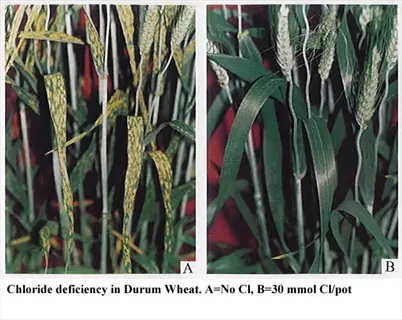
- Deficiency Signs: Wilting of leaf tips despite adequate watering, reduced root growth, and increased susceptibility to certain plant diseases are the primary signs of chlorine shortage.
- Soil Testing Thresholds: Soil chloride levels below 30 pounds per acre (33.6 kilograms per hectare) are considered deficient, 30-60 is marginal, and above 60 is adequate for most crops.
- Common Misconception: Many growers worry about chlorine toxicity from chlorinated water, but the amounts in municipal water are far below levels that would harm most garden plants.
- Natural Abundance: Chlorine deficiency is relatively rare in most agricultural settings because rainfall, irrigation water, and potassium chloride fertilizers supply adequate amounts naturally.
- Practical Tip: If soil tests show low chloride, apply potassium chloride (muriate of potash) at standard potassium rates, which typically provides more than enough chlorine as well.
All 7 of these nutrients work as a team inside your plants. A shortage of just one can stall growth even when the other 6 are at perfect levels. That's why a soil test is the best first step before you add anything to your garden beds.
Soil pH and Nutrient Uptake
Soil pH acts like a gatekeeper that controls which nutrients your plants can take in. At the right pH the door swings wide open and roots grab what they need. At the wrong pH that door slams shut and nutrients get locked in the soil where roots can't reach them. This pH lock-up is the most common cause of micronutrient problems I see in gardens.
Most micronutrients become more available in acidic soil and less available as pH rises. Copper is a dramatic example because its solubility jumps about 100 fold for each single unit drop in pH. That means alkaline soil nutrient deficiency is far more common than most growers expect. Iron, zinc, and manganese all get trapped in high pH soil too.
Molybdenum breaks the rule. It's the only one that gets more available as pH rises. Liming soil from pH 4.9 to 6.7 tripled the molybdenum in cauliflower crops. If your legumes look nitrogen starved, a low pH could be the real cause. On the flip side, acidic soil nutrients like iron and manganese can build to toxic levels when pH drops too low.
Soil pH micronutrient availability testing is the best move for your garden. A simple test costs about $15 to $30 and shows you where things stand. Nutrient availability soil pH data gives you a clear plan. Fix your pH first and many problems solve themselves.
Nutrient Interactions Matrix
Micronutrient interactions plants deal with can make or break your garden and most growers never learn about them. Think of your root zone like a busy traffic crossing. Nutrients share the same uptake lanes into your plants. When you flood one lane with too much of a single nutrient, it blocks others from getting through. This nutrient lockout plants suffer from is one of the biggest hidden problems in both gardens and farms.
I learned this lesson the hard way when I kept adding iron to my garden beds and watched my manganese levels crash. That iron manganese antagonism cost me an entire season of crops. The zinc phosphorus interaction is another big trap. Heavy phosphorus use locks out zinc at the root surface. High soil phosphorus is one of the top causes of zinc shortage in home gardens.
Not all interactions are bad. Boron and calcium work together to build strong cell walls and improve fruit quality. The key is knowing which pairs fight and which pairs help each other. The table below maps out the nutrient antagonism plants face most often so you can plan your feeding with confidence.
Once you understand these interactions you can stop chasing one problem after another. Test your soil for all micronutrients at once instead of guessing. That single step prevents the nutrient lockout plants suffer from when one element gets out of balance with the rest.
Application Methods Compared
Picking the right micronutrient fertilizers matters as much as choosing the right nutrient. Soil application micronutrients act like a daily vitamin for your plants. They give slow, steady feeding over time. Foliar spray micronutrients work more like a fast shot that brings quick relief when you see trouble. Each method has trade offs in cost, speed, and how long the effects last.
I use sulfate-based fertilizers for most of my soil work because they cost far less than chelated micronutrients per pound. Chelated forms are worth the extra money in high pH soils where standard products get locked up fast. For foliar work, MSU Extension suggests your first spray 4 weeks after plants emerge with a second spray 2 weeks later. After that you spray every 10 days until the problem clears up. The right micronutrient application rates depend on your soil test results and the method you pick.
Start with a soil test and match your method to the problem. For long term prevention use granular soil broadcast before planting. For fast fixes on growing crops, reach for a foliar spray. This approach saves you money and gets results where it matters most.
Crop-Specific Micronutrient Needs
Every crop has its own set of micronutrient needs by crop type and growing stage. This crop specific nutrient guide breaks down what each plant group needs most. I learned over the years that micronutrients for vegetables differ a lot from what fruit trees or grains need. Getting this wrong costs you yield and quality.
One number tells the whole story. MSU Extension found that 300 pounds of standard fertilizer with 0.05% manganese gives you just 0.15 pounds of the nutrient. But a deficient soil needs at least 5 pounds per acre to fix the problem. That's a 32 fold gap. You need targeted products for each crop group to close that shortfall.
Tomatoes and Peppers
- Top Priority Nutrients: Iron, zinc, and manganese are the three micronutrients most likely to limit tomato and pepper production, especially in alkaline or heavily limed garden beds.
- Boron for Fruit Set: Boron is critical during flowering because it drives pollen tube growth, and even a mild shortage leads to blossom drop and misshapen fruit in both crops.
- Application Strategy: Apply a balanced micronutrient blend at transplanting and follow up with a foliar iron spray if interveinal chlorosis appears on new leaves during the growing season.
Brassicas and Root Vegetables
- High Boron Demand: Cabbage, broccoli, cauliflower, turnips, and beets require more boron than most other garden crops, and deficiency causes hollow stems and internal browning.
- Molybdenum Sensitivity: Cauliflower is especially sensitive to low molybdenum; liming soil from pH 4.9 to 6.7 increased cauliflower molybdenum concentration more than threefold.
- Practical Rates: Apply 1-2 pounds (0.5-0.9 kilograms) of actual boron per acre before planting, but never exceed the recommended rate because brassica sensitivity varies within the family.
Beans, Peas, and Legumes
- Molybdenum Is Essential: Legumes depend on nitrogenase for nitrogen fixation, and this enzyme requires molybdenum as a cofactor; without it, nitrogen fixation fails even in good soil.
- Zinc Toxicity Caution: Dry edible beans show zinc toxicity at just 40-50 parts per million in leaf tissue, one of the lowest thresholds of any crop, so precision matters greatly.
- Seed Treatment Option: Coating legume seeds with sodium molybdate at 1-2 ounces (28-57 grams) per acre is a low-cost way to ensure adequate molybdenum from germination onward.
Fruit Trees and Berries
- Iron for Acid-Loving Fruits: Blueberries, raspberries, and citrus trees grown in neutral to alkaline soils frequently develop iron chlorosis that requires chelated iron applications to correct.
- Boron for Fruit Quality: Tree fruits benefit from boron sprays at bloom time because boron supports calcium movement into developing fruit, improving firmness and reducing storage disorders.
- Zinc for New Growth: Zinc deficiency causes small, narrow leaves and shortened shoots on apple, peach, and citrus trees, reducing canopy development and long-term productivity.
Corn, Grains, and Grasses
- High Zinc Tolerance: Corn tolerates zinc at 100-300 parts per million in leaf tissue without damage, meaning generous zinc applications are safe and often beneficial for grain yield.
- Manganese in Small Grains: Wheat and oats are particularly responsive to manganese in high-pH soils, and foliar sprays correct visible deficiency faster than soil-applied granular forms.
- Boron Sensitivity Warning: Grasses and small grains are very sensitive to boron; rates safe for brassicas and root vegetables can severely damage cereal crops if applied incorrectly.
Micronutrients for tomatoes and other garden crops differ a lot from what grain farmers need. Zinc for beans must stay below 40 to 50 ppm in leaf tissue while corn handles 5 times that amount. Boron for fruit trees boosts quality but the same rate can destroy a grass crop. Always check the needs of your specific plants before you apply anything.
Organic Micronutrient Sources
Think of organic micronutrient sources as a savings account for your soil. Each time you add compost or manure you make a small deposit. That deposit pays out nutrients over many seasons. I went organic 8 years ago and my soil test scores kept climbing. Natural micronutrients for plants build health that no bag from the store can match.
Repeated manure micronutrients use raises copper and zinc in your beds over time. Compost micronutrients come out at a slow pace that avoids toxic spikes. Kelp meal micronutrients bring in ocean minerals. Seaweed fertilizer does the same thing. These organic sources give you many benefits in one product.
Compost and Aged Manure
- Broad-Spectrum Supply: Well-made compost supplies all seven micronutrients in small, steady doses that feed plants gradually over multiple growing seasons without risk of sudden toxicity.
- Copper and Zinc Boost: Repeated applications of aged manure measurably increase available copper and zinc in soil, building long-term fertility that synthetic applications cannot match.
- Application Rate: Spread 1-3 inches (2.5-7.6 centimeters) of finished compost annually and work it into the top 6 inches (15.2 centimeters) of soil before planting to maximize nutrient release.
Kelp Meal and Seaweed Extracts
- Rich Trace Mineral Profile: Kelp meal and liquid seaweed concentrates provide a wide range of trace elements including iron, zinc, manganese, and boron collected from mineral-rich ocean water.
- Foliar and Soil Use: Apply liquid seaweed as a foliar spray every two to four weeks during the growing season or mix kelp meal into soil at 1-2 pounds per 100 square feet (0.5-1 kilogram per 9 square meters).
- Growth Stimulant Bonus: Beyond micronutrients, seaweed extracts contain natural plant hormones and alginates that improve root development and stress tolerance during hot or cold weather.
Rock Dusts and Mineral Powders
- Slow-Release Minerals: Basalt rock dust, granite dust, and glacial rock dust break down slowly over years, releasing a broad spectrum of trace minerals including iron, manganese, and zinc.
- Soil Structure Benefit: Fine mineral powders improve soil tilth and water-holding capacity while simultaneously adding the trace elements that organic matter alone may not supply in sufficient amounts.
- Application Rate: Spread 10-20 pounds per 100 square feet (5-10 kilograms per 9 square meters) and incorporate into soil, knowing that full mineral release takes two to five years.
Cover Crops and Green Manures
- Deep Mineral Mining: Deep-rooted cover crops like daikon radish and alfalfa pull micronutrients from subsoil layers that short rooted garden plants cannot reach on their own.
- Legume Advantage: Clover and vetch fix nitrogen and accumulate micronutrients that become available to the next crop when the cover crop is terminated and incorporated into the soil.
- Timing Strategy: Plant cover crops in fall after harvest and till them in three to four weeks before spring planting to allow enough time for decomposition and nutrient release.
Mixing several of these organic sources gives your soil the broadest range of trace minerals. I use compost plus kelp meal as my base and add rock dust every 3 years. This approach builds a rich soil that needs fewer outside inputs as time goes on.
5 Common Myths
If your soil has enough nitrogen, phosphorus, and potassium, your plants will never lack any nutrients.
Macronutrients alone cannot replace the seven micronutrients. A single missing trace element limits growth regardless of how much fertilizer you add.
Adding more micronutrients always leads to healthier plants and bigger harvests in every growing season.
Micronutrients are needed in a very narrow range. Excess amounts cause toxicity that can burn leaves, damage roots, and reduce yields instead of improving them.
Yellow leaves on a plant always mean the plant needs more iron, so you should apply iron right away.
Several micronutrient deficiencies produce yellow leaves, including zinc, manganese, and iron shortages. A soil or tissue test is needed before applying any correction.
Chelated micronutrient fertilizers are always worth the higher price because they work better in every situation.
Chelated forms are most beneficial in high-pH soils where standard sulfate forms become unavailable. In acidic soils, cheaper sulfate fertilizers often work just as well.
Once you correct a copper deficiency in your soil, you will need to reapply copper fertilizer every single year.
Copper has a very long residual effect in soil, lasting up to eight years after a single broadcast application, so annual reapplication is rarely necessary.
Conclusion
The smallest nutrients in your soil make the biggest impact on your garden. We covered all 7 essential micronutrients and how soil pH controls their uptake. We also showed why nutrient interactions can wreck your crops if you ignore them. About one third of all people face hidden hunger from gaps in plant nutrition. What you grow and how you feed your soil shapes what ends up on your plate.
Micronutrients for plants are not extras or nice to have additions. They are core parts of plant nutrition that drive growth, flavor, and food value. Around 30 to 40% of all plant proteins need metal cofactors to work. When those trace elements run low, your crops can't build the enzymes and structures they need. That's why 60% of soils in 6 European countries tested low for iron alone.
You now know how to spot problems, pick the right products, and match nutrients to your crops. Organic sources like compost and kelp can build your soil over many years. Foliar sprays fix urgent issues fast. The key is knowing when to use each tool and never guessing when a test can give you real answers.
A soil test micronutrients check is the single best first step you can take today. It costs less than a bag of fertilizer and shows you what your garden needs most. Start there and you will grow stronger, healthier food this season and every season after.
External Sources
Frequently Asked Questions
Which micronutrients are essential for plants?
Plants require seven essential micronutrients: boron, chlorine, copper, iron, manganese, molybdenum, and zinc. Each plays a unique role in enzyme activation, photosynthesis, and cellular development.
What is the best way to identify micronutrient deficiencies in plants?
Look for yellowing between leaf veins, stunted new growth, browning leaf tips, and poor fruit set. Each micronutrient produces distinct symptoms that help pinpoint the missing element.
What is the ideal time to apply micronutrients?
Apply micronutrients about four weeks after emergence or transplanting. A second application two weeks later corrects most deficiencies before they reduce yield.
Could micronutrients become toxic to plants?
Yes. Every micronutrient has a narrow safe range, and excess amounts cause leaf burn, root damage, or death. Boron and copper are especially prone to toxicity.
What effect does soil pH have on micronutrient availability?
Most micronutrients become less available as soil pH rises above 7.0. Copper solubility, for example, increases roughly 100-fold for each unit drop in pH.
How do soil and foliar micronutrient applications differ?
Soil applications release nutrients slowly through the root zone, while foliar sprays deliver a fast correction directly through leaf tissue. Each method has distinct advantages.
Can organic fertilizers contain sufficient micronutrients?
Most organic fertilizers supply some micronutrients, but concentrations vary widely. Compost and kelp meal are reliable sources, though severely deficient soils may need targeted amendments.
How frequently should I test soil for micronutrients?
Test soil every two to three years as a baseline. Test more frequently if you notice unexplained growth problems or after major amendments that change soil pH.
Is it okay to create DIY micronutrient fertilizers?
Simple homemade options include Epsom salt for magnesium and diluted borax for boron, but precise dosing is critical because the margin between benefit and toxicity is very small.
What makes molybdenum critical for legumes?
Molybdenum is a core component of the nitrogenase enzyme that allows legumes to fix atmospheric nitrogen. Without it, nitrogen fixation fails and the plants starve for nitrogen.