
Introduction
You stare at those bare patches under your trees where grass refuses to grow no matter what you try. The 10 best ground cover shade plants can transform these problem spots into lush carpets of green that need far less work than struggling lawn grass.
I spent years testing different plants for shady areas in my own woodland garden before finding what works. Research from Iowa State Extension confirms what I learned: shade ground cover plants need less maintenance than turf once they get going. These plants can outcompete most weeds on their own without constant attention from you.
Most gardening guides treat all shade the same way, but your results depend on knowing the difference between dry shade, moist shade, and full shade. A plant that thrives under a high oak canopy might fail beneath a dense maple that blocks both sun and rain. Think of ground covers as living mulch that protects your soil while adding beauty that bark chips can never match.
This guide shows you which shade ground cover options work best as a lawn alternative shade solution for your specific conditions. You will learn how to pick plants that match your site and stay where you want them.
10 Best Ground Cover Shade Plants
Finding the best ground cover for shade means matching plants to your specific site conditions. I tested dozens of perennial ground covers for shade over 15 years in my own woodland garden. Some spread too fast while others took forever to fill in, but these ten proved their worth.
Each plant below includes USDA zone ranges and warnings about spread that most guides skip. Native options like wild ginger support local wildlife. Plants like bugleweed ajuga and sweet woodruff fill gaps with color and texture while shade tolerant ground cover stays in place.
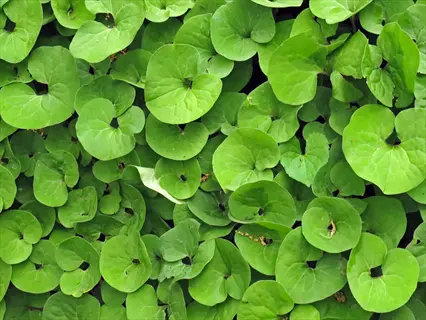
Canadian Wild Ginger (Asarum canadense)
- Native Range: Eastern North America from Quebec to North Carolina, making it an excellent native choice for woodland gardens in USDA zones 3 through 8.
- Growth Habit: Heart-shaped leaves form a dense carpet reaching 6 to 8 inches (15-20 cm) tall, spreading steadily through rhizomes without becoming aggressive.
- Shade Tolerance: Thrives in full to partial shade and tolerates the dry conditions often found beneath mature deciduous trees with competitive root systems.
- Wildlife Value: Serves as a larval host plant for pipevine swallowtail butterflies and provides shelter for beneficial ground-dwelling insects in the garden.
- Deer Resistance: Strong aromatic oils in the leaves make this plant highly deer tolerant, though deer may occasionally sample young growth in spring.
- Establishment Time: Expect 2 to 3 years for Wild Ginger to form a lush carpet, but patience rewards you with a long-lived, virtually maintenance-free ground cover.
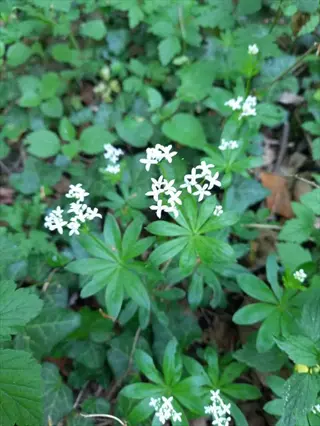
Sweet Woodruff (Galium odoratum)
- Hardiness Range: Performs best in USDA zones 4 through 8, though some sources extend this to zone 5 in colder microclimates with reliable snow cover.
- Growth Characteristics: Delicate whorled leaves create a fine-textured mat 6 to 8 inches (15-20 cm) tall topped with fragrant white star-shaped flowers in late spring.
- Spreading Method: Spreads through underground rhizomes at a moderate pace, filling in gaps between other shade plants without overwhelming neighboring perennials.
- Light Requirements: Prefers partial to full shade and struggles in hot afternoon sun, making it ideal for north-facing beds and areas beneath high-canopy trees.
- Soil Preferences: Thrives in moist, humus-rich soil similar to forest floor conditions and may need supplemental watering during dry spells in summer.
- Fragrance Bonus: Dried leaves smell like freshly cut hay and have been traditionally used to scent linens and flavor May wine beverages.
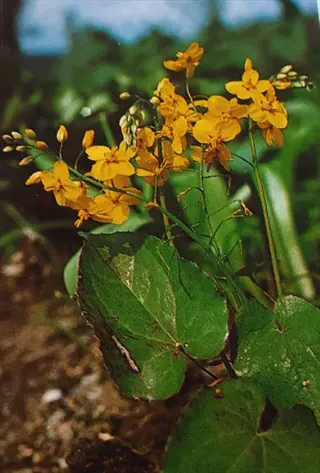
Barrenwort (Epimedium species)
- Zone Compatibility: Hardy in USDA zones 5 through 8 depending on species, with some varieties tolerating zone 4 when established and properly mulched.
- Height and Spread: Graceful heart-shaped leaves grow 8 to 12 inches (20-30 cm) tall on wiry stems, forming attractive clumps that spread slowly via rhizomes.
- Dry Shade Champion: Once established, Barrenwort excels in dry shade conditions beneath trees with surface roots where other ground covers often fail.
- Flower Display: Delicate spider-like flowers appear in early spring before the new foliage emerges, ranging from yellow to pink, red, white, and purple depending on variety.
- Maintenance Needs: Cut back old foliage in late winter before new growth emerges to showcase the flowers and encourage fresh, attractive leaf development.
- Deer and Pest Resistance: Rarely bothered by deer, rabbits, or serious pest problems, making it one of the most reliable choices for challenging shade locations.
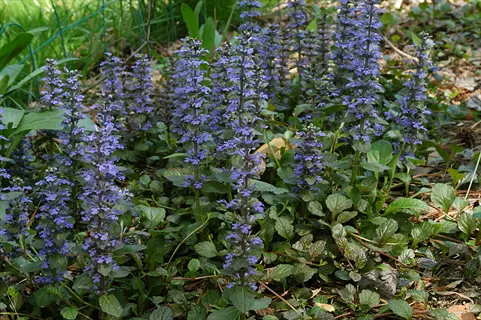
Bugleweed (Ajuga reptans)
- Wide Adaptability: Thrives in USDA zones 3 through 10, making it one of the most widely adaptable ground covers for shade across North America.
- Height Profile: Forms low rosettes 2 to 8 inches (5-20 cm) tall depending on variety, with colorful foliage in bronze, purple, variegated, and green selections.
- Rapid Spreading: Spreads quickly through stolons that root at leaf nodes, filling bare areas within one to two seasons but can become aggressive near lawns.
- Spring Flower Show: Blue, pink, or white flower spikes rise above the foliage in spring, attracting early-season pollinators including bees and small butterflies.
- Invasiveness Warning: Listed as potentially invasive in some regions including parts of Maryland, so check local guidelines and avoid planting near natural areas.
- Best Use Cases: Works exceptionally well between stepping stones, along pathways, and in contained areas where its spreading habit becomes an advantage.
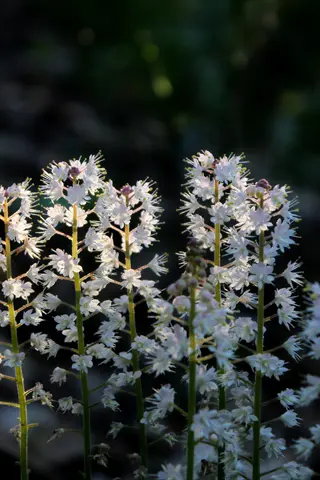
Foamflower (Tiarella cordifolia)
- Native Status: Native to eastern North American woodlands, Foamflower grows naturally from Nova Scotia to Alabama in USDA zones 3 through 8.
- Growth Form: Maple-shaped leaves form attractive mounds 6 to 12 inches (15-30 cm) tall that spread gradually through runners or remain clump-forming depending on variety.
- Flower Display: Bottlebrush-like spikes of white to pink flowers appear in mid-spring, creating a foam-like effect that gives the plant its common name.
- Shade Performance: Performs beautifully in partial to full shade and tolerates the challenging conditions beneath deciduous trees better than many flowering perennials.
- Fall Interest: Many varieties display attractive fall foliage colors with leaves turning bronze, red, or burgundy as temperatures drop in autumn.
- Companion Pairing: Combines well with hostas, ferns, and coral bells for a native-inspired shade garden that supports local ecosystem health.
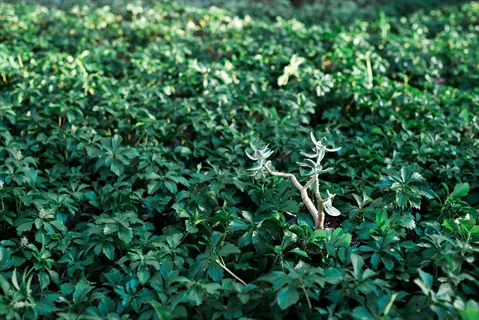
Japanese Pachysandra (Pachysandra terminalis)
- Zone Range: Hardy in USDA zones 4 through 9, performing reliably as an evergreen ground cover in most temperate regions of North America.
- Growth Dimensions: Dense whorls of dark green leaves reach 6 to 12 inches (15-30 cm) tall, creating a uniform carpet effect prized for formal shade gardens.
- Spreading Rate: Spreads through underground rhizomes at a moderate pace, though University of Georgia research notes full coverage may take 3 or more years.
- Evergreen Value: Maintains foliage through winter in most zones, providing year-round coverage when many other ground covers die back to the ground.
- Invasiveness Concern: Listed as potentially invasive in several states including Maryland, escaping cultivation and outcompeting native woodland plants.
- Best Applications: Works well in large-scale plantings beneath trees and shrubs where its uniform appearance and shade tolerance shine brightest.
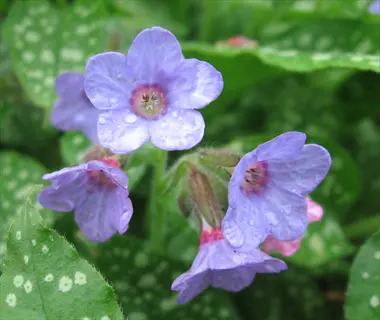
Lungwort (Pulmonaria species)
- Hardiness: Thrives in USDA zones 3 through 8, tolerating cold winters and performing best where summers remain relatively cool and humid.
- Distinctive Foliage: Silver-spotted leaves provide visual interest throughout the growing season, reaching 12 to 18 inches (30-45 cm) tall and wide.
- Spring Flowers: Bell-shaped flowers open pink and mature to blue on the same plant, creating a two-tone effect that attracts early spring bees.
- Shade Requirements: Prefers partial to full shade and suffers in hot afternoon sun, developing scorched leaf edges if exposed to intense light.
- Moisture Needs: Requires consistently moist soil and does not tolerate drought well, making it better suited for moist shade than dry shade conditions.
- Clump-Forming Habit: Spreads slowly through basal offsets rather than running roots, staying in place and working well as an accent plant or edging.
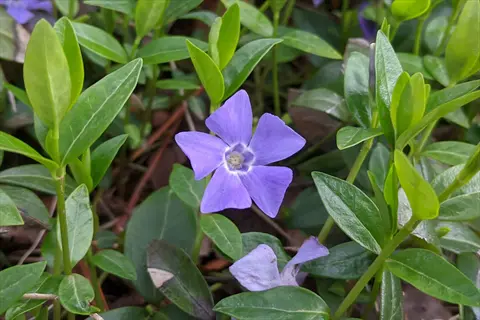
Periwinkle (Vinca minor)
- Zone Tolerance: Hardy in USDA zones 4 through 8, maintaining evergreen foliage through mild winters and recovering quickly from cold damage.
- Growth Height: Trailing stems form a dense mat approximately 6 inches (15 cm) tall that roots at leaf nodes as it spreads across the ground.
- Flower Color: Blue, purple, or white pinwheel-shaped flowers appear in spring, with some reblooming varieties continuing to flower sporadically through summer.
- Spreading Speed: Spreads rapidly via trailing shoots that root at nodes, making it effective for erosion control on shaded slopes and banks.
- Invasiveness Alert: Considered invasive in multiple states including parts of the Northeast and Mid-Atlantic, outcompeting native woodland plants in natural areas.
- Containment Options: Best used in contained areas, urban settings, or where bordered by hardscape that prevents spread into natural landscapes.
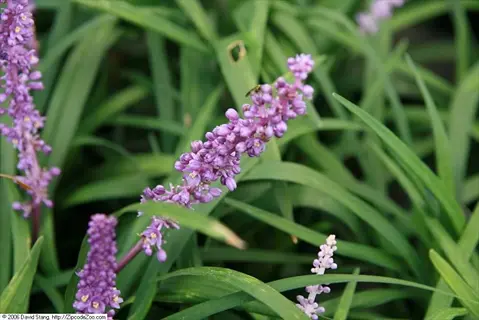
Lilyturf (Liriope muscari)
- Southern Adaptability: Thrives in USDA zones 6 through 10, performing exceptionally well in southern gardens where heat tolerance matters greatly.
- Grass-Like Form: Arching strap-like leaves grow 12 to 18 inches (30-45 cm) tall, providing a grass-like texture that contrasts nicely with broader-leaved shade plants.
- Flower Spikes: Purple or white flower spikes appear in late summer to fall, followed by dark berries that persist through winter for added interest.
- Drought Tolerance: Once established, Lilyturf tolerates drought, heat, and humidity better than most shade ground covers, thriving in challenging conditions.
- Regional Concern: Listed as Category 3 invasive by the Georgia Exotic Pest Plant Council, warranting caution in southeastern landscapes near natural areas.
- Clumping vs Spreading: Choose clumping varieties (Liriope muscari) over spreading types (Liriope spicata) for better containment and less aggressive growth.
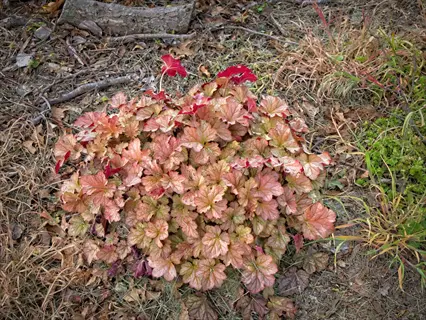
Coral Bells (Heuchera species)
- Native Heritage: Native varieties originate from North American woodlands, thriving in USDA zones 4 through 9 depending on the specific species and hybrid.
- Foliage Colors: Available in an extraordinary range of foliage colors including purple, coral, lime, silver, bronze, and multi-colored varieties.
- Height Range: Mounding foliage typically reaches 8 to 12 inches (20-30 cm) tall, with flower stalks extending to 18 inches (45 cm) in late spring.
- Shade Tolerance: Performs well in partial shade, though darker-leaved varieties tolerate more sun while lime and gold varieties need more protection.
- Spreading Habit: Forms slowly expanding clumps through basal offsets rather than running roots, making it well-behaved and suitable for mixed borders.
- Maintenance Tip: Divide every 3 to 4 years when the woody crown lifts from the soil, replanting divisions at the original depth for best performance.
Your best pick from this list depends on what challenge you face in your garden. Wild ginger and Barrenwort handle the toughest dry shade spots while Sweet Woodruff and Foamflower thrive where moisture stays more consistent.
Choosing Ground Cover by Shade Type
Picking the right full shade ground cover starts with knowing what type of shade you have. University of Florida research shows shade plants thrive with fewer than 4 hours of sun each day. But shade alone does not tell the whole story about what will grow in your garden.
Dry shade ground cover needs differ from moist shade plants because the soil matters as much as the light. I learned this the hard way when my first plants died under a maple tree. Utah State research confirms that dense tree canopies block both sun and rain. Ground cover under trees stays bone dry even during storms.
Partial shade ground cover gets 4 to 6 hours of sun and offers the widest plant choices. Dense shade plants that handle full darkness need special traits to survive with less energy from the sun.
The chart above shows why Wild Ginger and Barrenwort stand out for tough dry shade spots. If you have moist shade, your options open up because most ground covers prefer that extra moisture in the soil.
Native Alternatives to Invasive Species
Some popular plants spread beyond your garden and cause real problems. English Ivy, Japanese Spurge, and Periwinkle are ones to avoid. I watched my neighbor's ivy climb trees and kill them in just 5 years. These invasive ground cover alternatives harm native shade plants in nearby woods.
Non-invasive ground cover gives you similar looks without harming local woods. Native ground cover shade helps bees and butterflies thrive. Pollinator-friendly ground cover and woodland wildflowers stay where you plant them.
Instead of English Ivy
- Problem: English Ivy (Hedera helix) escapes cultivation in most eastern states, climbing trees, smothering native plants, and spreading through bird-dispersed berries.
- Native Alternative: Wild Ginger (Asarum canadense) provides similar dense coverage in shade without invasive tendencies, supporting native butterfly populations.
- Another Option: Partridge Berry (Mitchella repens) offers evergreen foliage with red berries in a much more compact, well-behaved form.
- Transition Tip: Remove English Ivy gradually over 2 to 3 years while establishing native replacements to avoid bare soil erosion issues.
Instead of Japanese Pachysandra
- Problem: Japanese Pachysandra (Pachysandra terminalis) spreads into natural areas via rhizomes, forming dense monocultures that exclude native woodland wildflowers.
- Native Alternative: Allegheny Pachysandra (Pachysandra procumbens) is a native species with similar appearance but slower, controlled growth and spring flowers.
- Another Option: Green and Gold (Chrysogonum virginianum) provides yellow daisy flowers and spreads at a manageable rate through stolons.
- Consideration: Native alternatives may establish more slowly but provide long-term ecological benefits and typically require less maintenance.
Instead of Periwinkle
- Problem: Periwinkle (Vinca minor) trails into forests through its rooting stems, outcompeting spring wildflowers and pushing out native plant species.
- Native Alternative: Foamflower (Tiarella cordifolia) offers white spring blooms and attractive foliage that spreads gently through runners without invasive tendencies.
- Another Option: Wild Stonecrop (Sedum ternatum) provides evergreen succulent foliage that tolerates dry shade and stays where planted.
- Removal Note: Periwinkle removal requires persistent effort over multiple years since fragments can regenerate from small root pieces left behind.
Instead of Creeping Jenny
- Problem: Creeping Jenny (Lysimachia nummularia) spreads aggressively in moist conditions, escaping into wetlands and stream banks where it displaces native species.
- Native Alternative: Golden Ragwort (Packera aurea) provides similar golden-yellow flowers and tolerates moist shade while supporting native pollinators.
- Another Option: Barren Strawberry (Waldsteinia fragarioides) offers yellow flowers and semi-evergreen foliage without aggressive spreading habits.
- Best Practice: Avoid planting Creeping Jenny near streams, wetlands, or drainage areas where it can spread into natural waterways.
Making the switch takes patience since native plants often grow slower at first. But after 2 to 3 years your native ground cover will thrive with less work than the invasives ever needed from you.
How Ground Covers Spread
The ground cover spreading rate matters more than most gardeners realize when picking plants. I learned this lesson after my fast spreading ground cover shade plants took over half my flower bed in one season. SDSU Extension warns that aggressive spreading ground cover can compete with other plants you want to keep.
Think of stolon ground cover like strawberry runners that creep along the surface where you can see them. Rhizome spreading plants work more like hidden underground highways sending up new shoots. Knowing which method your plants use helps you plan for controlled spreading.
Rhizome Spreaders
- How It Works: Underground stems called rhizomes grow horizontally beneath the soil surface, sending up new shoots at intervals to form expanding colonies.
- Speed Characteristics: Rhizome spreading typically occurs at moderate rates, making these plants reliable fillers that take 2 to 3 years to cover an area completely.
- Example Plants: Wild Ginger, Pachysandra, Sweet Woodruff, and Lily-of-the-Valley all spread primarily through underground rhizome networks.
- Containment Strategy: Install root barriers 6 to 8 inches (15-20 cm) deep around planting beds or use hardscape edges to prevent unwanted expansion.
Stolon Spreaders
- How It Works: Above-ground runners extend from the mother plant and root at leaf nodes when they contact soil, creating new independent plants.
- Speed Characteristics: Stolon spreading tends to be faster than rhizome spreading since runners grow above ground and root quickly in moist conditions.
- Example Plants: Bugleweed, Strawberry Begonia, and Creeping Jenny spread through visible stolons that can cover bare ground within a single growing season.
- Containment Strategy: Regular edging and removal of runners before they root helps contain these fast spreaders within desired boundaries.
Clump Formers
- How It Works: Plants grow outward from a central crown through basal offsets or slowly expanding root systems without sending out runners or rhizomes.
- Speed Characteristics: Clump formers expand slowly and predictably, typically increasing in diameter by just a few inches per year over time.
- Example Plants: Coral Bells, Lungwort, and many Ferns form expanding clumps that stay where planted and work well in mixed borders.
- Management Approach: Divide clump-forming plants every 3 to 5 years to maintain vigor and create new plants for expanding coverage areas.
Self-Seeders
- How It Works: Plants produce seeds that germinate around the parent plant, creating colonies through natural reproduction rather than vegetative spreading.
- Speed Characteristics: Self-seeding can be unpredictable, with some years producing heavy germination and others very little depending on conditions.
- Example Plants: Sweet Woodruff, Bleeding Heart, and some Viola species self-seed readily in favorable conditions with moist, humus-rich soil.
- Control Methods: Deadhead flowers before seeds mature to prevent unwanted spreading, or allow seeding in areas where naturalized colonies are welcome.
Match the spreading method to your goals before you buy any plants. Clump formers work best near other perennials. Rhizome and stolon spreaders do better in areas where you want full coverage.
Deer and Drought Resistant Options
Finding deer resistant ground cover shade plants takes some real work because no plant is truly deer proof. UGA Extension experts explain that deer tolerant plants means deer may nibble but don't prefer that foliage. In my garden, even the tough ground cover shade plants get sampled when spring food runs low.
You face a tough choice when you need drought tolerant shade ground cover. Utah State research shows that shade and drought tolerance rarely go together. The same features that help dry shade plants survive low light make them need more water. Rabbit resistant ground cover tends to match deer tolerant plants.
Wild Ginger and Barrenwort stand out as the best choices for both deer and drought problems. These two handle the toughest shade conditions. Your garden will thrive when you pick plants deer leave alone.
Start with these proven winners if deer visit your yard often. You can always add less tolerant plants later once you see how your local deer behave around your new ground covers.
Planting and Establishment Guide
Knowing how to plant ground cover sets you up for success from day one. In my experience, most planting ground cover shade projects fail because people skip the soil prep phase. I have tested dozens of planting methods and the basics always matter most.
UGA Extension research shows that slow spreaders like Pachysandra may take 3 or more years to fill in. You need to plan your ground cover spacing and shade garden preparation with that timeline in mind. Watering ground cover during ground cover establishment takes steady work but pays off big.
Soil Preparation Basics
- Testing First: Conduct a soil test before planting to understand pH and nutrient levels, since most shade ground covers prefer slightly acidic to neutral soil.
- Organic Matter: Incorporate 2 to 3 inches (5-8 cm) of compost or leaf mold into the top 6 inches (15 cm) of soil to improve moisture retention and drainage.
- Tree Root Caution: Avoid heavy tilling near established trees since damaging feeder roots harms tree health; instead, plant in pockets between major roots.
- Drainage Check: Ensure adequate drainage by digging a test hole and filling with water; if it drains within 4 hours, conditions suit most shade ground covers.
Proper Planting Technique
- Spacing Guidelines: Space plants 6 to 12 inches (15-30 cm) apart depending on species; closer spacing means faster coverage but higher initial plant costs.
- Planting Depth: Set plants at the same depth they grew in containers; planting too deep causes crown rot while planting too high exposes roots to drying.
- Timing Consideration: Plant in spring or early fall when temperatures are mild; avoid summer heat and winter cold that stress newly planted ground covers.
- Mulch Application: Apply 2 inches (5 cm) of organic mulch between plants to retain moisture and suppress weeds until the ground cover fills in completely.
First Year Care Requirements
- Watering Schedule: Water deeply once or twice weekly during the first growing season, providing about 1 inch (2.5 cm) of water including rainfall.
- Weed Management: Hand-pull weeds regularly during establishment since young ground covers cannot yet outcompete aggressive weed species for resources.
- Fertilizer Approach: Apply a light application of balanced slow-release fertilizer in spring; avoid heavy feeding that promotes leggy growth over root development.
- Patience Required: Expect modest growth the first year as plants establish root systems; significant spreading typically begins in year two.
Long-Term Maintenance Practices
- Established Watering: Once established after 1 to 2 years, most shade ground covers need supplemental water only during extended drought periods.
- Annual Cleanup: Remove dead leaves and debris in early spring before new growth emerges; some gardeners mow Pachysandra at highest setting to rejuvenate.
- Edge Control: Maintain defined edges through regular trimming or physical barriers to prevent ground covers from spreading into unwanted areas.
- Division Benefits: Divide overcrowded plantings every 3 to 5 years to maintain vigor and provide new plants for expanding coverage in other areas.
Your ground covers will reward your patience with years of low care beauty. Put in the work now and you can enjoy your shade garden for decades to come.
5 Common Myths
All shade ground covers are invasive and will take over your entire garden if you plant them once.
While some species like English Ivy and Periwinkle can become invasive in certain regions, many native alternatives like Wild Ginger and Foamflower spread at controlled rates and stay where planted.
Ground covers in shade need constant watering because they grow under trees that block all rainfall.
Once established (typically after 1 to 2 years), most shade ground covers develop root systems that access moisture deep in the soil and require supplemental watering only during extended drought periods.
Shade ground covers cannot produce flowers because they lack sufficient sunlight for blooming.
Many shade ground covers produce beautiful flowers including Sweet Woodruff with white spring blooms, Barrenwort with delicate spring flowers, and Lungwort with pink and blue blossoms.
You must remove all tree roots before planting ground covers in shaded areas under mature trees.
Disturbing tree roots can harm the tree and is unnecessary because most shade ground covers adapt well to growing among tree roots, simply requiring extra watering during establishment.
Deer will eat any ground cover planted in shade because they prefer tender shade-loving plants over sun plants.
Several shade ground covers including Wild Ginger, Barrenwort, and Ferns are deer tolerant, meaning deer may nibble them occasionally but generally avoid their foliage as a food source.
Conclusion
Picking the best ground cover for shade comes down to matching plants to your conditions. In my experience, checking your shade type and knowing how plants spread makes all the difference. These ground cover shade plants will serve you well when you make smart choices.
Iowa State Extension research confirms what I have seen in my own garden over the years. Low maintenance shade plants need far less work than lawn grass once they fill in. Shade garden ground cover can outcompete most weeds on its own without constant care from you.
Check your local extension website for invasive plant lists before you buy. What grows fine in one state might cause problems elsewhere. Your shade landscaping choices affect the natural areas around your home.
Shade gardens offer beauty that sunny borders cannot match. Give your new plants time to establish and enjoy years of low care rewards. Your patience during those first seasons will pay off with a garden that thrives.
External Sources
Frequently Asked Questions
Which ground cover plants perform best for shaded areas?
The top performers include Wild Ginger, Sweet Woodruff, Barrenwort, and Foamflower, all thriving with less than 4 hours of direct sun daily.
What low-maintenance ground covers work well in shade?
Sweet Woodruff, Pachysandra, and Liriope are:
- Require minimal watering once established
- Rarely need fertilizing
- Naturally suppress weeds
Could any ground cover survive in full shade?
Yes, several ground covers thrive in full shade with less than 3 hours of sun, including Wild Ginger, Pachysandra, and Sweet Woodruff.
Which ground cover for shade is most cost-effective?
Bugleweed and Creeping Jenny spread quickly and can be propagated easily from divisions, making them budget-friendly options.
Will creeping phlox grow well in shaded gardens?
Creeping phlox prefers partial sun to light shade but struggles in deep shade, performing best with 4 to 6 hours of morning sunlight.
Which drawbacks of using ground cover plants are common?
Common drawbacks include:
- Aggressive spreading into unwanted areas
- Slow establishment requiring 2 to 3 years
- Competition with other desirable plants
What shade ground cover spreads the fastest?
Bugleweed and Creeping Jenny are among the fastest spreaders, filling in areas within one to two growing seasons.
Which evergreen ground cover works year-round in shade?
Pachysandra, Vinca minor, and Liriope maintain their foliage through winter, providing year-round coverage in shaded landscapes.
Can ground cover plants attract pests or insects?
Most shade ground covers attract few pests, though dense plantings can harbor slugs and snails in moist conditions.
Which ground cover for challenging shade is toughest?
Wild Ginger and Barrenwort are exceptionally tough, tolerating dry shade, root competition, and deer pressure.