
Introduction
Welcome to the Top 10 Flowers for Bees: A Gardener's Essential Guide. This resource helps you turn your yard into a safe haven for pollinators that need our help now more than ever. Wild bee numbers dropped 23% from 2008 to 2013 across the United States. Winter colony losses now sit at about 30% each year, and those numbers keep climbing. When I first read that data, it matched what I noticed in my own garden beds each spring.
Your backyard works like a refueling station on a highway that bees travel each day. Too many of those stations are closing down right now. About 75% of flowering plants need animal pollinators to grow and produce fruit. One out of every 3 bites of food on your plate exists because a bee did its job well. Those pollinator crops bring in over $50 billion a year in the United States alone. That makes bee health a real concern for every person who eats food grown on a farm.
I started my own pollinator garden about 6 years ago with just a few lavender plants and some sunflowers in a raised bed. Within weeks I watched dozens of bee species show up that I had never spotted before in my yard. That small start proved you don't need a huge budget to make a difference. Even a few bee-friendly flowers in pots on a porch can boost your local bee conservation garden efforts in a big way.
This guide covers the best flowers backed by research from the USDA and Penn State. You will learn how to plan blooms for every season and pick native plants that work 4 times harder for local bees. From soil tips to building a bee hotel, you will find all the tools and advice you need right here. This pollinator garden resource puts real action steps at your fingertips so you can start making an impact today.
10 Best Flowers for Bees
Picking the best flowers for bees is a lot like stocking a buffet. You need enough choices in shape, color, and bloom time so every guest finds something to eat. The U.S. has over 4,000 native bee species and about 90% of them are solitary, not living in hives. Each type has different mouth parts and feeding habits, so the right mix of flowers matters more than most people think.
I tested all 10 of these flowers in my own garden over the past several seasons. Some drew bees within hours of their first bloom. Others took a few days but still pulled in crowds. USDA and Oregon State research shows that native plants attract bees at 4 times the rate of non native options. That data pushed me to favor native species on this list whenever I could.
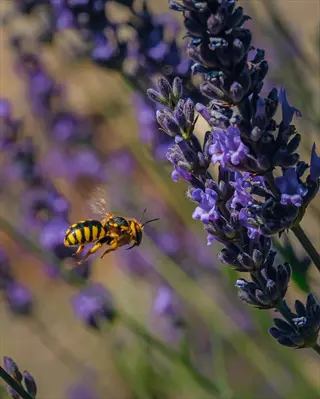
Lavender
- Bloom Season: Lavender flowers from early summer through late summer, providing weeks of continuous nectar across the hottest months when bees are most active.
- Bee Appeal: The tubular purple blooms are magnets for honeybees, bumblebees, and solitary mason bees, all drawn by the high nectar concentration and strong fragrance.
- Growing Conditions: Thrives in full sun with well-drained soil across USDA Zones 5 through 9, requiring minimal watering once established and tolerating poor, rocky soil.
- Garden Placement: Plant in clumps of three to five along borders or pathways where the fragrance and color can attract bees from a distance of several feet.
- Varieties to Try: English lavender (Lavandula angustifolia) produces the most nectar-rich blooms and handles cold winters better than French or Spanish types.
- Height and Spread: Grows 12 to 24 inches (30 to 60 centimeters) tall with a similar spread, forming compact mounds ideal for edges and container plantings.
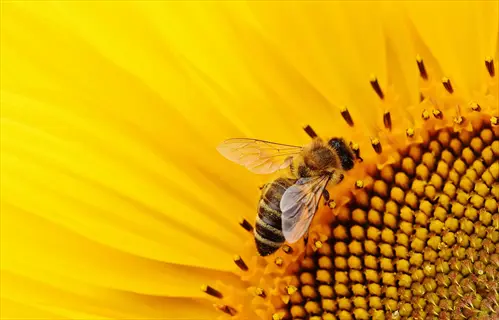
Sunflower
- Bloom Season: Sunflowers bloom from mid-summer through early fall, with each large flower head lasting one to two weeks and producing abundant pollen and nectar daily.
- Bee Appeal: The wide open faces give short-tongued bees, long-tongued bumblebees, and honeybees easy access to hundreds of tiny florets packed with protein-rich pollen.
- Growing Conditions: Prefers full sun and average soil in USDA Zones 2 through 11, making this one of the most universally plantable bee flowers across nearly every region.
- Garden Placement: Plant along fences or at the back of beds where the tall stalks reaching 6 to 10 feet (1.8 to 3 meters) will not shade shorter flowers.
- Varieties to Try: Choose single-headed pollen-rich varieties like Mammoth Grey Stripe or Lemon Queen rather than pollen-free ornamental cultivars that offer bees nothing.
- Unique Benefit: Research suggests bees may self-medicate by consuming sunflower pollen when dealing with certain gut parasites, adding a health dimension for visiting pollinators.
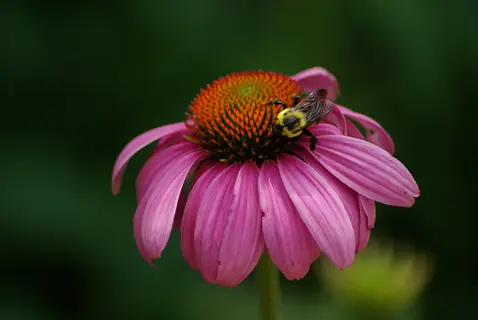
Purple Coneflower
- Bloom Season: Purple coneflower (Echinacea purpurea) blooms from early summer through early fall, offering three to four months of continuous food for foraging bees.
- Bee Appeal: The raised central cone provides a sturdy landing platform for bumblebees and smaller solitary bees while offering easy access to both nectar and pollen.
- Growing Conditions: Hardy in USDA Zones 3 through 8, coneflower thrives in full sun to light shade with average, well-drained soil and strong drought tolerance once established.
- Garden Placement: Works beautifully in mixed perennial borders and meadow-style plantings, reaching 2 to 4 feet (60 to 120 centimeters) tall in dense colorful stands.
- Varieties to Try: Stick with the native Echinacea purpurea species or single-flowered cultivars, avoiding double-flowered types that block bee access to nectar and pollen.
- Seed Value: Leave spent flower heads standing through winter as the seeds feed goldfinches and other birds while the hollow stems shelter overwintering solitary bees.
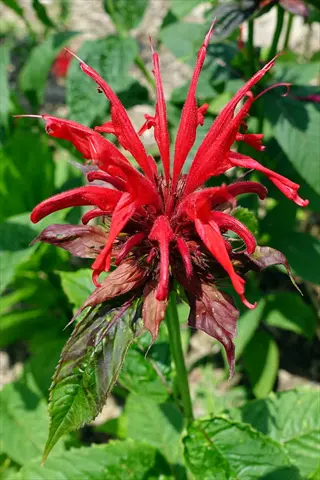
Bee Balm
- Bloom Season: Bee balm (Monarda) blooms from mid-summer through late summer, producing clusters of tubular flowers that keep bees visiting for six to eight weeks straight.
- Bee Appeal: The long tubular shape is perfectly sized for bumblebees with their long tongues, and the bright colors draw pollinators from across the garden with ease.
- Growing Conditions: Grows best in USDA Zones 3 through 9 in full sun to partial shade with moist, well-drained soil and good air circulation to prevent mildew.
- Garden Placement: Plant in large drifts in the middle of borders where the 2 to 4 foot (60 to 120 centimeter) stems create eye-catching masses of red, pink, or purple.
- Varieties to Try: The native wild bergamot (Monarda fistulosa) is especially valued by native bees, while red bee balm (Monarda didyma) draws hummingbirds as a bonus.
- Spreading Habit: Bee balm spreads readily by underground runners, so give it room or plant in a contained bed where its vigorous growth becomes an asset not a problem.
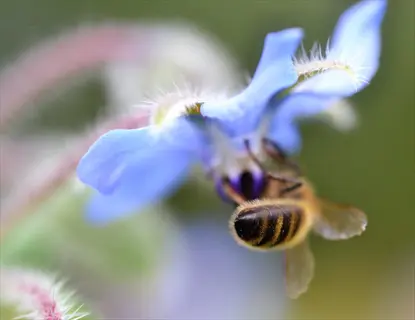
Borage
- Bloom Season: Borage blooms from late spring through the first frost, producing small star-shaped blue flowers continuously for months with minimal care or attention.
- Bee Appeal: Borage is reported to replenish its nectar supply within minutes after a bee visit, making it one of the most reliable and rewarding food sources for pollinators.
- Growing Conditions: An easy-to-grow annual in USDA Zones 2 through 11, borage thrives in full sun with average soil and reseeds itself freely each year without replanting.
- Garden Placement: Tuck borage into vegetable gardens or herb beds where it reaches 1 to 3 feet (30 to 90 centimeters) tall and attracts bees to pollinate nearby crops.
- Culinary Bonus: The blue flowers and young leaves have a mild cucumber flavor, making borage a dual-purpose plant for both pollinator support and kitchen use in salads.
- Companion Planting: Borage planted near tomatoes, squash, and strawberries helps draw pollinating bees directly to crop flowers, potentially increasing fruit set and yield.
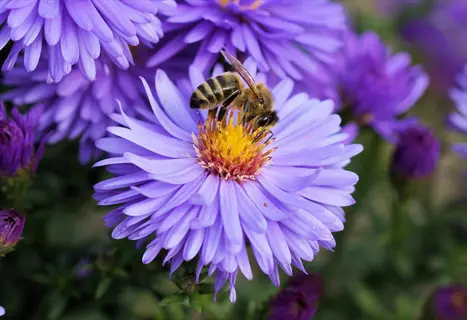
Aster
- Bloom Season: Asters bloom from late summer through late fall, filling a critical nectar gap when most other flowers have finished and bees need food before winter.
- Bee Appeal: Oregon State University research found Douglas aster to be the top performer for native bee variety and abundance among 25 plants tested over three years.
- Growing Conditions: Hardy in USDA Zones 3 through 8, asters prefer full sun and average to moist soil, adapting well to garden beds, meadow edges, and container plantings.
- Garden Placement: Mass plant asters along borders or in wildflower areas where the 1 to 6 foot (30 to 180 centimeter) stems create a fall display buzzing with activity.
- Varieties to Try: New England aster and aromatic aster are top native choices, while the frost aster recommended by Penn State tolerates dry soil and partial shade.
- Late Season Lifeline: Asters are among the last flowers standing before winter, making them a literal lifeline for queen bumblebees fattening up before hibernation begins.
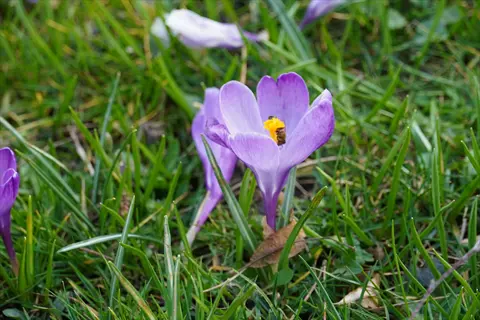
Crocus
- Bloom Season: Crocus is among the very first flowers to bloom in late winter to early spring, emerging through snow to offer desperately needed food to early-rising bees.
- Bee Appeal: Queen bumblebees emerging from hibernation rely heavily on early-blooming crocus for their first meals of nectar and pollen after months without food.
- Growing Conditions: Hardy in USDA Zones 3 through 8, crocus bulbs thrive in full sun to partial shade with well-drained soil, planted 3 to 4 inches (7 to 10 centimeters) deep in fall.
- Garden Placement: Plant crocus in large clusters of 25 or more along walkways, under deciduous trees, or scattered through lawns for maximum early-season visual and pollinator impact.
- Varieties to Try: Species crocus (Crocus tommasinianus) naturalizes freely in lawns, while Dutch crocus (Crocus vernus) produces larger flowers with more pollen per bloom.
- Naturalizing Potential: Once planted, crocus bulbs multiply on their own year after year, creating ever-expanding patches of early spring color without any extra work.
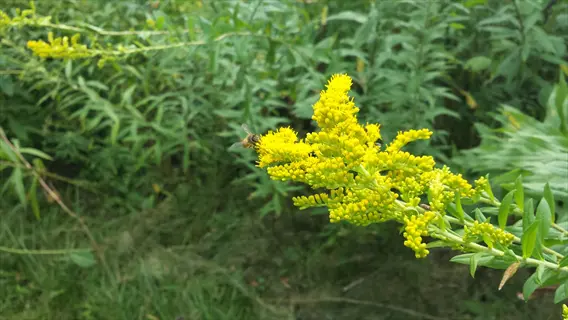
Goldenrod
- Bloom Season: Goldenrod blooms from late summer into mid-fall, covering roadsides and garden edges in brilliant yellow plumes loaded with pollen and nectar for weeks.
- Bee Appeal: Goldenrod supports an exceptionally wide range of bee species including bumblebees, sweat bees, mining bees, and honeybees gathering stores for winter survival.
- Growing Conditions: Native across most of North America, goldenrod grows in USDA Zones 2 through 8 in full sun with nearly any soil type from dry sand to moist clay.
- Garden Placement: Place goldenrod at the back of borders or in naturalized meadow areas where its 3 to 5 foot (90 to 150 centimeter) stems wave freely in the wind.
- Common Misconception: Goldenrod is often blamed for fall allergies, but ragweed is the actual culprit; goldenrod pollen is too heavy and sticky to become airborne easily.
- Varieties to Try: Stiff goldenrod (Solidago rigida) and showy goldenrod (Solidago speciosa) are well-behaved garden selections that spread less aggressively than wild types.
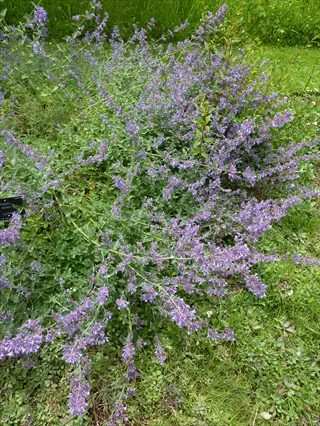
Catmint
- Bloom Season: Catmint blooms from late spring through early fall, often reflowering after deadheading to provide up to five months of continuous blue-purple blossoms.
- Bee Appeal: The small tubular flowers produce abundant nectar that attracts bumblebees, honeybees, and numerous solitary bee species throughout its long flowering period.
- Growing Conditions: Very hardy in USDA Zones 3 through 8, catmint tolerates heat, drought, poor soil, and partial shade once established, making it nearly impossible to fail with.
- Garden Placement: Use catmint as a low 12 to 18 inch (30 to 45 centimeter) border edging or groundcover that spills gracefully over paths while buzzing with bee activity.
- Varieties to Try: Walker's Low catmint (Nepeta x faassenii) is a proven performer that blooms profusely without invasive self-seeding, unlike the closely related true catnip.
- Maintenance Ease: Simply shear catmint back by one-third after the first flush fades in midsummer and a fresh wave of flowers will appear within two to three weeks.
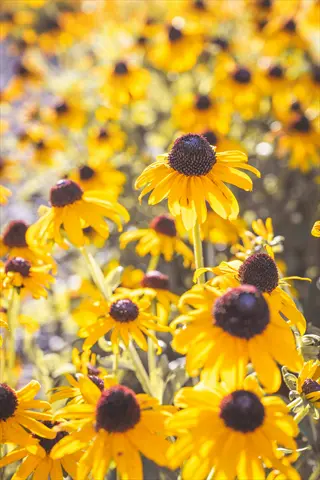
Black-Eyed Susan
- Bloom Season: Black-eyed Susan (Rudbeckia) blooms from mid-summer through early fall, brightening gardens with golden yellow petals that last six to eight weeks per plant.
- Bee Appeal: The open daisy-shaped flower gives easy landing and feeding access to small native bees, sweat bees, and mining bees that struggle with deep tubular blooms.
- Growing Conditions: Thrives in USDA Zones 3 through 9 in full sun to light shade with average soil, tolerating heat, humidity, clay, and periodic drought once established.
- Garden Placement: Mass plant in drifts of five or more in the middle of sunny borders where the 2 to 3 foot (60 to 90 centimeter) stems create vivid color blocks.
- Regional Value: The U.S. Fish and Wildlife Service specifically recommends black-eyed Susan for Southeast pollinator gardens as a native wildflower with proven regional effectiveness.
- Self-Seeding Nature: Black-eyed Susan reseeds freely in open soil, expanding your pollinator planting each year without any cost and filling gaps that other plants leave behind.
Every flower here earned its spot through real garden results and solid research. Lavender for bees draws the biggest summer crowds. Crocus spring bees count on keeps queens alive after hibernation. Sunflower pollinators show up in force too. The coneflower echinacea picks above are some of your best bets. Bee balm monarda and borage bees love round out the options too. Aster bees visit in fall and goldenrod fills the same late gap with golden plumes.
Your best move is to plant a mix from this list so your garden feeds bees from early spring through late fall with no gaps. Even 3 or 4 of these species in your yard will make a big difference for the pollinators around your home.
Seasonal Bloom Planning
A seasonal bloom plan works a lot like shift scheduling for your garden. Each flower takes over when the one before it clocks out, so there is never a gap in service for seasonal bloom pollinators. The USDA says you need at least 3 species blooming across spring, summer, and fall in clumps to keep bees fed all season long. I learned this the hard way when my first garden had nothing but summer bloomers and bees vanished by September.
Queen bumblebees come out of the ground as early as February in mild parts of the country. They need food right away after months with nothing to eat. That makes spring flowers for bees like crocus and catmint a must have in your plan. On the other end, fall flowers for bees like asters and goldenrod fuel the winter prep that queens depend on through October. Summer flowers for bees fill the long hot stretch in between with the bulk of your garden's nectar and pollen output.
Your goal for a continuous bloom and year-round bloom plan is simple. Pick at least one flower from each column in the table above. Crocus covers spring, lavender or bee balm handles summer, and aster or goldenrod takes care of fall. That 3 flower combo alone gives your bees food from March through October in most USDA zones across the country.
Native Plants vs Non-Native
The native vs non-native plants bees question is the most important planting choice you will make for local pollinators. Think of it this way. Non native plants are like fast food for bees. They fill a gap but native plants for bees are the home cooked meal that feeds local species the way they need. USDA and Oregon State research shows that bee-friendly native plants pull in bees at 4 times the rate of imported species.
Oregon State ran a 3 year study testing 25 different plant species for native bee response. Douglas aster came out as the clear winner for bee count and species range. That result tells you something big about choosing regional native plants over flashy imports. I switched half my garden to natives 4 years ago. The number of bee species I spotted jumped from 8 to over 20 in just one season.
The wild type vs cultivar debate matters a lot too. Some bred cultivars lose the nectar and pollen that make the original plant so good for bees. Always check what you buy at the garden center. If a label says "improved" or "double bloom" you should ask what was lost to get those looks.
The U.S. Fish and Wildlife Service puts out native plant lists for 8 regions across the country. Use the lists below to find what works best in your area. Your local bees built bonds with these species over thousands of years. Planting them gives pollinators the food sources they know best.
Northeast Region Natives
- Wild Lupine: A stunning spring bloomer with tall purple spikes that feeds both bumblebees and the endangered Karner blue butterfly in sandy woodland habitats.
- Common Milkweed: Produces large pink flower clusters rich in nectar throughout summer, supporting honeybees, bumblebees, and monarch butterflies across meadows and roadsides.
- Cardinal Flower: Brilliant red tubular blooms appear in late summer along stream banks, attracting long-tongued bumblebees and ruby-throated hummingbirds to shady moist areas.
- New England Aster: One of the last native flowers blooming from September through October, providing critical late-season fuel for bees preparing for winter hibernation.
Southeast Region Natives
- Black-Eyed Susan: A heat-tolerant wildflower blooming throughout summer with open golden faces that welcome small native bees, sweat bees, and mining bees easily.
- Butterfly Milkweed: Bright orange flowers thrive in full sun and dry soil from June through August, attracting native bees alongside monarchs and swallowtail butterflies.
- Swamp Sunflower: A tall vigorous perennial that explodes with yellow blooms in fall, providing one of the richest late-season nectar sources in the Southeast.
- Purple Coneflower: Native throughout the Southeast, this hardy perennial offers three months of continuous bloom and supports dozens of bee species from honeybees to leafcutters.
Midwest Region Natives
- Wild Bergamot: A tough native mint-family perennial with lavender flower heads that bloom for weeks in midsummer, drawing bumblebees, specialist bees, and beneficial wasps.
- Common Milkweed: Especially important in the Midwest prairie corridor where it provides nectar for native pollinators and serves as the sole host plant for monarch caterpillars.
- New England Aster: Thrives in prairie restorations and garden borders, producing masses of purple fall flowers that support exceptional native bee range in the region.
- Rattlesnake Master: An unusual prairie plant with globe-shaped flower heads that bloom in midsummer and attract a wide range of specialist native bees and beneficial insects.
Pacific Region Natives
- Oregon Grape: An early-spring shrub with bright yellow flower clusters that provide some of the first nectar of the year for mason bees and mining bees in western gardens.
- Showy Milkweed: A western cousin of common milkweed with pink-purple flower clusters that attract native bees, honeybees, and butterflies across open meadows and disturbed sites.
- Douglas Aster: Oregon State University research found this to be the single best plant for native bee range and abundance among 25 species tested over three years.
- Western Coneflower: A tall yellow-flowered native that blooms from midsummer into fall, supporting bumblebees and solitary bees along stream banks and moist meadow edges.
Flower Traits Bees Prefer
The flower shapes for bees in your garden make a huge difference in how many visits you get each day. Bees have special hairs called scopa that carry a static charge and pull pollen off flowers as they land. Deep tubular blooms suit bumblebees with long tongues while open flat flowers work for short tongued species. For bees, purple flowers for bees are like a brightly lit restaurant with an open door. A red double petaled rose is more like a locked building with the lights off.
Bee color vision is nothing like ours. Bees see purple, blue, and yellow better than any other colors but they can't see red at all. They also pick up UV light that we miss. Flowers use UV patterns called nectar guides that act like runway lights pointing bees straight to the nectar and pollen rich flowers center. The flower colors bees prefer most are purple and blue because those shades pop out against green leaves in the UV spectrum bees rely on.
The single flowers vs double flowers debate is one that every gardener should know about before buying plants. Breeders often strip out pollen and nectar when they create double petaled blooms that look fancy to us. A simple single petaled daisy gives bees full access to nectar-rich flowers and pollen-rich flowers they need. Double blooms just leave them hungry and wasting energy on dead ends. Stick with species types and heirloom plants whenever you can find them at the store.
Building Bee Habitat
Flowers are your garden's dining room but bees also need a bedroom and a bathroom to stick around. A bee hotel is the apartment complex. A bee watering station is the drinking fountain. About 90% of bee species are solitary nesters that live in ground holes or wood gaps. Penn State counted 437 bee species in Pennsylvania alone. Many of them need very specific bee nesting sites to survive and raise young.
I built my first bee condo 3 years ago from a chunk of untreated oak and a drill. Within 2 weeks I watched mason bees fill every single hole with mud caps. That moment showed me how desperate these solitary bee habitat seekers are for good nesting spots. Ground nesting bees need something different though. They want patches of bare dirt in a sunny spot where they can dig tunnels for their eggs. Your pollinator habitat is not complete until you cover food, water, and shelter all in one garden.
Bee Nesting Blocks and Hotels
- Construction: Drill holes of varying diameters from 3/32 inch to 3/8 inch into untreated wood blocks, each 3 to 5 inches deep without going all the way through.
- Placement: Mount bee hotels 3 to 6 feet off the ground on a wall or post that faces south, gets morning sun, and stays sheltered from rain and strong wind.
- Maintenance: Replace nesting tubes or blocks every 2 to 3 years to prevent parasites and mold from building up inside old tunnels where bee larvae grow.
- Species Served: Mason bees, leafcutter bees, and small carpenter bees will adopt well made nesting blocks placed in sunny sheltered locations near flowering plants.
Ground Nesting Areas
- Why It Matters: About 70% of native bee species nest underground in bare soil, so leaving unmulched patches in your garden supports the bulk of wild bee populations.
- Location Tips: Leave small sunny areas of exposed well drained soil in garden corners or along slopes that face south where ground nesting bees can dig their burrow tunnels.
- What to Avoid: Thick layers of mulch, landscape fabric, and heavy ground cover plants all block ground nesting bees from reaching the soil they need for building nest chambers.
- Species Served: Mining bees, sweat bees, digger bees, and cellophane bees all require direct access to bare soil for nesting, and many of these species are gentle and seldom sting.
Water Stations for Bees
- Simple Setup: Fill a low dish or birdbath with clean water and add pebbles, marbles, or small stones that break the surface so bees can stand safe while drinking.
- Placement: Set water stations in a sunny spot near flower beds and refresh the water every 1 to 2 days to prevent mosquito breeding and keep the supply clean for bees.
- Why Bees Need Water: Bees collect water to cool their nesting sites, thin stored honey for feeding larvae, and maintain proper moisture levels inside the nest chamber.
- Seasonal Need: Water stations are most critical during hot summer months when natural puddles dry up and bees must travel long distances to find safe drinking sources.
Dead Wood and Hollow Stems
- Leave Some Debris: Old tree stumps, fallen branches, and standing dead wood provide natural nesting cavities for carpenter bees, mason bees, and other cavity nesting species.
- Hollow Stem Bundles: Save dried stems from sunflowers, elderberry, and ornamental grasses, then bundle and hang them flat under an eave to create simple natural bee nesting tubes.
- Fall Cleanup Approach: Delay cutting back perennial stems until late spring because many solitary bees overwinter inside hollow stems and come out when temps warm up for good.
- Species Served: Small carpenter bees, certain mason bees, and various wasp species that eat garden pests all benefit from standing dead wood and hollow stem bundles.
Bee-Friendly Garden Design
Your pollinator garden design works best when you think of it like a layered buffet table. Put tall sunflowers at the back, medium coneflowers in the middle, and low catmint spilling over the front edge. California research shows one small urban bee-friendly garden can attract up to 50 native bee species. That proves size matters far less than how you pick and place your plants.
I learned to plant in clumps after years of scattering single plants across my beds. The change was night and day. Bees started visiting 3 times more often once I grouped flowers in patches of 3 to 5. You also need to avoid pesticides bees can absorb through nectar and pollen. A bee lawn with clover and creeping thyme mixed into your grass gives bees food right where they live. Companion planting pollinators near your vegetable crops boosts your fruit and veggie harvest too. Container gardening bees find on a balcony proves that anyone can help no matter how small their space.
Plant in Drifts and Clumps
- Minimum Grouping: Plant each flower species in groups of 3 to 5 to create visible color blocks that bees can spot from a distance and forage without wasting energy.
- Drift Planting: Arrange groups in flowing shapes rather than straight rows, matching natural meadow patterns that give your garden both beauty and maximum pollinator appeal.
- Color Blocks: Bees find large patches of one color more inviting than mixed plantings, so group purple lavender together and yellow sunflowers together rather than mixing.
Layer Heights for All Bees
- Back Row: Place tall plants like sunflowers and goldenrod at the back of borders where they create a visible beacon without shading your shorter flowers below.
- Middle Row: Fill the center with medium flowers like coneflower, bee balm, and black eyed Susan for the core pollinator feeding zone in your garden beds.
- Front Edge: Use low catmint, crocus, and creeping thyme along the front where ground level bees and small solitary species forage close to the soil.
Skip the Pesticides Safely
- Neonicotinoid Danger: Systemic pesticides called neonicotinoids get absorbed into plant tissue including nectar and pollen, poisoning bees even when you spray weeks before bloom time.
- Safer Alternatives: Use hand picking, row covers, companion planting, and beneficial insect releases instead of chemical sprays to manage pests while keeping bees safe.
- If You Must Spray: The USDA Forest Service says to spray at night when bees are not active, and choose targeted products that break down fast in sunlight.
Container and Small Spaces
- Balcony Gardens: Even a few pots of lavender, borage, and catmint on a sunny balcony can attract dozens of bee species to an urban apartment with no yard at all.
- Window Boxes: Fill window boxes with trailing herbs like thyme and oregano that bloom in summer, creating a mini pollinator station visible to bees from nearby green spaces.
- Raised Beds: A single 4 by 8 foot raised bed planted with 5 or 6 bee safe species can support real pollinator range in a small backyard.
5 Common Myths
Honeybees are the only bees that matter for pollination and gardeners should focus exclusively on supporting them.
Wild bees provide similar pollination value as honeybees according to Rutgers University research, and roughly 4,000 native bee species exist in the United States alone.
Red flowers are a great way to attract bees because the bright color is easy for them to spot from a distance.
Bees cannot see the color red at all; they perceive it as black. Purple, blue, and yellow flowers are visible to bees and far more attractive.
Double-petaled flowers like fancy roses and pom-pom dahlias provide more petals and therefore more pollen for visiting bees.
Plant breeders often remove pollen, nectar, and fragrance from double-flowered varieties, making them nearly useless to pollinators despite their larger blooms.
A perfectly manicured lawn with no weeds is the best foundation for a bee-friendly garden because it looks tidy and organized.
Clover, dandelions, and other lawn weeds provide critical early-season nectar for bees. A small unmowed patch can significantly boost pollinator food supply.
Planting just one large patch of lavender is enough to support bees in your garden throughout the entire growing season.
The USDA recommends at least three different species blooming across spring, summer, and fall because no single flower can provide food for the full season.
Conclusion
Every flower you plant for bees helps push back against the 23% bee population decline that hit wild species from 2008 to 2013. Starting a bee-friendly garden is less like building a house and more like setting a table. Even a small effort with just 3 or 4 flowers for bees from this guide makes a meaningful difference in your corner of the map.
Rutgers University found that honey bees and wild bees bring similar value to crops. Your garden's mix of native plants for bees and classic favorites feeds both groups at once. Pollinator conservation starts at home with the choices you make this weekend. USDA data shows pollinator crops bring in over $50 billion a year. Your backyard work feeds right into food security for your community.
You now have the tools for real results. Pick your flowers from the top 10 list. Plan blooms for spring, summer, and fall. Choose native species for your region. Build a simple bee hotel or water station. Those 4 steps are all you need to create a garden that bees will visit for years to come.
My own pollinator work grew from a single pot of lavender to a full bee-friendly garden buzzing from March through October. When I first started I had no idea what I was doing but the bees showed up anyway. Your garden can do the same thing. The bees are out there looking for food and shelter right now. You can be the one who gives it to them.
External Sources
Frequently Asked Questions
What flowers attract the most bees?
Lavender, sunflower, coneflower, bee balm, and borage consistently attract the highest number of bee species across gardens.
What can I do to make my garden more appealing to bees?
Plant flowers in clumps, choose native species, provide water sources, and avoid pesticides to create a welcoming bee habitat.
Can certain flower colors attract bees more than others?
Bees see purple, blue, and yellow most clearly, making these colors the top choices for a pollinator garden.
Which flowering plants support bees throughout the season?
Crocus blooms in spring, lavender in summer, and aster in fall to provide food from early spring through late autumn.
Can hybrid flowers be bad for bees?
Many hybrid flowers with doubled petals lack accessible nectar and pollen, making them poor choices for pollinators.
How much space should bee-friendly gardens have?
Even a small balcony container garden with three or four flowering species can attract dozens of native bee species.
Which common garden features harm bees?
Systemic pesticides, artificial turf, double-flowered plants, and lack of water sources all reduce bee activity in gardens.
Is it okay to attract bees without flowering plants?
Yes, by providing water stations, bee hotels, bare soil patches, and dead wood you can support bee nesting and hydration.
Can herbs benefit pollinators?
Rosemary, thyme, oregano, basil, and borage are excellent pollinator plants that also serve culinary purposes.
What is the best way to protect bees while gardening?
Avoid spraying during daylight, skip neonicotinoid products, leave some bare ground, and tolerate a few weeds for foraging.