
The leaves and the seeds are the parts the science actually works with. Nearly every study of the medicinal part of plantain runs on an extract, not on the raw plant, and the labs make that extract with ethanol or with water. So a plantain leaf extract and a fresh leaf off your lawn are two different materials, and the gap between them matters a lot when you read a claim on a package or a blog.
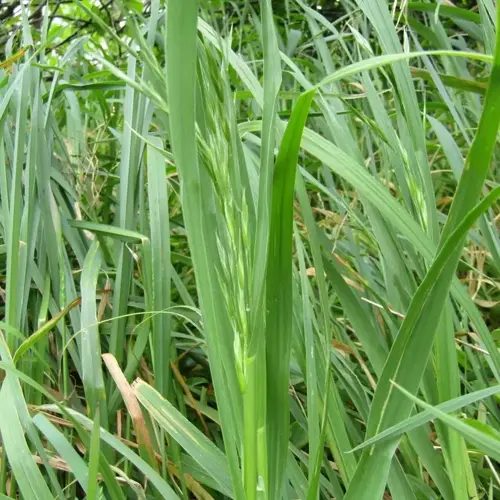
The plant makes that split easy to see once you look at how it is built. There is no true stem above ground. Every leaf rises straight off a crown sitting at the soil surface, and the leaves spread out flat in a low rosette instead of stacking up a stalk. Each leaf stalk runs about as long as the blade it carries. Under the crown you get a mat of fibrous roots.
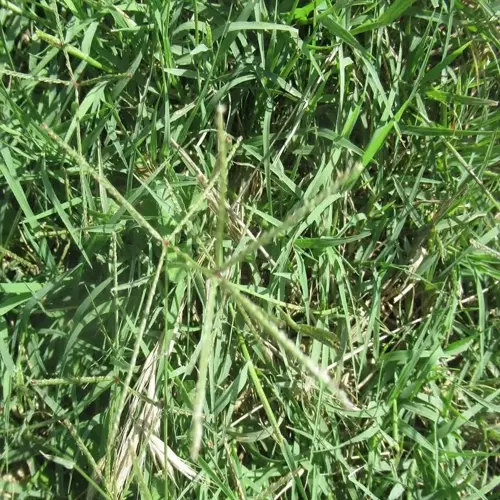
The flower stalks come off that same crown, thin and bare, with no leaves on them at all. Plantago major seeds ride those spikes in tight rows. Each seed measures about 1/16 inch (1.6 mm) across, and buckhorn plantain seeds run the same size. They stick to boots, tires and dog fur, which is how a plant that spreads mainly by seed keeps turning up in every scuffed patch of yard.
Leaf Blade And Stalk
- Shape: Broad blade held flat near the ground, with a stalk about as long as the blade itself.
- Position: All the leaves are basal, so there is no leafy stem to strip.
- Studied as: One of the two parts the published extracts were made from.
Seed Spike
- Shape: A slim leafless stalk that climbs from the crown and holds the seed in rows.
- Seed size: Roughly 1/16 inch (1.6 mm) per seed, small enough to move on a shoelace.
- Studied as: The second part behind the tested extracts.
Crown And Roots
- Shape: A short crown right at soil level with fibrous roots fanning out below it.
- Position: Everything else on the plant grows off this one point.
- Studied as: Not the source of the extracts covered here.
What sits inside those leaves and seeds is well catalogued. A 2023 review in Pharmaceuticals names two iridoid glycosides. They are aucubin and catalpol. It also names plantamajoside and acteoside. Both of those are built on caffeic acid. The flavonoids on the list are luteolin and apigenin. The names are a mouthful. What counts is that the extracts behind them were made from leaf and seed.
The list runs longer than that. Two terpenoids, ursolic acid and oleanolic acid, are on it. So are the alkaloids indicain and plantagonin, along with polysaccharides and fatty acids. That is a wide chemical range for a weed most people mow over twice a month.
The solvent used to make the extract is worth checking too. Some of the work used water based extracts and some used ethanol based ones, and the two are not the same starting material. Two papers on the same weed can therefore begin with different liquids. Read the method line before you line up one result against another.
Handle what the studies handled. The leaves and the seed spikes are the parts these extracts were made from, and the crown and roots are not.
None of this says a thing about whether plantain does anything for a scrape or a bug bite. That is a separate question with its own answer, and it deserves the space. All the anatomy tells you is where the tested compounds came from. If you are reading a label or a study, check which part went into the jar and which liquid pulled it out. Those two lines tell you more than the plant name on the front ever will.
Read the full article: Plantain Weed: Eat It or Get Rid of It