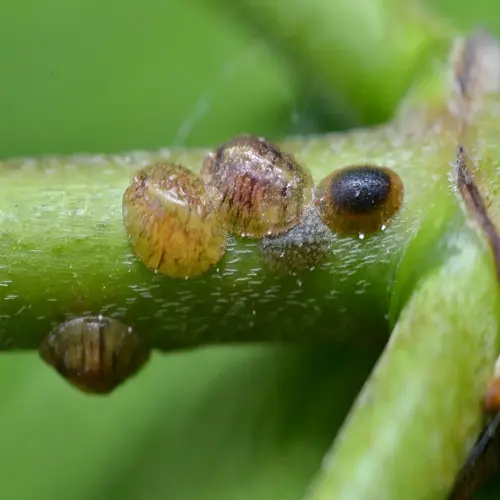

The spider mite life cycle has five stages: egg, larva, protonymph, deutonymph, and adult. This cycle can finish in as little as one week under warm conditions. Knowing these stages helps you time your treatments to catch mites at their most vulnerable points.
Spider mite reproduction happens at a frightening pace that catches many plant owners off guard. Colorado State research shows females lay up to 12 eggs per day for about two weeks straight. Ohio State reports each female produces 100 to 200 eggs in her lifetime. These numbers add up fast when you have multiple adults on a single plant.
I watched a small infestation explode on my pothos because I did not know how fast mites breed. A few pale dots turned into full webbing across several leaves in just two weeks. The delay in treatment let multiple generations hatch and mature. That experience taught me to act fast at the first sign of trouble.
Temperature controls how fast spider mite eggs hatching occurs and how quick the full cycle runs. At 70°F (21°C) the cycle takes about 12 days from egg to adult. Raise that to 85°F (30°C) and the cycle finishes in just five to seven days. Your heated home hits these warm ranges all winter long.
The mite development stages each have different traits you should know. Eggs are tiny round spheres attached to leaf undersides. Larvae have six legs and start feeding right after they hatch. The two nymph stages add more legs and grow larger before becoming adults. Adults have eight legs and can start laying eggs within days of reaching maturity.
Most treatments you use at home do not kill eggs at all. The protective shell keeps sprays and oils from reaching the mite inside. You must wait for spider mite eggs hatching to occur, then treat the young larvae before they mature. This fact shapes how you should plan your treatment schedule from start to finish.
Time your treatments every 10 to 14 days to catch newly hatched generations. The first spray kills adults and larvae on your plant at that moment. The second spray catches mites that hatched from eggs after your first treatment. A third spray often wraps up the stragglers. Stopping after one treatment lets the next generation take over.
I now set phone alerts for follow-up treatments instead of hoping my memory holds. This simple habit keeps me on schedule even when plants look better after the first spray. The spider mite life cycle never stops, so your treatment plan should not stop either until you hit at least three rounds.
Read the full article: Spider Mites on Houseplants: Complete Control Guide