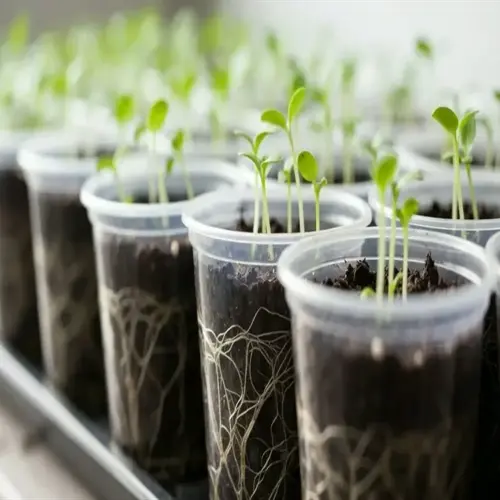

The root rot appearance you'll see includes brown or black roots that feel soft and mushy when touched. Healthy roots look white or light tan and feel firm. Rotted roots also give off a bad smell like swamp water or rotten eggs.
The first time I pulled a plant with root rot from its pot shocked me. Instead of the white healthy root ball I expected, I found dark brown mush that fell apart in my hands. The smell hit me before I even got close. That memory still makes me check my plants more often.
To identify root rot early, you need to know what healthy roots look like first. Good roots are white to light tan in color. They feel firm when you squeeze them, like al dente pasta. They snap rather than squish when you bend them.
The rotted roots visual is very different. Infected roots turn dark brown, gray, or black. They feel soft and slimy to the touch. When you tug on a rotted root, the outer layer slides off the inner core. This happens because the outer tissue has died and separated from the living center.
You can do a simple slip test to check your roots. Pinch a suspected root between your fingers and pull gently. If the outer layer slides off like a sleeve, that root has rot. Healthy roots stay intact when you tug on them.
The smell test works even before you unpot your plant. Lean close to the soil surface and take a sniff. Healthy soil smells earthy and clean. Soil with rotting roots underneath has a sour, swampy odor that healthy plants never produce.
Sometimes you'll find a mix of healthy and rotted roots on the same plant. This means the infection hasn't spread everywhere yet. Cut away all the brown mushy roots and keep the firm white ones. Your plant may still have a chance if enough healthy roots remain.
Check the root crown where stems meet roots as well. If this junction feels soft or mushy, the infection has spread too far. A firm crown with some healthy roots below means you caught it in time. Act fast once you spot these signs.
Read the full article: How to Treat Root Rot and Save Your Plants