
The tradition is a clean leaf crushed until it goes wet and dark, then pressed against the bite and held there. That is the whole plantain poultice method. Using plantain for bug bites is a tradition, not a tested practice. No study has looked at what a crushed leaf does to a mosquito welt or a wasp sting. The lab work on this plant is real and I will get to it, but none of it was ever aimed at bites.
The poultice framing you meet online, along with the nature's band-aid line that trails after it, traces back to foraging blogs that cite nothing at all. Follow any of those pages upstream and the trail ends at another page saying the same thing in different words. That does not make the practice wrong. It just means nobody checked.
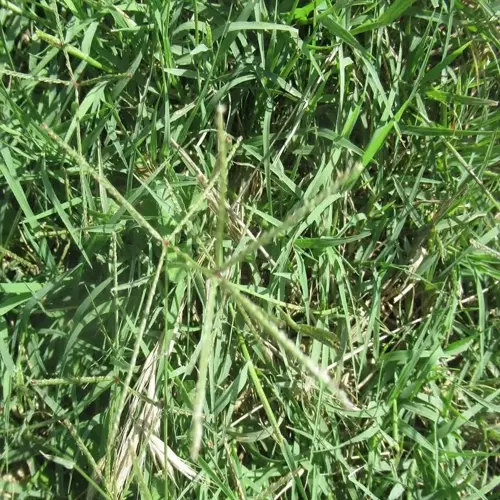
Bare feet on warm concrete, and every crack along the edge of the slab held a flat green rosette. I laid that patio four summers back, and by the first August I found them in every joint. The leaves lay flat against the ground as if something had pressed them there. Veins ran the length of each blade in long curves, base to tip. Those curved veins are the giveaway, and you can pick them out from standing height without bending down.
The citable research covers the plant, not the bite. Zhakipbekov and colleagues reported in 2023 that leaf extracts lowered IL-6, TNF-alpha and PGE2, three of the signals your body raises when tissue is inflamed. They tied the effect to COX-2 inhibition, which is the target several everyday painkillers work on. That is an extract in a lab. A crushed plantain leaf mashed onto your forearm is not an extract.
The antibacterial side of the work runs the same way. Lab extracts held back three common bacteria in culture, at concentrations that swing wide depending on how the extract was prepared. Where a mashed leaf lands inside that range is anyone's guess. A 2019 review went hunting for evidence on this species and skin wound healing. They reported that no systematic review had been identified.
That last finding is easy to skim past. A missing review does not mean the plant failed a test somewhere. It means nobody has gathered the evidence and weighed it. What you are left with is scattered lab results on one side, and a few hundred years of people reaching for the nearest leaf on the other. Both are worth something. Neither one tells you your bite will stop itching.
Where you pick matters more than how you crush. Lawn plantain is a standard herbicide target, and the products used on it include 2,4-D, dicamba, triclopyr and mecoprop. It grows thickest in mown turf and along worn path edges, which are the same strips that get sprayed. The sources naming those chemicals set no post-treatment waiting period for picking, so none of them hands you a number of days to count off. If you cannot say what has been put on a patch, walk past it.
- Pick clean: Gather from ground you know has never been sprayed, then rinse the leaf and your hands before anything touches skin you have scratched open.
- Set the bar low: Treat it as tradition. Nothing in the published work promises relief from an itch or a sting.
- Watch the bite: See a clinician if a bite spreads, swells sharply or refuses to settle.
The honest answer sits between two true things. The poultice is a real tradition with a long run behind it, and the published research holds up on its own terms. Neither one has ever been aimed at an insect bite, and calling that gap what it is costs you nothing. I tried a leaf on a mosquito bite last July and could not tell you whether it did a thing. Crush one if you want to, and do it knowing nobody has tested whether it helps.
Read the full article: Plantain Weed: Eat It or Get Rid of It