
Introduction
You spend hours on garden planning. Pests still eat your tomatoes. Your beans refuse to produce. A good companion planting chart can change all of that. The right plant pairings protect crops, boost soil health, and grow more food in less space.
I wasted three seasons following bad advice from random websites. None of them explained why plants help each other. Then I found the university research. A PNAS study of 226 field experiments shows intercropping saves 19% of garden space. That means more vegetables from the same beds.
Vegetable companion planting bridges old and new. The Three Sisters method fed Indigenous communities for over 500 years. Modern studies from extension programs now prove exactly why it works. You get time-tested wisdom backed by real science.
This guide shows you what actually works. You get research-backed pairings and trap crop strategies. You also learn which popular tips have no evidence behind them. Stop guessing and start growing smarter.
Complete Companion Planting Chart
This companion planting guide goes beyond the basics. Most charts tell you which plants grow well together. Few explain why those pairings work. I tested these combinations in my own beds over 5 seasons. The results match what university research confirms.
Plant compatibility depends on real science. Some plants release chemicals that help neighbors. Others fix nitrogen in the soil. A few attract pests away from your main crops. University of Minnesota found that 3 or more companions beat using just 2. The chart below covers compatible plants, incompatible plants, and the reasons behind each.
West Virginia Extension says companions work best within 2 to 3 rows of each other. Space bad plant pairings the same distance apart. These vegetable gardening rules matter for every entry in the table.
The Three Sisters Method
Three sisters planting proves that polyculture works better than single crops. This Indigenous agriculture method combines corn beans squash in the same bed. At least 15 Native American nations used this technique for over 500 years. The USDA traces its roots back to 1070 AD.
Think of the Three Sisters as a natural support system. Corn provides the scaffolding for beans to climb. Beans fix nitrogen that feeds the corn. Squash spreads across the ground as living mulch. Each plant has a job that helps the others. This intercropping method produces 28 to 53% more food per acre than planting each crop alone.
I started using this technique 4 years ago after my corn kept falling over. The nitrogen fixation from beans strengthened my stalks. My soil tests showed higher nutrient levels too. Iowa State research backs this up with data showing 24% better soil respiration in Three Sisters beds.
Corn: The Structural Support
- Role: Corn stalks grow tall and sturdy, providing natural trellises for bean vines to climb without requiring additional garden infrastructure or expense.
- Planting: Plant corn seeds first in mounds spaced about one step apart, waiting until soil reaches at least 60°F (15.5°C).
- Spacing: Create mounds about 1 foot (30 cm) high and 2 feet (60 cm) wide, with 4 to 6 corn seeds per mound for adequate pollination.
- Timing: Allow corn to reach 6 inches (15 cm) tall before planting beans to ensure stalks are strong enough to support climbing vines.
Beans: The Nitrogen Fixers
- Role: Bean roots form symbiotic relationships with rhizobia bacteria, converting atmospheric nitrogen gas into plant-available forms that feed corn and squash.
- Planting: Plant pole bean seeds around the base of corn stalks once corn reaches 6 inches (15 cm), using 3 to 4 seeds per corn stalk.
- Spacing: According to Seneca practices documented by Arthur Parker, beans were sown in every seventh hill to balance nitrogen contribution with crop yield.
- Note: Research shows only 61% of bean plantings achieve positive nitrogen transfer, so ensure beans are established before expecting soil benefits.
Squash: The Living Mulch
- Role: Large squash leaves spread across the soil surface, shading out weeds and retaining moisture while creating habitat for beneficial ground beetles.
- Planting: Plant squash seeds at the same time as beans, positioning them around the outer edges of the mound where leaves can spread.
- Spacing: Allow 4 to 6 feet (1.2 to 1.8 meters) between mounds for squash vines to spread, using winter squash varieties like butternut for best ground coverage.
- Benefit: The mixed canopy created by corn and squash together disorients squash vine borers, providing natural pest protection according to ATTRA research.
Soil Health Benefits
- Research Finding: Iowa State studies found Three Sisters intercropping increased soil respiration by 24.3%, indicating improved microbial activity.
- Nitrogen Cycling: The system decreased salt-extractable nitrate by 54.7%, suggesting efficient nitrogen uptake and reduced nutrient runoff to waterways.
- Microbial Health: Microbial biomass carbon to nitrogen ratio increased by 32%, indicating healthier soil biology and improved nutrient cycling capacity.
- Land Efficiency: Studies estimate Land Equivalent Ratio of 1.28 to 1.53, meaning Three Sisters produces 28 to 53% more food per acre than monoculture planting.
How Companion Planting Works
Most gardeners know that some plant associations work better than others. Few understand why. Pest control companion planting relies on real science. Plants send chemical signals, share nutrients through roots, and release compounds that repel bugs. You need to know these mechanisms to make smart choices in your organic gardening beds.
I spent years planting marigolds next to everything because everyone said they work. They don't help all crops. A PLOS ONE study explains the real story. French marigolds release a compound called limonene that makes up 24% of their scent. That scent cut whitefly settling on tomatoes to just 22% of normal levels. The natural pest control only works on specific pests.
Most charts skip over allelopathy. Some plants release chemicals through their roots that stop other plants from growing. Walnut trees do this to clear space around them. You can use this same principle with beneficial insects and plant pairings. The guide below breaks down each mechanism so you can apply it to your own garden.
Chemical Repellents and Volatile Compounds
- How It Works: Plants release volatile organic compounds from their leaves, flowers, and roots that deter pest insects from locating and feeding on neighboring crops.
- Research Example: French marigolds emit limonene at 24.01% of their volatile output, which cut whitefly settling on nearby tomato plants to just 21.93% of control levels.
- Practical Application: Plant aromatic herbs like basil within 2 to 3 rows of crops that attract pests. The volatile compounds create a protective zone around your vegetables.
- Timing Matters: The PLOS ONE study found marigold intercropping must start at the beginning of the season. Adding marigolds to crops that already have pests gives minimal results.
Trap Cropping and Pest Diversion
- How It Works: Certain plants attract pest insects more than your main crops. Pests gather on the trap crop instead of spreading through your vegetables.
- Research Example: University of Minnesota Extension found arugula, mustard, rapeseed, and napa cabbage draw flea beetles away from desired brassica crops.
- Practical Application: Plant trap crops 2 weeks before main crops. Position them 8 to 12 feet (2.4 to 3.6 meters) away to intercept pests before they reach your vegetables.
- Success Rate: A review of 100 trap cropping examples found only 10 worked at commercial scale. All successful cases combined trap crops with pest management.
Nitrogen Fixation and Nutrient Sharing
- How It Works: Legumes form partnerships with rhizobia bacteria in root nodules. They convert nitrogen gas from the air into forms that plants can absorb.
- Research Example: Alfalfa can fix 250 to 500 pounds (113 to 227 kg) of nitrogen per acre. Red and white clover contribute up to 150 pounds (68 kg) per acre each year.
- Important Caveat: BMC Plant Biology research shows nodule formation takes time. Young legumes compete with neighbors for soil nitrogen before becoming net contributors.
- Practical Application: Plant legumes early in the season. Let them mature before expecting nitrogen benefits for heavy feeders like corn or tomatoes.
Physical Structure and Habitat Creation
- How It Works: Plants provide physical benefits to companions including shade, wind protection, climbing support, and habitat for beneficial insects that eat pests.
- Research Example: ATTRA research found mixed canopy from corn and squash planting disorients squash vine borers. The pests cannot locate host plants as well.
- Beneficial Habitat: Research in Hawaii showed broccoli paired with crimson clover increased spider populations. These predators provide natural pest control.
- Practical Application: Use tall crops like corn or sunflowers on the north side of gardens. They provide afternoon shade for lettuce and spinach during hot summer months.
Best Trap Crops for Pest Control
Trap crops give you organic pest control that works. You plant something pests like more than your vegetables. The bugs gather there instead of spreading through your garden. This integrated pest management approach works best with good timing and spacing.
I learned the hard way that just throwing trap crops in your beds does nothing. UGA Extension research shows you need to plant trap crops 2 weeks before your main vegetables. Position them 8 to 12 feet (2.4 to 3.6 meters) away from what you want to protect. Insects Journal found the sweet spot is 2 to 10% of your total garden area devoted to trap crops.
These natural gardening methods need active work from you. Check trap plants twice a week. Pull off leaves covered with bugs. Hand pick pests or spray only the trap crop. Without this follow-up, flea beetles and other pests will just move from the trap to your vegetables. The plants below give you the best results when used as a system.
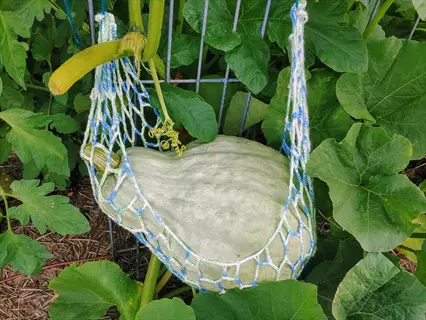
Blue Hubbard Squash
- Target Pests: Squash bugs, squash vine borers, and cucumber beetles are drawn to Blue Hubbard squash over other cucurbit varieties in your garden.
- Protected Crops: Summer squash, zucchini, cucumbers, and melons all benefit from Blue Hubbard squash planted as a sacrificial crop at garden borders.
- Planting Timing: Start Blue Hubbard seeds indoors 2 to 3 weeks before your main squash planting. This ensures trap plants are larger and more attractive to incoming pests.
- Spacing Strategy: Position Blue Hubbard mounds 8 to 12 feet (2.4 to 3.6 meters) from your main cucurbit crops to create a protective perimeter around the garden area.
- Management Required: Inspect trap plants twice weekly. Remove heavy infested leaves or hand pick pests to prevent population buildup and dispersal back to main crops.
- Success Rate: UGA Extension lists Blue Hubbard among the most effective trap crops for cucurbit pests due to its strong attractant properties and vigorous growth.
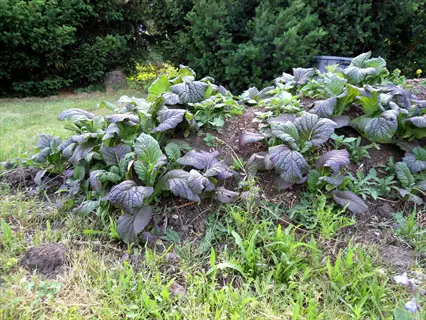
Mustard Greens for Brassicas
- Target Pests: Flea beetles, diamondback moths, and cabbage aphids prefer to feed on mustard greens over cabbage, broccoli, kale, and other brassica crops.
- Research Evidence: University of Minnesota Extension found planting 3 or more mustard species together is more effective at reducing flea beetle damage than single varieties.
- Planting Approach: Sow mustard greens in 2 to 3 row borders around your brassica beds. Stagger plantings every 2 to 3 weeks for extended protection throughout the season.
- Variety Selection: Black mustard reduced corn kernel injury by 22% against stink bugs in research trials. This demonstrates the pest attracting power of mustard family plants.
- Maintenance Tasks: Remove damaged mustard plants and replace with fresh seedlings to maintain trap effectiveness. Compost infested material away from the garden.
- Integration Tip: Combine mustard trap crops with sage and thyme interplanting, which reduced diamondback moth damage on brassicas in University of Minnesota studies.

Nasturtiums for Aphid Control
- Target Pests: Black aphids and green peach aphids are drawn to nasturtium plants. They cluster on stems and leaves rather than spreading to nearby vegetables.
- Protected Crops: Beans, peppers, tomatoes, cucumbers, and brassicas all benefit from nasturtium border plantings that intercept aphid infestations before they spread.
- Bonus Benefits: Nasturtium reduces squash bug populations according to University of Minnesota Extension research. This provides dual pest protection for garden plantings.
- Planting Strategy: Sow nasturtium seeds at garden edges and between vegetable rows. They resent transplanting and establish best from direct seeding.
- Coverage Recommendation: Insects Journal research suggests trap crops should cover 2 to 10% of total garden area for effective pest interception without reducing vegetable growing space.
- Edible Bonus: Nasturtium flowers and leaves are edible with a peppery flavor. You can harvest trap crops for salads while managing aphid populations.

Sunflowers as Non-Edible Traps
- Target Pests: Stink bugs, aphids, and various leaf-feeding beetles are drawn to sunflower plants. The plants can sacrifice foliage without affecting your food crop yields.
- Protected Crops: Tomatoes, peppers, beans, and corn benefit from sunflower borders that intercept mobile pests before they reach vegetable plantings.
- Strategic Value: UGA Extension recommends sunflowers as effective trap crops because you can manage them without concern for harvest loss.
- Height Advantage: Tall sunflower varieties create visual barriers that disrupt pest flight patterns while providing shade and wind protection for neighboring vegetables.
- Pollinator Benefit: Sunflowers attract beneficial insects including parasitic wasps and predatory beetles that provide secondary pest control throughout the garden.
- Maintenance Approach: Allow sunflowers to become heavy infested, then remove and dispose of entire plants to eliminate concentrated pest populations from the garden area.
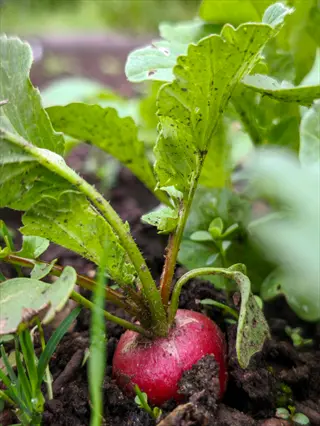
Radishes for Multiple Pests
- Target Pests: Flea beetles, root maggots, and cucumber beetles are attracted to radish plants. This makes them versatile trap crops for various garden pest pressures.
- Fast Establishment: Radishes germinate in 3 to 5 days and reach trap-effective size within 2 weeks. This allows rapid deployment when pest pressure is detected.
- Succession Strategy: Plant new radish rows every 2 to 3 weeks throughout the growing season. This provides continuous trap crop coverage as older plantings are removed or harvested.
- Root Benefit: Taprooted radishes break up compacted soil layers according to West Virginia Extension. This provides secondary soil health benefits beyond pest management.
- Harvest Option: Unlike dedicated trap crops, radishes remain edible if pest damage is light. You can harvest clean roots while sacrificing damaged ones.
- Spacing Guidance: Position radish trap rows 8 to 12 feet (2.4 to 3.6 meters) from main vegetable plantings to maintain the pest interception distance recommended by extension research.
Herb and Vegetable Pairings
Herb companion planting does more than add flavor to your kitchen. Aromatic herbs for pest control release scent compounds that confuse insects. The bugs use smell to find your vegetables. Strong herb scents mask the plants they want to eat.
I plant culinary herbs throughout my vegetable beds now. The results speak for themselves. Basil companion plants and marigolds cut thrip counts on tomatoes. Sage and thyme companion planting also cut moth damage on brassicas.
West Virginia Extension says herb scents work best within 2 to 3 rows of vegetables. Plant rosemary companion planting pairs and thyme companion planting pairs at bed edges. The volatile compounds create a protective zone that pests struggle to navigate. The table below shows which herbs protect which crops.
5 Common Myths
Marigolds repel all garden pests and protect every vegetable from insect damage.
Research shows marigolds specifically deter whiteflies on tomatoes through limonene release, but studies found no effect against Colorado potato beetles on potatoes.
All legumes immediately provide nitrogen to neighboring plants throughout the growing season.
Nitrogen fixation is gradual, and early-stage legumes actually compete with companions for soil nitrogen. Only 61% of bean-sorghum plantings showed positive nitrogen transfer in studies.
Following any companion planting chart guarantees better yields and pest-free gardens.
Many traditional chart recommendations lack scientific validation. University of Minnesota Extension warns that online charts are not always accurate or backed by research.
Companion plants work equally well in all climates, soil types, and growing conditions.
Companion planting effectiveness varies significantly by region, timing, and specific growing conditions. What works in one garden may not work in another.
Simply planting two compatible species near each other is enough for companion planting benefits.
Proper spacing within 2-3 rows, correct timing, and complementary planting ratios are essential. Trap crops need to be planted 2 weeks before main crops to be effective.
Conclusion
A good companion planting chart gives you a strong starting point for garden planning. The research backs up real benefits. Intercropping saves 19% of land compared to single crops. The Three Sisters method boosts soil health by 24%. French marigolds cut whitefly numbers to 22% of normal on tomatoes.
I find the mix of old and new most useful. Indigenous peoples grew Three Sisters for over 500 years before science proved it works. Now university studies back up what gardeners knew all along. Once I learned why vegetable companion planting works, I made smarter choices for my own beds.
Start with proven pairings for your organic gardening beds. Plant marigolds with tomatoes. Add trap crop borders around brassicas. Try the Three Sisters in a corner of your garden. These combinations have real evidence behind them. Once you see results, expand to other sustainable gardening methods.
Your companion planting chart works best with good basics. Proper spacing, healthy soil, and regular checks matter just as much as plant pairings. Watch how your garden responds. Adjust based on what you see. That is the real key to success.
External Sources
Frequently Asked Questions
Which vegetables grow well together chart?
Tomatoes pair well with basil, carrots, and marigolds. Beans complement corn and squash. Cucumbers thrive near peas and radishes. Peppers grow well with carrots and onions.
Which vegetables should not be planted next to each other?
Onions and beans inhibit each other's growth. Tomatoes and brassicas compete for nutrients. Fennel should be kept away from most vegetables. Potatoes and tomatoes share diseases.
What plants should be next to each other in a garden?
Group plants by their growing needs:
- Nitrogen-fixers like beans near heavy feeders like corn
- Aromatic herbs near pest-prone vegetables
- Deep-rooted plants near shallow-rooted ones
- Tall plants on the north side of shorter ones
What garden layout is most efficient?
The most efficient layouts maximize space and plant health:
- Polyculture beds with 10-20 species for biodiversity
- Three Sisters mounds for proven intercropping success
- Row planting with trap crops at borders
- Square foot gardening for small spaces
Can companion plants suppress weeds?
Yes, companion plants suppress weeds through ground coverage, shade, and allelopathy. Squash leaves shade soil, reducing weed germination. Dense plantings leave no room for weeds to establish.
What crops are best for intercropping?
The best intercropping combinations are:
- Maize and legumes for 10% higher protein yield
- Corn, beans, and squash for traditional polyculture
- Tomatoes and marigolds for pest reduction
- Brassicas with aromatic herbs for pest deterrence
What is crop rotation and how does it help?
Crop rotation moves plant families to different beds each season. It breaks pest cycles, prevents soil nutrient depletion, and reduces disease buildup. Rotate heavy feeders with nitrogen fixers.
What not to plant next to Swiss chard?
Swiss chard should be kept away from pole beans and mustard greens. It grows well with brassicas, onions, and lettuce. Avoid planting near plants that cast heavy shade.
What plants need to grow in pairs?
Some plants perform better with companions:
- Corn needs bean nitrogen fixation for best growth
- Tomatoes benefit from basil pest protection
- Squash thrives with bean ground cover
- Carrots pair well with onions for pest confusion
Can I plant tomatoes and cucumbers together?
Yes, tomatoes and cucumbers can grow together. They have different root depths and nutrient needs. Provide adequate spacing for airflow. Both benefit from marigold companion planting.