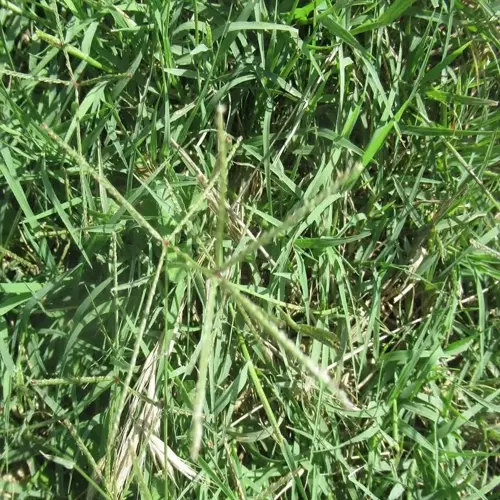

Spray a nutsedge patch flat in July and your ground looks clean for maybe two weeks. Then the green tufts push up again, thin at first, and thick as ever by August. The leaves you killed were never really the plant. Nutsedge tuber survival is what beats you. Each plant stores its next generation in small underground nutlets, and a spray on mature leaves moves down to them poorly at best. Kill the top and the tubers below just start over.
Those tubers form on rhizomes, the thin side stems that creep out from the plant under your soil. The rhizomes run 8 to 14 inches (20 to 36 cm) deep, and most of the tubers sit in the top 6 inches (15 cm). Even that upper band sits deeper than a quick pass with a fork turns over. UC IPM is blunt about where that leaves you. No product effectively controls mature nutsedge plants.
The wake-up schedule is the other half of why nutsedge keeps coming back. Tubers do not all break dormancy at the same time, so your treatment only reaches the batch that happens to be awake. The rest wait you out. You get bare ground for a few weeks, then a fresh flush from the tubers that stirred late, and you blame the product when the product did about all you could ask.
Scale is the part most people underestimate. One plant left alone to mature can set thousands of tubers, and each one is a separate plant waiting on your soil to warm. Lifting only the visible clump does nothing about that bank, which is why you can hand pull a mature patch and gain two quiet weeks.
The 6,000 count from NC State Extension came from one yellow nutsedge plant under optimum conditions. Treat that as the ceiling, not your average back lawn. Even a fraction of that number is more than one weekend of digging can undo. A patch that filled in over a single summer takes years, not weeks to break.
The survival window is where the sources split. UC IPM puts tuber life in the soil at 1 to 3 years, while NC State has recorded some staying dormant for up to 10 years. Take both figures as they stand rather than splitting the difference. Either one outlasts your season of weeding. Mature nutlets shrug off herbicide treatment too, so a spray program on its own leaves nutsedge tuber survival untouched.
Judge your progress the right way and the job gets less maddening. Early on, success does not look like a clean lawn. Success looks like each flush coming back thinner than the one before, because you are drawing down a bank of tubers instead of killing a plant.
Young shoots have not built a tuber bank yet. Pull or treat them while they are small and you stop the next 6,000 from ever being made.
Timing is the one thing that changes your outcome. Nutsedge tubers get made by plants you left alone long enough to mature, so the young shoots you take out early never fund the next batch. Walk the same spots every 2 to 3 weeks through the growing season and pull whatever is up. NC State says any nutsedge plan will need several years of sustained effort, and that is the honest answer to why this weed keeps beating you.
Read the full article: Nutsedge: How to Kill It and Keep It Out