
Selective broadleaf herbicides kill weeds and leave your grass standing. The workhorse actives are 2,4-D, dicamba and triclopyr, and almost every broadleaf herbicide on the shelf is built around one of them. Chelated iron is the other route, and it burns weeds on contact instead of moving through them. A selective weed killer lawn owners can trust will name the grass species it spares right on the front label. Anything non-selective is the wrong tool on turf, because it does not care what it lands on.
White clover spread through the strip by my front walk until the grass under it went thin and pale. Repeat sprays of chelated iron broke the mats up and the clover gave out. The dandelion patch along that same walk took the same sprays and came back anyway. I pulled a few and the taproots snapped off deep in the soil, which is where the new leaves keep coming from. Rutgers Cooperative Extension hit the same split in its chelated iron clover trials. Repeat sprays there cleared white clover out. Dandelion came back from the taproot.
Selectivity is the whole trick. These actives injure broadleaf plants while sparing the lawn grasses the label covers. A non-selective product does the opposite and kills anything green it touches, your turf included. Rutgers put this coverage out for cool season lawns. Check that the active you pick is labeled for your own grass species, since tolerance shifts from one turf type to the next and the label is the only place that answer lives.
Coverage gaps are where people get burned. 2,4-D takes out dandelion and plantains. It will not touch white clover, chickweed, purslane or ground ivy. Dicamba flips that around and works on knotweed, purslane, spurge, henbit and chickweed while it leaves plantains and dandelion alone. Triclopyr is the pick for speedwell, lespedeza, oxalis, ground ivy, violets and clover, which covers most of what 2,4-D walks past. No single bottle handles the whole yard.
Organic choices run out fast here. There are currently no selective organic herbicides that kill broadleaf weeds without harming lawn grasses. Corn gluten meal does not control broadleaf weeds either, so skip it if that is the job you need done. Chelated iron gets you closest, and it stays non-systemic, so it burns what the spray wets and nothing below that. In the trials it cleared white clover and left dandelion standing.
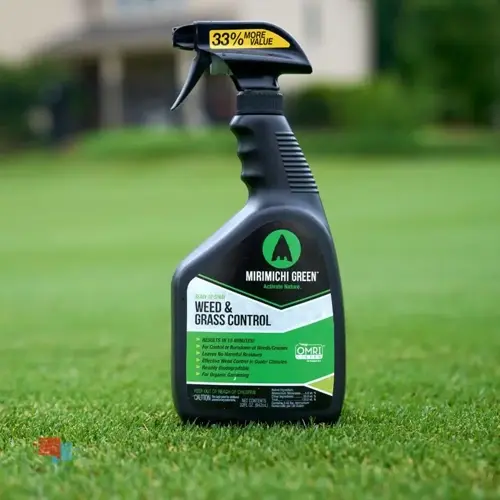
Sprayable products beat granules in most yards because you can spot treat with them, and spot treating cuts the total amount of herbicide you put down. Walk the lawn before you mix anything. Mark the patches you want gone, hit those, and leave the rest of the grass alone. Mixing a full tank for four dandelions puts chemical on turf that was already fine, and a blanket application buys you nothing on ground with no weeds in it.
Sprays let you hit one patch at a time, and treating patches instead of the whole yard keeps the herbicide off grass that never needed it.
Match the active to the weed in front of you and you spray once instead of three times. Dandelion and plantain point you at 2,4-D. Clover and ground ivy point you at triclopyr. Get down on one knee and identify the weed before you shop, since the wrong bottle is a wasted afternoon. Then read the label for the turf types it will not harm, because that one line decides whether your turf takes the hit along with the weeds.
Read the full article: Weed and Feed: When It Works and When It Fails