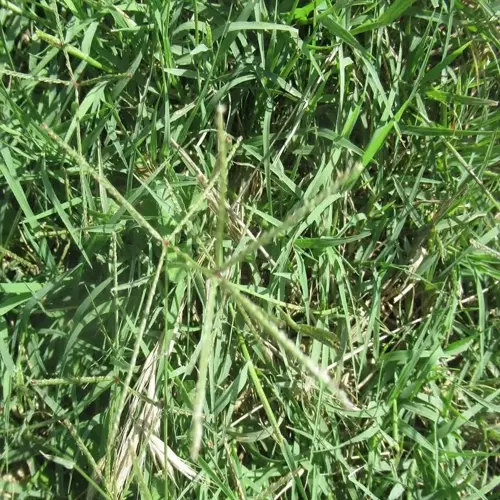

Yellow nutsedge carries a whole shelf of food names, and that is where most questions about nutsedge uses start. The tubers are on record as tasting like almond, which is how one sedge ended up answering to chufa and to earth-almond. In your lawn it is still a weed, and one of the hardest ones you will ever push back out of your grass.
I found my first tuber the July the patch showed up in the side yard. I tugged a stem and the soil let go of a small dark bead on the end of a root. It rolled between my thumb and finger, round and smooth, about the size of a pea. UC IPM lists yellow nutsedge tubers as brown to black and up to 7/16 inch (11 mm) across, with an almond taste. Purple nutsedge is the bitter one, and its tubers hang in chains along the roots rather than sitting alone at a tip.
Six names point at the same plant. Chufa and earth-almond are the two you meet most often. Rush-nut, coco sedge, northern nut-grass and edible galingale all mean yellow nutsedge as well, so a lawn weed ends up sounding like something off a health food shelf. Type chufa yellow nutsedge into a search box and you get food pages on one line and weed control programs on the next.
Those names are the reason you are asking about nutsedge uses at all. A plant that answers to earth-almond sounds like it ought to be worth keeping around. But the record I am working from covers what this sedge is called and what its tubers are like. It says nothing about growing it. So I will not tell you your lawn is sitting on a forgotten crop, because a stack of food names proves nothing about how a plant was farmed or by whom.
Underground, the two problem nutsedges look nothing alike, and that split matters more to you than the naming does. Yellow nutsedge sets one round tuber at the tip of each rhizome, and it sits there alone, smooth and dark. Purple nutsedge runs its tubers in chains instead. Each link is 7/16 to 1-1/3 inch (10 to 35 mm) long and bitter. So the almond note that earned all those food names belongs to the yellow plant alone.
That brings you to the question about edible nutsedge tubers, and this is where the honest answer runs out. My research covers naming and taste. It carries nothing on pulling a tuber out of your lawn or a garden bed, and nothing on what to do with one after that. It gives no harvesting guidance and no eating guidance, so neither one belongs on this page. You will get none of it here. I would rather hand you an obvious gap than a method I made up on the spot.
What this plant does well is spread. A single plant can build a patch 10 feet (3 m) or more across, which is most of a small front lawn. Out of more than 40 sedge species in North Carolina, yellow and purple nutsedge are the two that cause the most trouble in home landscapes. They move into turf and garden beds, and they come back the next year until the tuber supply runs down.
So park nutsedge uses in the trivia column and plan your season around the weed instead. It is aggressive and persistent, and it will hold ground in your lawn and your flower beds until you take it on. The almond names are worth knowing while you dig out a patch, and that is roughly the whole of what this sedge does for your yard.
Read the full article: Nutsedge: How to Kill It and Keep It Out