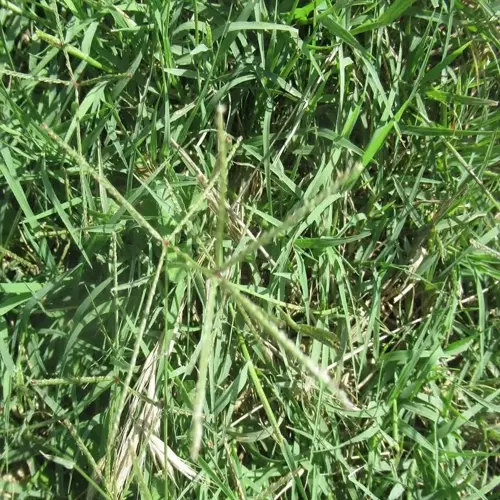

Yes on young shoots, and no as a one-off attack on a mature patch. Pulling nutsedge by hand works on small shoots you take out on a set schedule. Every shoot you pull costs the tuber below a piece of its stored energy. Clear a thick stand in one angry weekend, and you will see that same patch back inside a month, grown from the tubers you left.
First warm week of spring, shoots still short, and I was on my knees in my own front bed with a border spade, cutting a wide circle around each clump. Clemson HGIC puts the depth at 10 inches (25 cm) and the circle at 8 to 10 inches (20 to 25 cm) past the edge of the leafy top growth. For a weed no taller than your hand, that sounds like far too much digging. The tubers sit out that wide and that deep, so a neat hole around the stem leaves most of the crop in your soil.
A tuber spends about 60% of its stored reserves raising the first plant, and another 20% on the second. The third shoot comes up from a near empty tank. Cut each shoot off before the leaves grow big enough to send food back down, and you never let that tuber refill. Keep at it and the sprouts you find get weaker through the season.
Timing decides whether hand weeding nutsedge does anything at all. Pull each plant before the 5 to 6 leaf stage, which is about when a plant stops spending and starts building new tubers. Through summer heat you want a pass every 2 to 3 weeks. Miss a month and you are pulling plants that already paid the tuber back with interest.
The pulling goes easier after rain or a deep soak. In dry ground the shoot snaps off its nut at the first tug and you get a green ribbon and nothing else. In wet soil you often lift the shoot, the pale stem below, and the spent nut too. Grab low, right where the shoot meets the ground, and pull slow and straight up.
Digging out nutsedge asks for more care with the soil than with the plant. Snap a rhizome, leave the pieces in the hole, and each piece can start a new plant. I pulled every hard brown nut and white thread out of the shovelfuls by hand before I filled the hole back in. Early spring is the best window, before this year's crop of tubers forms.
Lift clumps while the shoots are still short and this year's tubers have not formed yet.
Slice the soil 8 to 10 inches out past the leafy top growth on every side of the clump.
Sink the spade at least 10 inches so the tubers come up with the plant instead of breaking off it.
Pick every nut and white thread out of the shovelful by hand before you backfill the hole.
Check it every 2 to 3 weeks and pull anything green that shows up while it is still small.
A tiller does not kill tubers. It drags them the length of the bed, so one bad corner becomes a bad yard by fall.
On a thick mature stand, hands alone will not clear the patch. The tops snap off at the soil line and the tubers stay put, sitting deeper than your fingers reach, and a fresh shoot shows up in a week or two. Pulling earns your time on light patches and on new outbreaks you catch early.
So pick one patch you can reach twice a month and leave the rest for now. Dig that patch out in spring, sift what you lift, then keep every shoot that follows from reaching six leaves. A tuber that never grows past a few leaves cannot feed itself, and starving one out is the one job your hands can finish alone.
Read the full article: Nutsedge: How to Kill It and Keep It Out